
Ropa Vieja (Cuban Shredded Beef)
Ropa Vieja is a traditional Cuban dish featuring tender, shredded flank steak simmered in a vibrant sofrito.
Contents (5 sections)▾
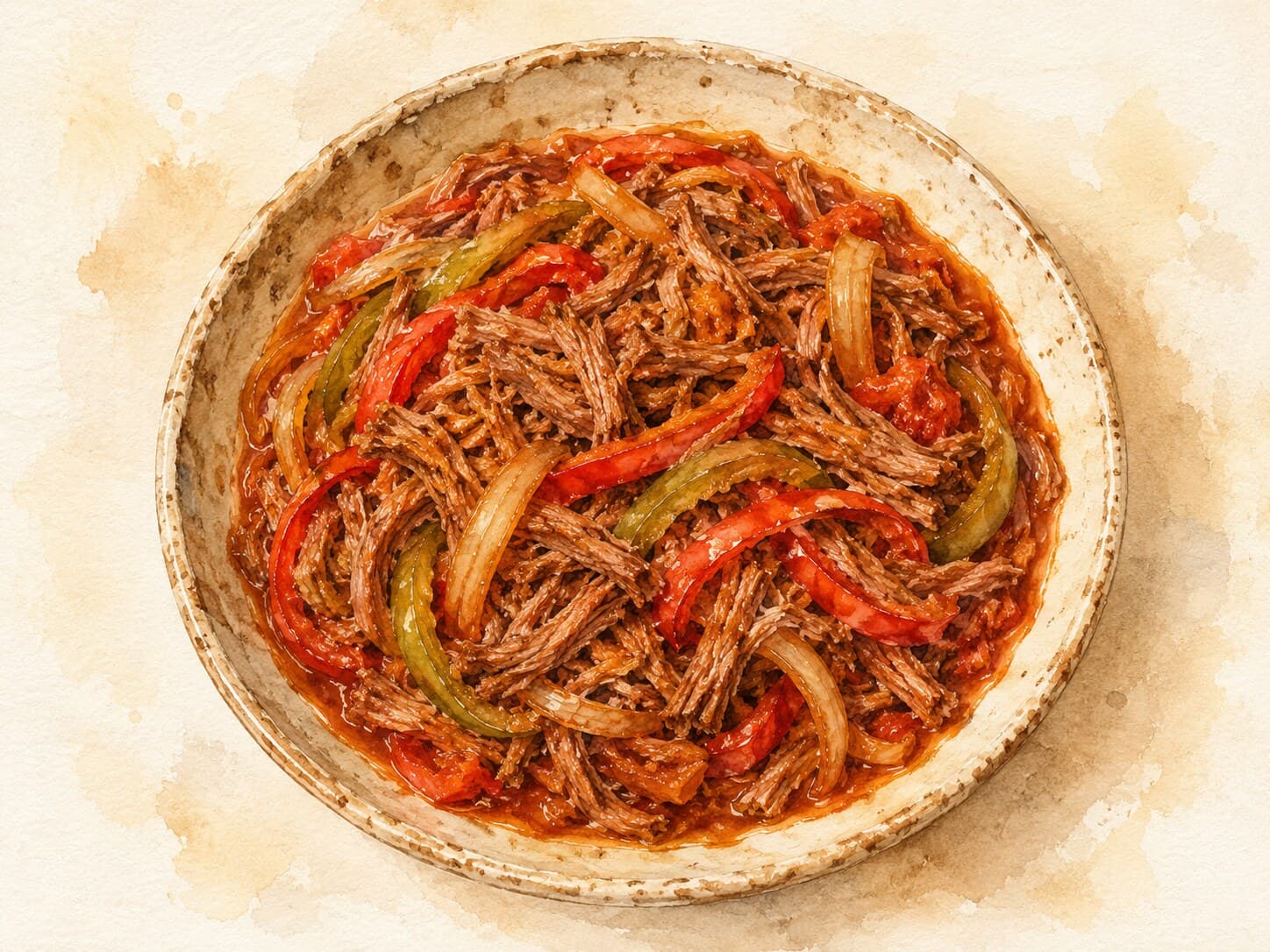
Ingredients
- 1 kg flank steak
- 2 tbsp olive oil
- 1 large onion, sliced
- 1 red bell pepper, sliced
- 1 green bell pepper, sliced
- 2 cloves garlic, minced
- 1 tsp ground cumin
- 1 can (400 g) diced tomatoes
- 1 cup beef broth
- 2 bay leaves
- Salt to taste
- Black pepper to taste
Steps
In a large pot, heat olive oil over medium heat. Sear the flank steak on all sides until browned, about 4 minutes per side. Browning enhances flavor.
Add sliced onion, bell peppers, and minced garlic to the pot. Sauté until softened, about 5 minutes.
Stir in ground cumin and cook for 1 minute to release its aroma.
Add diced tomatoes, beef broth, bay leaves, salt, and pepper. Bring to a boil, then reduce heat to low. Cover and simmer for 1.5 to 2 hours, until the beef is tender and shreds easily.
Once cooked, remove the flank steak and shred it using two forks. Return the shredded beef to the pot, stir well, and let it simmer for an additional 15 minutes to absorb the flavors.
Why this works
Braising flank steak transforms it into the tender, flavorful base of Ropa Vieja. The process of cooking it slowly in liquid allows the tough fibers to break down, resulting in meat that can be easily shredded. The sofrito—comprised of sautéed peppers, onions, garlic, and spices—infuses the beef with rich flavors. If the sauce seems too thin, allow it to simmer uncovered for a bit longer to reduce and thicken. Conversely, if you find it too thick, you can add a splash of beef broth to achieve your desired consistency. The combination of aromas from the spices and the freshness of the vegetables creates a vibrant dish that is both comforting and satisfying.
Common mistakes
Pulling the beef before the fibers surrender.
- Target: The flank should shred apart with light pressure from two forks, with no springy resistance — typically 1.5 to 2 hours of bare simmer.
- Why it matters: Flank is loaded with connective tissue; if you stop while it's still firm, you get chewy strands instead of soft, sauce-soaking rags. The name "old clothes" only earns out when the fibers have fully relaxed.
- What to do: Test with two forks at the 90-minute mark, and keep simmering in 15-minute increments until the meat falls apart without effort.
Searing in a crowded pot.
- Target: A single layer with breathing room between the slabs of flank; sear in two batches if you have to.
- Why it matters: Crowding drops the surface temperature and the meat steams instead of browning, costing you the deep fond (the browned, flavor-rich residue stuck to the pan bottom after searing) that gives the broth its color and backbone.
- What to do: Pat the steak dry, salt it, sear one piece at a time on each face, and only build the sofrito once those drippings are dark brown on the pot bottom.
Throwing raw spices straight into the wet braise.
- Target: The cumin should hit a dry, hot pan with the sofrito for about 60 seconds, until it smells nutty and warm rather than dusty.
- Why it matters: Ground cumin needs heat and a touch of fat to wake up the volatile aromatics; dropped into water-heavy liquid it stays flat and faintly raw.
- What to do: Stir the cumin into the softened onions and peppers off-heat or on low, watch for a perfume change, then add the tomatoes and broth.
Skipping the final stir-back simmer.
- Target: Once shredded, return the beef to the pot and simmer 10–15 more minutes uncovered, until the sauce clings to the strands instead of pooling beneath them.
- Why it matters: Shredded beef has hugely more surface area than the whole slab; if you skip this step the meat tastes braised but un-dressed, and the sauce sits separately on the plate.
- What to do: Pull the beef, shred, return it, and let it bubble gently until each strand looks glossy and the liquid has reduced to a loose coating.
What to look for
- The pot bottom turns dark mahogany under the seared steak — not pale tan and not black.
- At doneness, a fork twisted in the meat splits the grain instantly with no rubbery snap-back.
- The sofrito smells sweet and faintly toasted, with the cumin sitting on top of the pepper aroma rather than underneath it.
- The finished sauce coats a spoon in a thin, glossy film and the shredded strands look damp, not floating in liquid.
A note on history
Ropa Vieja — literally "old clothes" — is one of Cuba's national dishes, but its roots run back to the Iberian peninsula. Sephardic Jewish cooks (the Jewish communities historically rooted in the Iberian Peninsula) in medieval Spain are credited with the original slow-cooked shredded-beef stew, and a closely related Canarian version travelled with immigrants from the Canary Islands (the Spanish archipelago off the northwest African coast) to Cuba in the 16th and 17th centuries. Cuban cooks adapted it with local peppers, tomatoes and Caribbean spices, and the dish settled into the form most home cooks now know.
Get the essays in your inbox — free
Weekly notes on flavor, fermentation, and food history — the writing behind the Atlas of Flavor. No spam; unsubscribe anytime.