
Cuban Picadillo
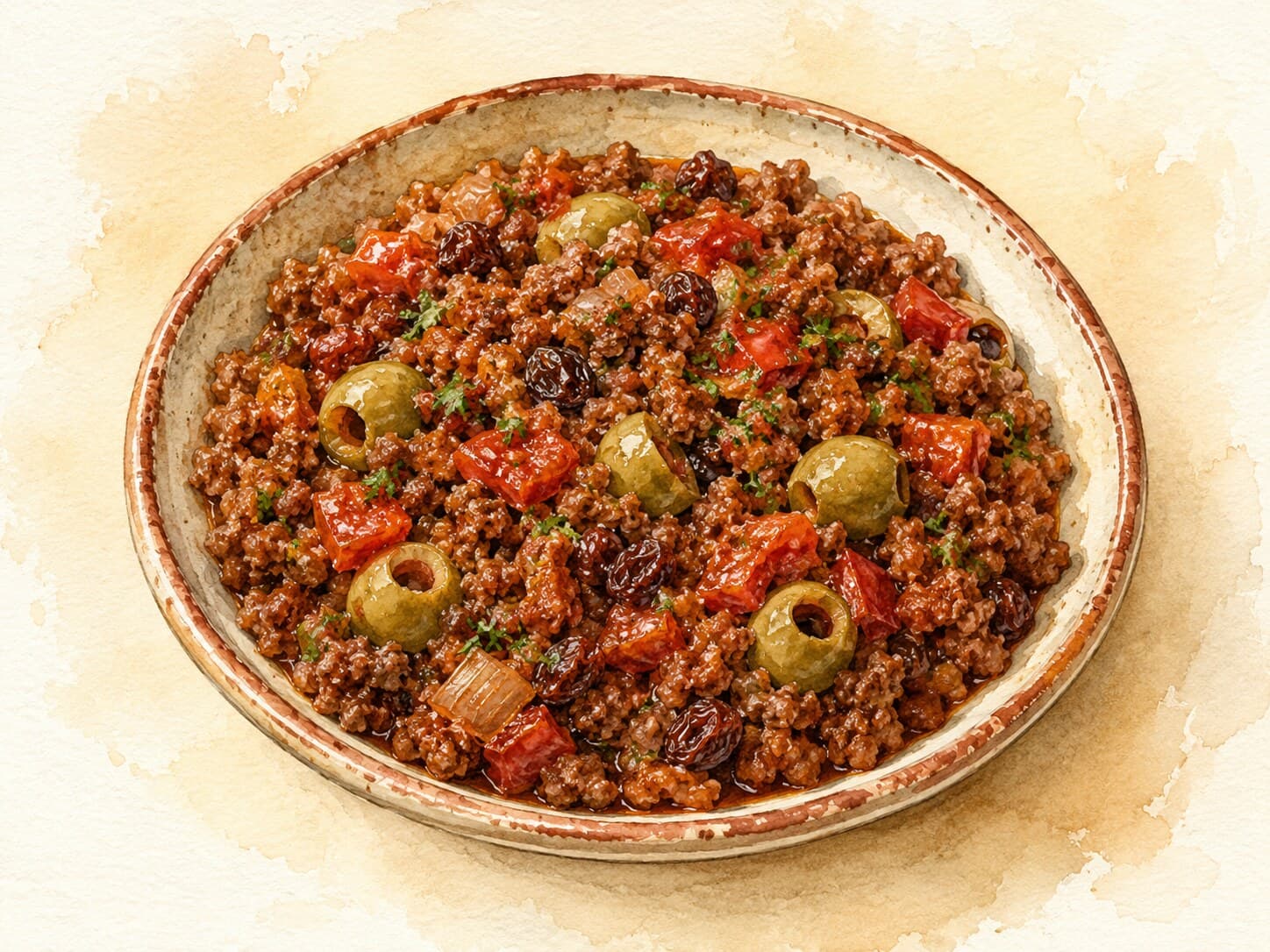
Cuban Picadillo is a savory-sweet ground beef dish simmered with olives, raisins, and capers, perfect for weeknights.
Contents (5 sections)▾
Ingredients
- 500 g ground beef
- 1 cup onion, chopped
- 1/2 cup bell pepper, chopped
- 4 cloves garlic, minced
- 2 tbsp olive oil
- 1 cup tomato sauce
- 1/2 cup green olives, sliced
- 1/4 cup raisins
- 2 tbsp capers, drained
- 1 tsp cumin
- 1 tsp oregano
- Salt and pepper to taste
Steps
In a large skillet, heat olive oil over medium heat. Add chopped onion and bell pepper, sautéing for about 5 minutes until softened, creating a flavorful sofrito base.
Add minced garlic and cook for an additional minute until fragrant. Then, add the ground beef, breaking it up with a spatula, and cook until browned, about 7-10 minutes.
Stir in the tomato sauce, olives, raisins, capers, cumin, and oregano. Season with salt and pepper to taste.
Reduce the heat to low and let the mixture simmer for 10 minutes, allowing the flavors to meld together and the dish to thicken.
Why this works
This recipe showcases the balance of flavors that are characteristic of Cuban cuisine, particularly in Picadillo. Browning the ground beef in sofrito develops a deep, savory flavor and infuses the dish with the aromatic essence of sautéed onions, peppers, and garlic. The combination of sweet raisins, tangy olives, and briny capers creates a complex flavor that captures the essence of savory, sweet, and briny notes. If the mixture seems too dry during simmering, add a splash of water or more tomato sauce to achieve the desired consistency. This dish exemplifies how diverse ingredients can come together to tell a story on your plate, making it a perfect representation of Cuban heritage and culinary history.
Common mistakes
Steaming the beef instead of browning it.
Target: Patches of deep brown on the meat before the tomato goes in; the pan should hiss, not simmer.
Why it matters: Browning is the Maillard reaction (the heat-driven chemistry between proteins and sugars that builds savory, roasted flavor). It only happens above the boiling point of water, on a dry, hot surface. If you dump cold beef into a crowded pan, it releases liquid and stews in its own juices — pale, washed-out, and flat. The single biggest flavor gap in a weak picadillo is browning that never happened.
What to do: Get the sofrito (the slow-cooked onion-pepper-garlic flavor base) going first, then add the beef and spread it out. Let it sit untouched for a minute or two to catch color before you break it up; work in two batches if your pan is small.
Undercooking the ground beef.
Target: Cooked through to 71°C (160°F) — no pink remaining, juices running clear.
Why it matters: This is the safety point for ground beef. Grinding spreads any surface bacteria throughout the meat, so unlike a steak it must be cooked through all the way, not just seared outside. The good news is that picadillo's 10-minute simmer after browning keeps the meat well past safe — the risk is only if you rush it to the table.
What to do: Break the beef into small crumbles so it heats evenly, cook until no pink streaks remain, and let it simmer in the sauce. If unsure, an instant-read thermometer in the thickest clump removes all doubt.
Adding the olives, capers, and raisins too late — or treating salt like an afterthought.
Target: Stir them in with the tomato, then taste for salt only at the very end.
Why it matters: This dish is built on three loud salt-and-acid voices — briny olives, sharp capers, sweet raisins that round them off. They need simmering time to bleed into the sauce and find balance. They also carry a lot of salt themselves, so seasoning early risks an over-salted pan once they've given up their brine.
What to do: Add olives, capers, and raisins with the tomato sauce so they meld. Hold most of your added salt until the final taste, adjusting against the brine already in the pot.
Letting it cook dry and tight.
Target: A loose, spoonable sauce that just coats the meat — glossy, not pasty.
Why it matters: As the tomato reduces, the sauce can clench up and the spices can scorch on the pan bottom, turning bitter. Picadillo should stay saucy enough to spoon over rice.
What to do: Keep the simmer gentle and low. If it tightens before the flavors have melded, loosen with a splash of water or extra tomato sauce.
What to look for
- A ready sofrito: the onion turns soft and translucent and smells sweet, not sharp. This is the aromatic floor the whole dish stands on — don't rush past it.
- Properly browned beef: visible brown flecks and a roasted, savory smell, with no standing gray liquid in the pan. Pooled liquid means it's steaming; raise the heat or wait.
- A melded sauce: the raw-tomato sharpness has softened and the olives, capers, and raisins read as one balanced sweet-salty-briny note. Taste here before you add any salt.
- Right consistency to serve: loose and glossy, sliding off the spoon, lightly coating the meat — not dry or claggy. Adjust with a splash of water if it's tightened up.
A note on history
Picadillo's name comes from the Spanish picar, "to mince," and the dish descends from Spanish minced-meat cooking that reached the Caribbean during the colonial era (Curious Cuisiniere; Tasting Table). The Cuban version is defined by its sweet-savory-briny signature — green olives, capers, and raisins alongside cumin and oregano — ingredients whose presence traces directly back to the Spanish pantry brought to the island (No Recipes; Curious Cuisiniere). It is, in a real sense, a whole history of contact told on one weeknight plate.
Get the essays in your inbox — free
Weekly notes on flavor, fermentation, and food history — the writing behind the Atlas of Flavor. No spam; unsubscribe anytime.