
Red Red
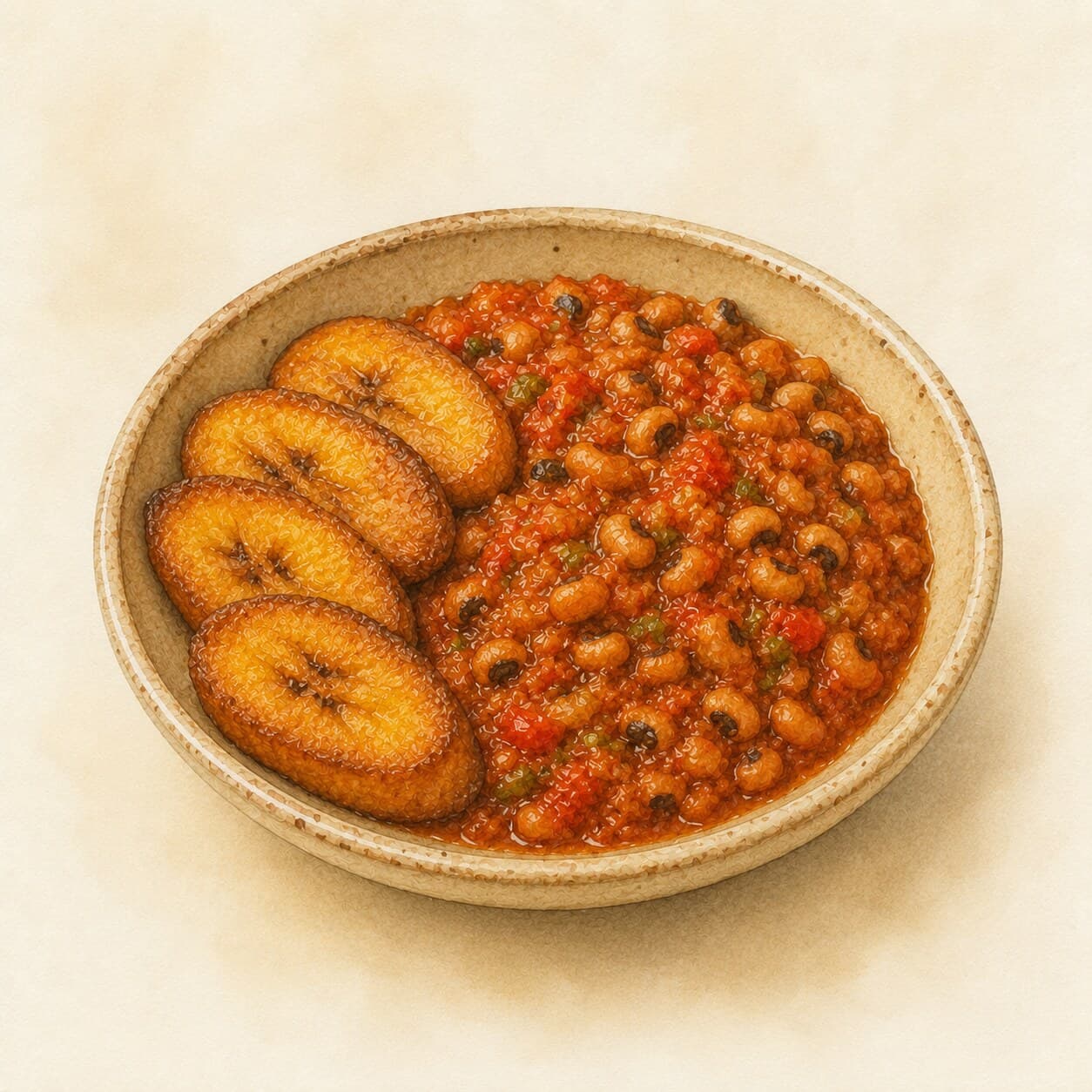
Experience the rich flavors of Ghana with this black-eyed pea stew, enhanced by red palm oil and tomatoes, served alongside fried sweet plantains.
Contents (5 sections)▾
Ingredients
- 300 g black-eyed peas, soaked overnight
- 100 ml red palm oil
- 400 g tomatoes, chopped
- 1 large onion, diced
- 100 g dried fish or shrimp, soaked
- 2 ripe sweet plantains, sliced
- Salt, to taste
- Pepper, to taste
Steps
In a medium pot, heat the red palm oil over medium heat until fragrant, about 2 minutes. This step is crucial as it brings out the unique flavor of the oil.
Add the diced onions and sauté until translucent, about 5 minutes. This softens the onions, allowing their sweetness to enhance the stew.
Stir in the chopped tomatoes, cooking for another 5 minutes until they break down into a sauce. This forms the base of your stew.
Add the soaked black-eyed peas and enough water to cover them. Season with salt and pepper. Simmer for 15-20 minutes until the peas are tender. Stir occasionally to prevent sticking.
Meanwhile, in a separate pan, fry the sliced sweet plantains in a little oil over medium heat until golden brown on both sides, about 3-4 minutes per side.
Once the black-eyed peas are cooked, add the soaked dried fish or shrimp, allowing it to heat through for about 2-3 minutes. This adds a savory depth to the stew.
Why this works
The combination of black-eyed peas and red palm oil creates a hearty stew that is both satisfying and flavorful. The two reds—palm oil and tomatoes—contribute to the dish's vibrant color and enhance its taste profile, with the oil providing a rich, nutty flavor and the tomatoes adding acidity. The trick with black-eyed peas is ensuring they are tender but not mushy, which can be achieved by soaking them overnight and simmering them just until cooked through. If the stew seems too thick, simply add a bit more water to achieve the desired consistency. The fried plantains add a sweet contrast, balancing the savory stew beautifully. This dish is not just delicious; it’s a complete meal that embodies the essence of Ghanaian cuisine.
Common mistakes
Skipping the overnight soak, or rushing dried peas straight into the pot.
Target: Soak the black-eyed peas overnight in plenty of water before cooking, as the recipe specifies.
Why it matters: Dried beans that go straight into the pot without soaking take far longer to cook and often cook unevenly, staying chalky at the center while their skins split and turn mushy on the outside.
What to do: Plan ahead and soak the peas overnight (or at least several hours) in cold water, then drain and rinse before adding them to the pot.
Not warming the palm oil enough before adding the aromatics.
Target: Heat the red palm oil until fragrant, about 2 minutes, before adding the onions.
Why it matters: Red palm oil carries much of its distinct, slightly nutty flavor in aromatic compounds that need gentle heat to open up; onions dropped into cold or barely warm oil steam rather than sauté, and the dish loses some of the oil's character.
What to do: Give the oil those first couple of minutes over medium heat — you should be able to smell it — before the onions go in.
Boiling the peas hard, or pulling them before they're tender.
Target: Simmer the black-eyed peas gently until tender all the way through — soft but still holding their shape, not mushy or falling apart.
Why it matters: A hard boil can split and slough off the peas' skins while the interior is still firm, giving an uneven, half-and-half texture; cooking them beyond tender, on the other hand, turns the whole pot to mush and thickens the stew unpredictably.
What to do: Keep the pot at a steady, gentle simmer rather than a rolling boil, and start checking for doneness — bite one; it should be soft with no chalky center — a few minutes before the recipe's time is up.
Overcrowding the pan or using too little oil when frying the plantains, so they steam instead of browning.
Target: Fry the sliced sweet plantains in a single layer with enough oil to coat the pan, until golden brown on both sides.
Why it matters: Sweet plantains need real contact with hot oil to caramelize (brown and sweeten under heat as their natural sugars cook) into that golden-brown color and slightly crisp edge; too many slices crammed into a dry pan release moisture and steam instead of frying, leaving them pale and soft rather than caramelized.
What to do: Fry in batches if needed, keep the oil at a steady medium heat, and let each side develop real color before flipping.
What to look for
- Black-eyed peas soft enough to mash easily between two fingers, but still holding their shape in the stew. That's tender without going mushy; a chalky, firm center means they need more time.
- A stew with a rich reddish-brown color from the palm oil and tomatoes, thick enough to cling to a spoon. Too thin and watery means it needs more time uncovered to reduce; add a splash of water if it looks too thick or starts sticking.
- Plantain slices that are deep golden-brown at the edges, not pale yellow or greasy-soft. That color means the natural sugars caramelized properly; pale slices mean the oil wasn't hot enough or the pan was too crowded.
A note on history
Red red is closely tied to southern Ghana, where it grew out of everyday bean dishes built on cowpeas (black-eyed peas) and red palm oil, both long-standing staples of the region. The dish takes its name from its two "reds": the deep color the red palm oil gives the beans, and the golden-red hue of the fried ripe plantains served alongside.
It's generally described as a comparatively modern, urban staple — closely associated with street food and everyday eating in cities like Accra — rather than a dish with an ancient or ceremonial pedigree, though it draws on much older West African traditions of simmering beans in oil-rich, tomato-based sauces, the same broad family of cooking that produced Ghana's waakye, a rice-and-beans dish with its own path across the region (Wikipedia).
Get the essays in your inbox — free
Weekly notes on flavor, fermentation, and food history — the writing behind the Atlas of Flavor. No spam; unsubscribe anytime.