
Waakye
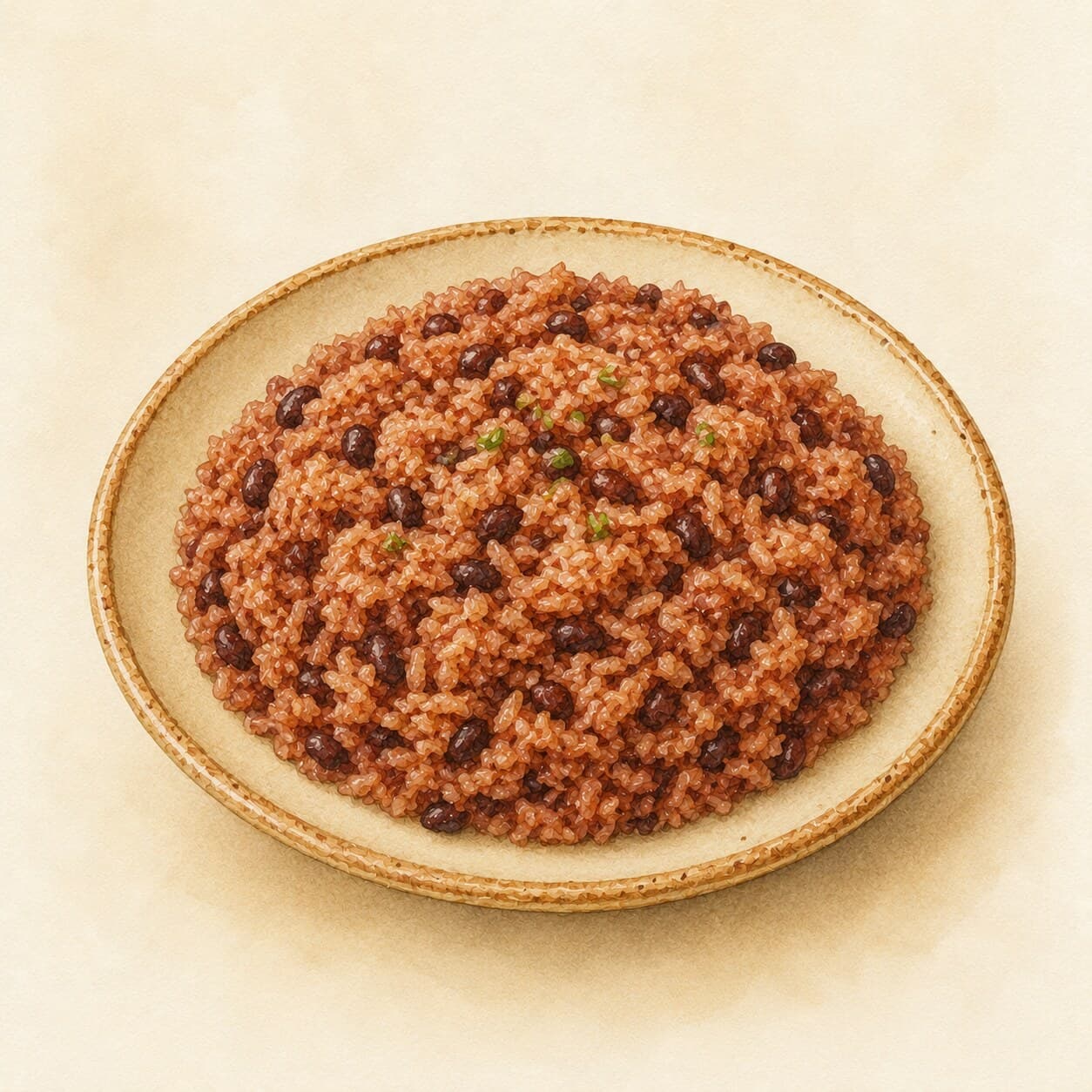
Waakye is a traditional Ghanaian dish of rice and beans, uniquely colored with dried sorghum leaves.
Contents (5 sections)▾
Ingredients
- 2 cups long-grain rice
- 1 cup black-eyed peas, soaked for 2 hours
- 2-3 dried sorghum stalks or leaves
- 1 teaspoon salt
- 6 cups water
Steps
In a large pot, combine the soaked black-eyed peas and 6 cups of water. Bring to a boil over medium-high heat for about 10 minutes.
Add the dried sorghum stalks or leaves to the boiling water and continue boiling for an additional 5 minutes to extract the color.
Stir in the long-grain rice and salt. Reduce the heat to low, cover the pot, and simmer for 20 minutes until the rice and beans are tender and the water is absorbed.
Remove from heat and let it sit, covered, for another 5 minutes to allow the flavors to meld before serving.
Why this works
The combination of long-grain rice and black-eyed peas creates a delightful texture and flavor, while the dried sorghum leaves impart a distinct red-brown color to the dish. Cooking everything in one pot ensures that the flavors meld beautifully, making each bite a cohesive experience. The soaking of the black-eyed peas is crucial as it reduces cooking time and helps achieve a tender texture. If the rice seems too dry during cooking, you can add a little more water, stirring gently to avoid breaking the grains. Conversely, if it appears too watery, increase the heat slightly to allow more steam to escape, helping the excess moisture evaporate without overcooking the rice. This technique enhances the visual appeal and embodies the essence of traditional Ghanaian culinary practices.
Common mistakes
Skipping or shortening the bean soak.
Target: Soak the black-eyed peas for the full time called for, longer if you have it to spare, before they go anywhere near the pot.
Why it matters: Dried beans that go into the pot unsoaked take much longer to soften and can cook unevenly, with tough or chalky centers even after the outside looks done, throwing off the timing for when the rice should go in.
What to do: Plan ahead and give the peas a proper soak in plenty of water; if you forgot, budget real extra simmering time before adding the rice.
Adding the rice before the beans are already tender.
Target: Confirm the black-eyed peas are tender before stirring in the rice, since the two ingredients need very different amounts of cooking time.
Why it matters: Rice cooks through in well under 20 minutes, while dried beans need much longer to soften. Add the rice at the same time as still-firm beans, and you'll end up with blown-out, mushy rice sitting next to beans that are still undercooked.
What to do: Taste a bean before adding the rice — it should already be tender, not merely softened at the edges — then stir in the rice and salt.
Lifting the lid and stirring too often once the rice goes in.
Target: Once the rice is added and the pot is covered, resist lifting the lid or stirring more than once or twice for the rest of the cook.
Why it matters: This absorption method (where the rice cooks by soaking up a measured amount of water rather than boiling in an excess) depends on steady, trapped steam to cook the grains evenly. Frequent lid-lifting lets that steam escape, which can leave the rice undercooked on top or scorched on the bottom by the time the rest catches up.
What to do: Set a timer and only check near the very end, or sooner if you smell scorching.
Not giving the dried sorghum enough time before it comes back out of the pot.
Target: Let the dried sorghum stalks or leaves simmer for the full time in the initial water, rather than shortcutting that step.
Why it matters: Waakye's signature red-brown color and subtle depth come entirely from compounds released by the dried sorghum during that simmer. Pulling it early, or using too little, leaves a pale, undercolored dish that looks more like plain rice and beans.
What to do: Let it simmer the full time given, and if the color still looks weak, let it go a few minutes longer before moving on to the rice.
What to look for
- Rice and beans with an even reddish-brown color throughout, not just on the surface. That even tint means the sorghum had enough time to release its color before the rice went in.
- Beans that are tender all the way through, with no chalky or firm center when you bite one. Since beans take longer than rice, check them specifically, not just the rice.
- Grains of rice that are separate and tender, not mushy or sitting in standing water. All the water should be absorbed into fully cooked rice by the end of the simmer.
- A pot bottom free of scorching when you finally check. A faint nutty smell is fine, but a sharp burnt smell means the heat ran too high or the lid came off too often.
A note on history
The name waakye comes from Hausa, a major West African language, where it is a contraction of a longer phrase meaning "rice and beans." That points to the dish's roots among Hausa communities and other groups from Ghana's north, rather than the coastal south where Accra sits.
Traders and migrants are generally understood to have carried the dish from Ghana's north down to southern cities over generations, and it took root in "zongo" neighborhoods (settlements historically associated with Muslim and northern-Ghanaian communities in southern towns) before spreading well beyond them to become one of the most widely eaten dishes across the country — sold everywhere from roadside stalls to office-worker lunch spots, typically wrapped in leaves and served with an array of sides that vary by region and vendor.
Get the essays in your inbox — free
Weekly notes on flavor, fermentation, and food history — the writing behind the Atlas of Flavor. No spam; unsubscribe anytime.