
Pol Sambol
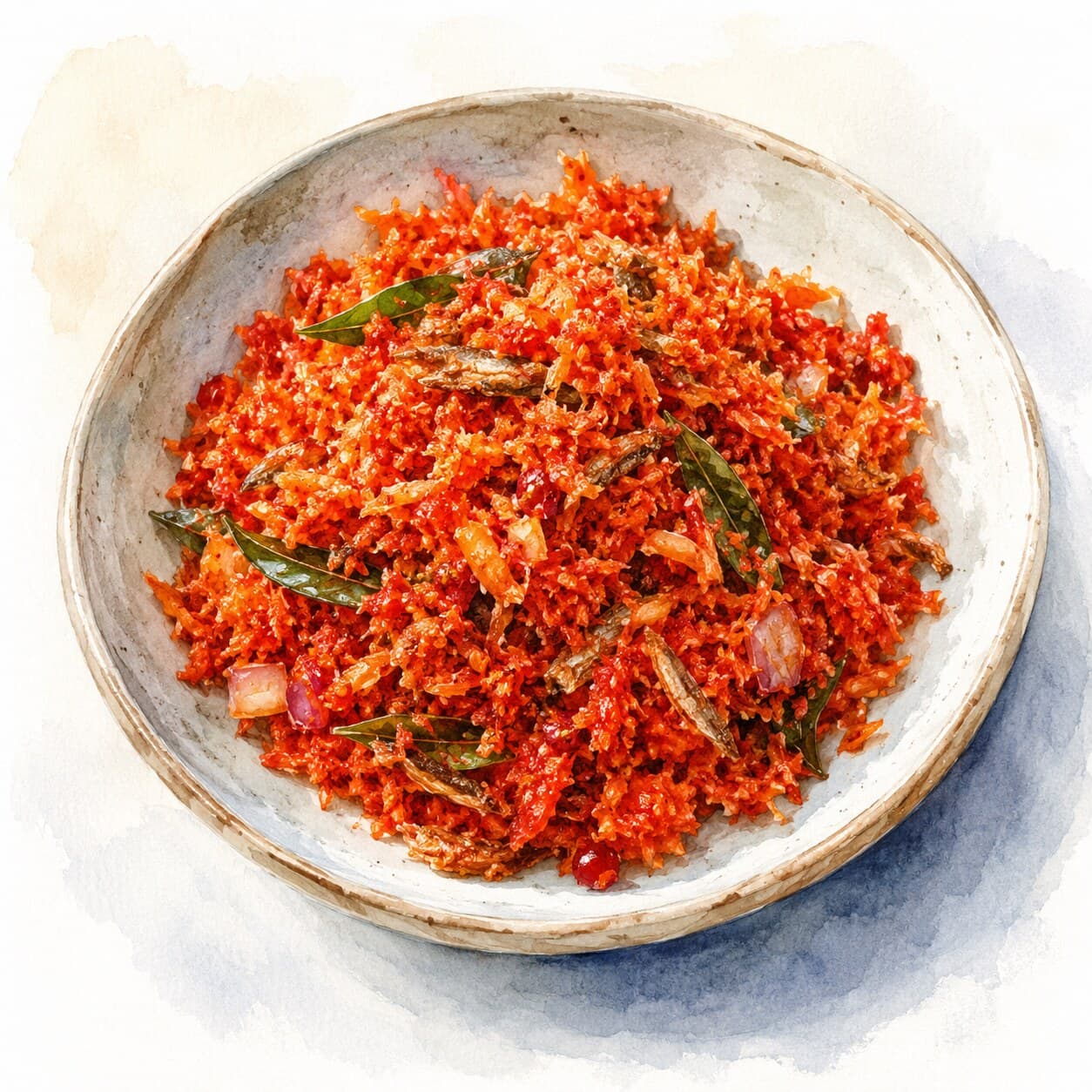
Pol Sambol is a vibrant Sri Lankan coconut chili relish, perfect as a flavorful side dish.
Contents (5 sections)▾
Ingredients
- 200 g grated fresh coconut
- 2 tbsp chili powder
- 30 g dried Maldive fish or salt to taste
- 1 lime, juiced
- 1 medium red onion, finely chopped
Steps
In a mortar and pestle, combine the grated coconut and chili powder. Pound together for about 5 minutes until the coconut releases its oil and blends well with the chili.
Add the dried Maldive fish (or salt) and continue to pound for an additional 3 minutes. This helps incorporate the flavors fully.
Stir in the lime juice and finely chopped red onion. Mix thoroughly to combine all ingredients.
Taste and adjust seasoning with more salt or lime juice if necessary. Serve immediately for the best flavor.
Why this works
The technique of pounding fresh coconut with chili in a mortar allows the natural oils in the coconut to blend seamlessly with the spices, creating a rich, flavorful relish. This method ensures the coconut's texture remains intact while releasing essential oils that enhance the dish's overall flavor. The addition of dried Maldive fish adds a savory umami depth, but if you prefer a vegetarian option, salt can be used instead. If the mixture seems too dry, add a splash more lime juice to help bind and moisten the ingredients. This balance of spice and acidity is crucial; if you find the chili flavor overwhelming, adjust by adding more coconut or lime juice to temper it. The result is a lively condiment that pairs beautifully with rice or bread, showcasing the vibrant flavors of Sri Lankan cuisine.
Common mistakes
Using desiccated or sweetened coconut instead of fresh grated coconut.
Target: Use fresh grated coconut (or thawed frozen grated coconut), not the dried, shredded, or sweetened coconut sold for baking.
Why it matters: Fresh coconut carries moisture and natural oil that releases when pounded, binding the relish together and carrying the chili's flavor. Dried, shredded coconut is dehydrated and often sweetened — it won't release oil the same way, and it adds an unwanted sweetness that fights the chili and lime.
What to do: Look for fresh or frozen grated coconut, commonly sold in Asian or South Asian grocers; if you truly can't find either, rehydrating unsweetened desiccated coconut in a little warm water is a closer substitute than the sweetened baking kind.
Chopping or blitzing the coconut in a food processor instead of pounding it.
Target: Use a mortar and pestle (or the back of a heavy spoon in a sturdy bowl) to pound, not just chop, the coconut and chili together.
Why it matters: Pounding bruises and crushes the coconut's fibers so they release oil and blend into the chili and salt; a quick food-processor chop just cuts the shreds into smaller shreds without breaking them open the same way, leaving a drier, less cohesive relish.
What to do: Work in the mortar with real pressure and a grinding motion, not just a few taps, until you can see and smell the coconut's oil coming through.
Skipping the dried fish (or its salt substitute) and under-seasoning.
Target: Use the dried Maldive fish (a salted, dried tuna traditional to the dish), or, if avoiding it, season with salt to taste — not neither.
Why it matters: Dried Maldive fish gives pol sambol a savory, umami-rich (deep, savory-tasting) backbone that coconut and chili alone can't provide; leaving it out without adding enough salt in its place results in a flat, one-note relish.
What to do: If you skip the fish for a vegetarian version, season more assertively with salt than you might expect, tasting as you go to replace the savory depth it would have added.
Making it too far ahead and letting it sit.
Target: Serve pol sambol shortly after making it, rather than storing it for days.
Why it matters: Once lime juice and salt hit the fresh coconut, the relish begins to break down — the coconut can turn soggy and the bright, sharp lime flavor fades as it sits, dulling the contrast that makes the dish work.
What to do: Make it close to serving time; if you must prepare ahead, hold off on adding the lime juice and onion until just before the meal.
What to look for
- Coconut that looks faintly glossy, not dry and powdery. That sheen is the released coconut oil binding the relish; a matte, crumbly look means it needs more pounding.
- An even reddish-pink color throughout, not streaky white patches. Even color means the chili has been worked all the way through the coconut rather than sitting on top of it.
- A balance where no single note — heat, salt, or acid — overwhelms the others. Taste for chili heat, salt (or dried-fish umami), and lime acidity all coming through together; if one dominates, adjust with a little more coconut, salt, or lime juice.
A note on history
Pol sambol takes its name from two words: pol, Sinhala for coconut, and sambol, the Sri Lankan word for a range of spicy condiments usually eaten raw or only lightly cooked. Sambol itself likely reached Sinhala through "sambal," the chili-based condiment associated with Malay and Indonesian cooking, thought to have arrived via Dutch colonial trade routes between Sri Lanka and Southeast Asia in the 17th and 18th centuries — and some food historians trace the word's roots back further still, through Tamil and Sanskrit terms for a spiced dish.
The coconut base is older than any of that history. Sri Lanka's coastal geography and abundant coconut palms made grated coconut an everyday kitchen staple long before chilies — a New World crop introduced to South Asia by Portuguese traders a few centuries ago — arrived to give the relish its heat. Today pol sambol is an everyday side on Sri Lankan tables, eaten with rice, hoppers, or string hoppers rather than reserved for special occasions (Wikipedia).
Get the essays in your inbox — free
Weekly notes on flavor, fermentation, and food history — the writing behind the Atlas of Flavor. No spam; unsubscribe anytime.