
Tahdig (Persian Crispy Rice)
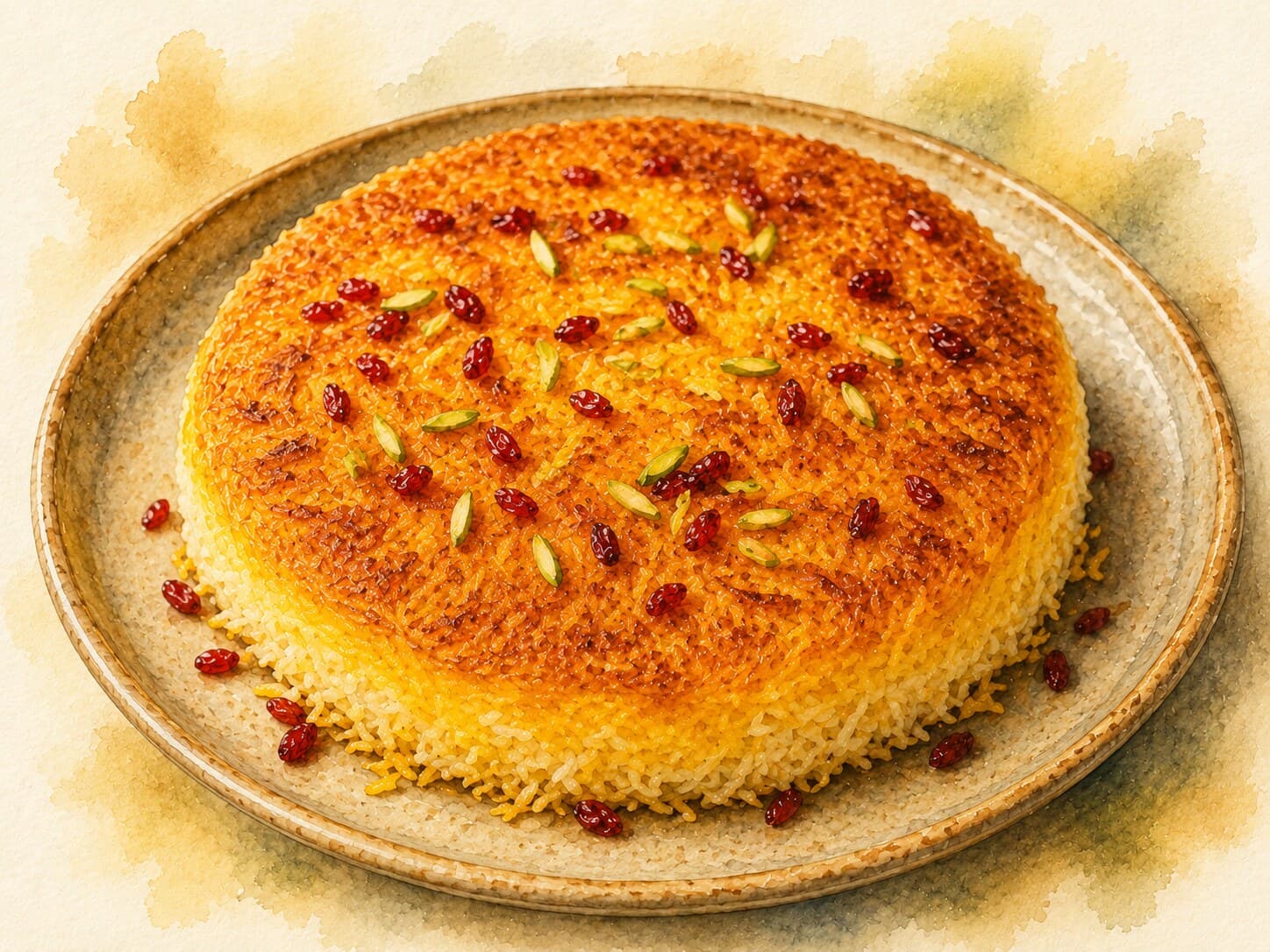
Tahdig, the beloved Persian crispy rice, features a golden crust that transforms a simple dish into a culinary treasure.
Contents (5 sections)▾
Ingredients
- 2 cups basmati rice
- 4 cups water
- 1/4 cup plain yogurt
- 1/4 cup vegetable oil
- 1 tsp salt
- 1/4 tsp saffron threads (optional)
- 2 slices of flatbread (optional)
- to taste black pepper
Steps
Rinse the basmati rice under cold water until the water runs clear, then soak it in water for at least 30 minutes to 1 hour. This step helps to remove excess starch for fluffier rice.
In a large pot, bring 4 cups of salted water to a boil. Add the soaked rice and parboil for 5-7 minutes until slightly tender but still firm. Drain the rice in a colander and let it sit for a few minutes.
In the same pot, heat the vegetable oil over medium heat. If using saffron, dissolve it in 1 tablespoon of hot water and mix it with the yogurt. Spread the yogurt mixture or flatbread on the bottom of the pot, covering the oil.
Layer the parboiled rice over the yogurt or bread, creating a mound. Poke a few holes in the rice with the handle of a wooden spoon to allow steam to escape. Cover the pot with a lid and cook on low heat for 30-35 minutes. This step creates the signature tahdig crust.
Once cooked, carefully flip the pot onto a large serving platter to release the tahdig. If the rice seems too stuck, let it sit for a few more minutes on low heat before attempting to flip.
Why this works
The key to achieving a perfect tahdig lies in the steam-cooking method over a layer of oil (and optionally yogurt or bread). This technique creates a deep-golden, crispy crust while keeping the rice tender and fluffy. The oil heats up and allows the bottom layer of rice to fry, forming a crust that is both shattering and satisfying. If the tahdig breaks during the flipping process, don’t panic—simply use a spatula to piece it back together on the serving platter. The use of yogurt adds flavor and helps create a crispier texture. If you find the crust is not forming well, ensure that you are using enough oil and that the pot is properly covered to trap steam. Cooking on low heat ensures that the rice cooks evenly without burning, making it essential to maintain a steady heat throughout the cooking process.
Common mistakes
Skipping the rinse and soak, or under-parboiling the rice. Target: rinse basmati (the long-grain aromatic rice from the Indian subcontinent, prized in Persian cooking for grains that stay separate and fluffy) until the water runs clear; soak 30–60 minutes; parboil 5–7 minutes only (parboiling means partly boiling — cooking the rice until just half-done in lots of water, then draining and finishing it another way) — grains should bend but the core should still resist a bite. Why it matters: rinsing strips surface starch that would otherwise make grains clump and turn gummy. Soaking lets water enter the grain so it cooks evenly. If you parboil too long, the rice already exhausts its starch in the boiling water and the steaming stage produces a soft, pasty crust instead of a shattering one. What to do: test by squeezing one grain — it should crush with resistance, not paste. Drain in a colander and let it sit for a couple of minutes to dry slightly before layering.
Too much heat, too fast — the crust burns before it browns. Target: medium-high for the first 2–3 minutes (to set the oil sizzle), then drop to low for the long steam (30–35 minutes). The sizzle should sound steady, never aggressive; the kitchen smells of toasted rice, not scorched. Why it matters: the golden crust forms through Maillard browning (the chemistry that turns toast brown), which is a slow reaction — high heat shortcuts it into smoke and bitterness. Burned tahdig is not rescuable; the bitterness penetrates the rice above it. What to do: if you smell scorch, immediately remove the pot from the heat, take the lid off, and lift the pot onto a damp folded towel for 5 minutes — the steam will loosen the crust enough to spatula it out, and you can salvage the unburned layer.
Forgetting the towel under the lid; condensation drips back in and softens the crust. Target: wrap the lid in a clean kitchen towel (folded edges on top to keep them away from the flame) before covering, or use a paper-towel layer under the lid. Why it matters: as steam escapes from the rice and hits the cold lid, it condenses and drips back down — soaking the top of the rice and any partial crust below. A trapped towel catches that water and keeps the rice fluffy. What to do: never let towel edges hang near a gas flame. Tuck them up and over the lid handle.
Flipping while the crust is still soft. Target: at the end of cooking, let the pot rest off the heat for 5 minutes; you should see a thin oily edge around the rim, and the pot should feel light when you slide it (the crust has detached). Why it matters: a hot, still-soft crust will tear during the flip. The cool-down lets steam recede and the bottom layer crisp-set so it releases as a single golden disc. What to do: if it sticks even after resting, set the pot bottom briefly on a wet folded towel for 30 seconds; the thermal shock helps release the crust.
What to look for
- A steady sizzle, never a roar. Lean down and listen near the pot — gentle crackling means the oil is doing its work; aggressive popping means heat too high.
- Toasted-rice aroma, not bitter smoke. A nutty, popcorn-like smell rising from the lid is the signal the crust is forming. Sharp acrid smoke means stop now.
- Steam puffing from under the lid. Until about 20 minutes in, you want visible steam — that means the rice above is steaming through. When the steam tapers, the cook is almost finished.
- A clean release on the flip. A finished tahdig comes out in one glossy, deep-golden disc with visible grain texture. Patchy white spots mean undercooked crust; dark brown-black means scorched.
A note on history
Tahdig — Persian tah (bottom) + dig (pot) — emerged from the long tradition of rice cultivation along Iran's Caspian coast, where rice has been grown for thousands of years and Persians developed a distinctive layered-and-steamed approach to cooking it (MasterClass, Aish). The crispy bottom layer was the prized payoff of this method and became its own art form, with regional variations using bread, potato slices, or yogurt as the base layer (Tablet Magazine).
Get the essays in your inbox — free
Weekly notes on flavor, fermentation, and food history — the writing behind the Atlas of Flavor. No spam; unsubscribe anytime.