
Ghormeh Sabzi (Persian Herb Stew)
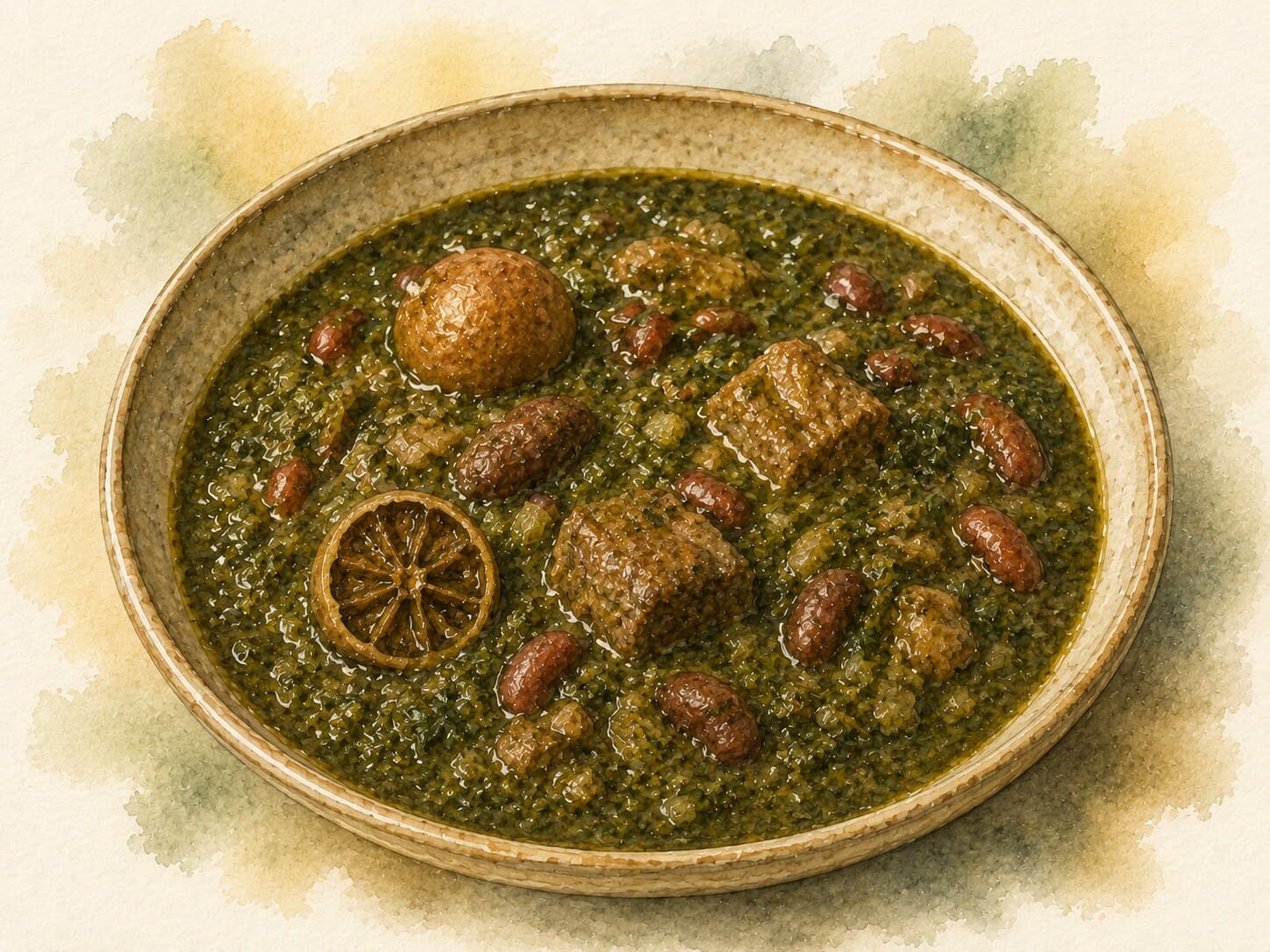
Ghormeh Sabzi is a rich Persian herb stew featuring lamb, beans, and dried lime, simmered to perfection.
Contents (5 sections)▾
Ingredients
- 500 g lamb, cubed
- 300 g fresh parsley, chopped
- 200 g fresh cilantro, chopped
- 100 g fresh chives, chopped
- 100 g dried kidney beans, soaked overnight
- 4 dried limes, pierced
- 2 medium onions, finely chopped
- 4 cloves garlic, minced
- 2 tbsp vegetable oil
- 1 tsp turmeric
- Salt to taste
- Pepper to taste
- Water as needed
Steps
In a large pot, heat 2 tablespoons of vegetable oil over medium heat. Add the chopped onions and sauté until they are translucent, about 5 minutes.
Add the garlic and turmeric, stirring for another minute until fragrant. Then, add the lamb cubes to the pot, browning them on all sides, which should take about 10 minutes.
In a separate pan, add the chopped herbs and fry them over medium heat until they darken, about 15-20 minutes. This step enhances their flavor profile.
Combine the fried herbs with the lamb and onions in the pot. Add the soaked beans, pierced dried limes, salt, and pepper. Pour in enough water to cover the ingredients and bring to a boil.
Reduce the heat to low, cover, and simmer for 1.5 to 2 hours, stirring occasionally. The stew should thicken and the flavors meld beautifully.
Why this works
The key to Ghormeh Sabzi's signature flavor lies in the cooking technique of frying the herbs until they darken. This process intensifies their flavor and adds depth to the stew, creating a complex, savory base. The long braising time (slow cooking in a small amount of liquid with the lid on) allows the lamb to become tender and the beans to cook through, while the dried limes introduce a unique sourness that balances the rich flavors. If the stew seems too thick towards the end, add a little water to adjust the consistency. Conversely, if it appears too watery, let it simmer uncovered for a bit longer to allow excess liquid to evaporate. Patience in cooking transforms this stew's simple ingredients into a deeply satisfying dish.
Common mistakes
Under-frying the herbs.
Target: 15–25 minutes of patient sautéing (frying in a little hot fat) until the bright spring green darkens to a deep, almost army-green olive color and the smell shifts from grassy to roasted-savory.
Why it matters: The signature flavor of ghormeh sabzi is not the freshness of the herbs but their transformation. Heat oxidizes chlorophyll and triggers Maillard reactions (the browning reaction between amino acids and sugars that creates roasted aromas) in the herb proteins. A pale, still-green herb mass tastes thin and "salad-like" in the finished stew.
What to do: Use a wide pan, plenty of oil, medium-low heat, and stir frequently. The herbs will release water, then dry out, then begin to fry. Wait for the color shift — it is the single most reliable doneness cue.
Stewing the dried limes whole without piercing.
Target: Pierce each limoo amani (Persian dried lime) 3–4 times with a fork or paring knife before adding.
Why it matters: Unpierced dried limes float on the surface and barely release their sour, slightly bitter, fermented-citrus character into the stew. Pierced limes let liquid in and aroma out — the whole pot becomes perfumed.
What to do: Pierce, then submerge. If the limes still try to float, weigh them down briefly with a spoon. Halfway through the simmer, press them gently against the side of the pot to release more juice.
Adding beans that are still hard.
Target: Soak red kidney beans overnight (8–12 hours) in cold water; if you forgot, do a quick-soak (boil 2 minutes, cover, rest 1 hour). Beans must finish fully tender, with no chalky center, before serving — kidney beans contain a lectin called phytohemagglutinin that is destroyed only by genuine boiling, so undercooked kidney beans are a real safety concern, not just a texture problem.
Why it matters: Kidney beans need a rolling boil at the start, then a long simmer until soft all the way through. Half-cooked beans are both unpleasant and unsafe.
What to do: Pre-cook the soaked beans in fresh water at a hard boil for 10 minutes, then drain and add to the stew. Continue the long simmer until they crush easily between two fingers.
Salting the meat and beans too early.
Target: Add most of the salt in the last 30–45 minutes of simmering.
Why it matters: Acid — not salt — is what firms bean skins, by stabilizing their pectin, so the dried limes (which are acidic and need a long simmer for their flavor) are the reason the beans should be brought most of the way to tender first; salt's own effect on the skins is slight. Early heavy salt matters for a different reason: it draws moisture out of the meat before it has time to braise into tenderness, and the dried lime's salt-like savor means early over-seasoning leads to an over-salted finish.
What to do: Season lightly when browning the meat for flavor, then taste and adjust at the end, after the beans are fully soft and the limes have done their work.
What to look for
- After frying the herbs: deep olive-green, almost khaki, with a roasted, hay-like smell. If it still smells like fresh parsley, keep going.
- Halfway through the simmer: the surface should show a thin slick of green-tinted oil and the dried limes should have sunk and softened. That oil layer is flavor, not failure — do not skim it all off.
- Just before serving: the stew is dark green-brown, slightly thickened, with beans tender all the way through and meat falling apart at the touch of a spoon.
- Taste profile at the finish: sour first from the dried limes, then savory from the meat and herbs, then a gentle bitter edge from the lime peel. If sourness is weak, press a soaked lime against the pot wall to release more juice.
A note on history
Ghormeh sabzi is widely considered one of Iran's national dishes, with roots reaching deep into Persian culinary history; some accounts place an early form during the Safavid dynasty (1501–1736), and the dish has long served as a way to capture the flavor of fresh herbs across the seasons (Wikipedia, Cyprus Mail). The name itself describes the method: ghormeh is borrowed from the Turkish kavurmak, "to braise" or "to fry slowly," while sabzi is the Persian word for greens or herbs — the dish is, quite literally, "braised herbs" (Wikipedia).
Get the essays in your inbox — free
Weekly notes on flavor, fermentation, and food history — the writing behind the Atlas of Flavor. No spam; unsubscribe anytime.