
Pernil
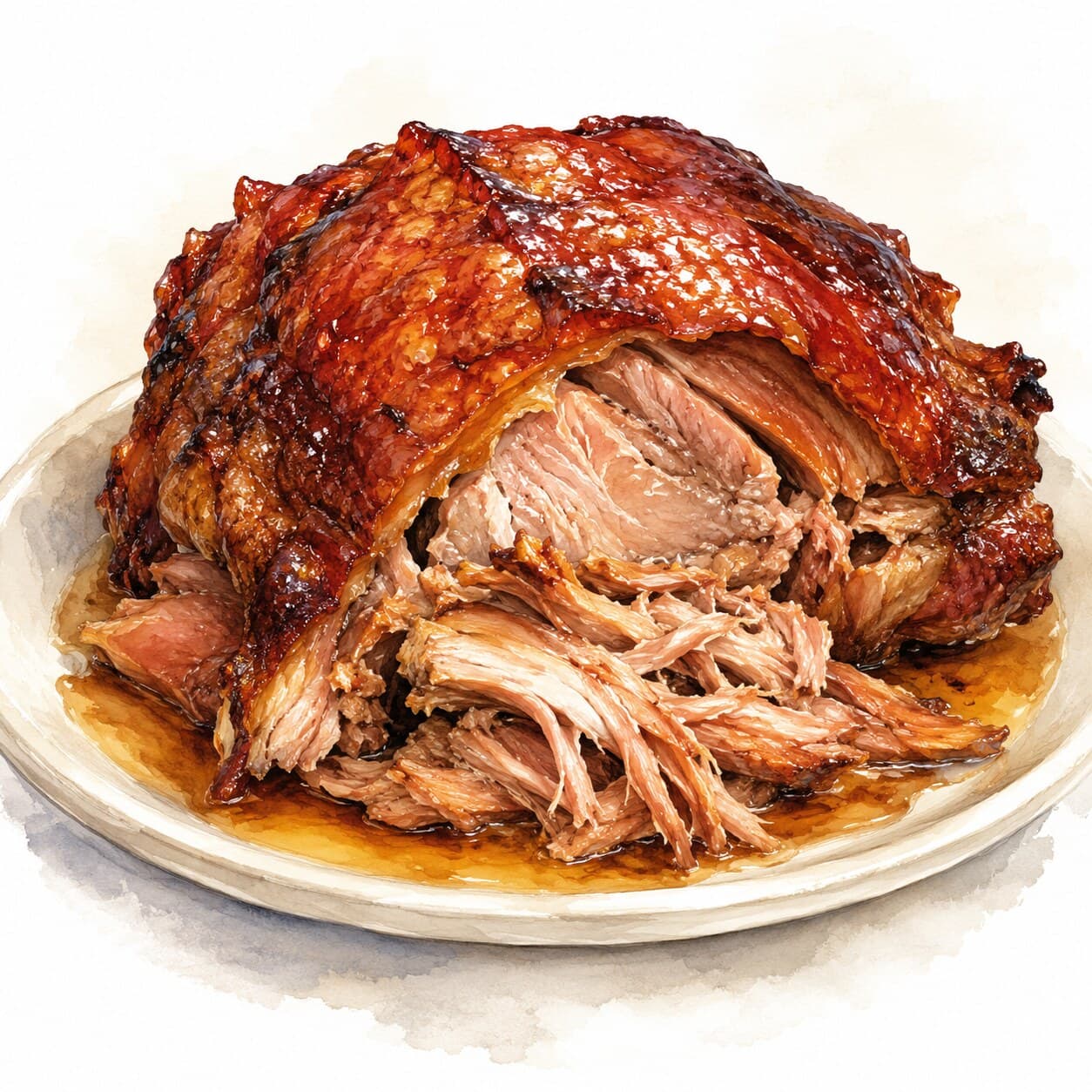
This Puerto Rican Pernil features a succulent slow-roasted pork shoulder with crispy skin, perfect for festive gatherings.
Contents (5 sections)▾
Ingredients
- 3 kg bone-in pork shoulder
- 10 cloves garlic, minced
- 2 tbsp dried oregano
- 1 cup sour orange juice
- 2 tbsp salt
- 1 tsp black pepper
- 1/4 cup vinegar
Steps
In a bowl, combine 10 cloves of minced garlic, 2 tablespoons of oregano, 1 cup of sour orange juice, 2 tablespoons of salt, 1 tablespoon of black pepper, and 1/2 cup of vinegar to create a marinade.
Make deep incisions, about 1 inch apart, into the pork shoulder to allow the marinade to penetrate. Rub the marinade all over the pork, ensuring it fills the incisions.
Cover the marinated pork shoulder with plastic wrap and refrigerate for at least 12 hours, preferably overnight, to enhance flavor absorption.
Preheat the oven to 150°C (300°F). Place the marinated pork in a roasting pan, skin side up.
Roast the pork in the preheated oven for approximately 12-14 hours, or until the internal temperature reaches 88°C (190°F) and the meat is tender.
Increase the oven temperature to 230°C (450°F) for the last 30-45 minutes to achieve a crispy crackling skin.
Remove the pork from the oven and let it rest for 20 minutes before slicing.
Why this works
The key to a successful Pernil lies in the overnight marinade, which allows the pork shoulder to absorb the rich flavors of garlic, oregano, and sour orange. The low-temperature roasting at 150°C (300°F) for 12-14 hours breaks down the collagen in the meat, resulting in tender, juicy pork. The final high-temperature blast at 230°C (450°F) for 30-45 minutes creates that iconic crispy skin, adding texture to the dish. If your skin doesn't crisp as desired, simply broil it for an additional 5-10 minutes, watching closely to avoid burning. This method balances moisture and flavor, ensuring every bite is succulent and satisfying. The long cooking time allows for the transformation of tough cuts into tender meat, making it an ideal dish for special occasions and gatherings. The combination of a well-prepared marinade and a carefully controlled cooking process is essential for achieving the desired outcome.
Common mistakes
Skipping or shortening the incisions and the overnight marinade.
Target: Cut deep slits across the pork shoulder about 2.5 cm (1 inch) apart, work the marinade into them, and refrigerate for at least 12 hours, ideally overnight.
Why it matters: Pork shoulder is a thick, dense cut; a marinade rubbed only on the surface barely reaches past the first few millimeters. The incisions give the garlic, oregano, and sour orange a path down into the muscle, so the seasoning flavors the inside of the roast, not just the crust.
What to do: Make the cuts before marinating, press some marinade into each one with your fingers, then cover and refrigerate for the full time — don't shortcut it to a couple of hours.
Roasting hot and fast instead of low and slow.
Target: Roast at a low 150°C (300°F) for the full 12-14 hours, judging doneness by internal temperature and fork-tenderness rather than the clock alone.
Why it matters: Pork shoulder is loaded with collagen (the connective tissue that holds tough muscle fibers together) that only softens with many hours of gentle heat. Blast it at a high temperature from the start and the outside dries out or scorches long before the inside becomes tender.
What to do: Keep the oven low for the entire first stage, and only raise the heat at the very end to crisp the skin — never the reverse.
Cranking the heat for crackling before the meat is fully cooked and tender.
Target: Raise the oven to a high 230°C (450°F) only for the final 30-45 minutes, after the pork has already reached a well-done internal temperature (about 88°C/190°F) and is fork-tender, with no pink remaining.
Why it matters: The high-heat blast is a finishing step meant to dry and blister the skin into crackling, not a shortcut for cooking the meat through. Doing it earlier leaves the interior undercooked while the outside burns.
What to do: Confirm with a meat thermometer (a probe that reads the internal temperature of the meat) that the pork is fully cooked and tender at low heat first, then raise the oven temperature only for the last stretch, watching closely so the skin blisters and crisps rather than blackens.
Slicing the pork straight out of the oven.
Target: Let the roast rest, loosely tented, for about 20 minutes before slicing.
Why it matters: A cut this size comes off the oven very hot; slice into it immediately and more of that hot juice runs onto the cutting board. A rest lets it come off its peak before carving, so less runs out at the knife.
What to do: Set the pernil aside on a board or platter for the full resting time before carving, leaving the skin uncovered so it stays crisp.
What to look for
- Skin that sounds hollow and crackles audibly when tapped or cut. That crisp, blistered shell — not soft or rubbery — is the sign the final high-heat blast worked.
- Meat that pulls apart easily with a fork, with no pink anywhere — only white-to-golden, fully cooked tones. Well past any raw color is correct and safe for a long-roasted pork shoulder like this.
- Juices that run clear, confirmed by a thermometer reading the interior is well done. Combined with fork-tenderness, this is your sign that the long roast has finished its job.
A note on history
Pernil traces back to Spain's long tradition of slow-roasting whole or half a pig — the same lineage behind Cuban lechón and other whole-roast-pork dishes found across the Spanish-speaking Caribbean. That tradition arrived in Puerto Rico during the colonial era and was reshaped with local ingredients, most notably the sour orange and oregano in the marinade. Pork was practical for feeding a crowd, and over time this long, slow roast shifted from everyday fare into a dish reserved for real celebrations.
Today pernil is one of the fixed points of a Puerto Rican Nochebuena (Christmas Eve) table, typically served alongside rice with pigeon peas (arroz con gandules).
Get the essays in your inbox — free
Weekly notes on flavor, fermentation, and food history — the writing behind the Atlas of Flavor. No spam; unsubscribe anytime.