
Mofongo
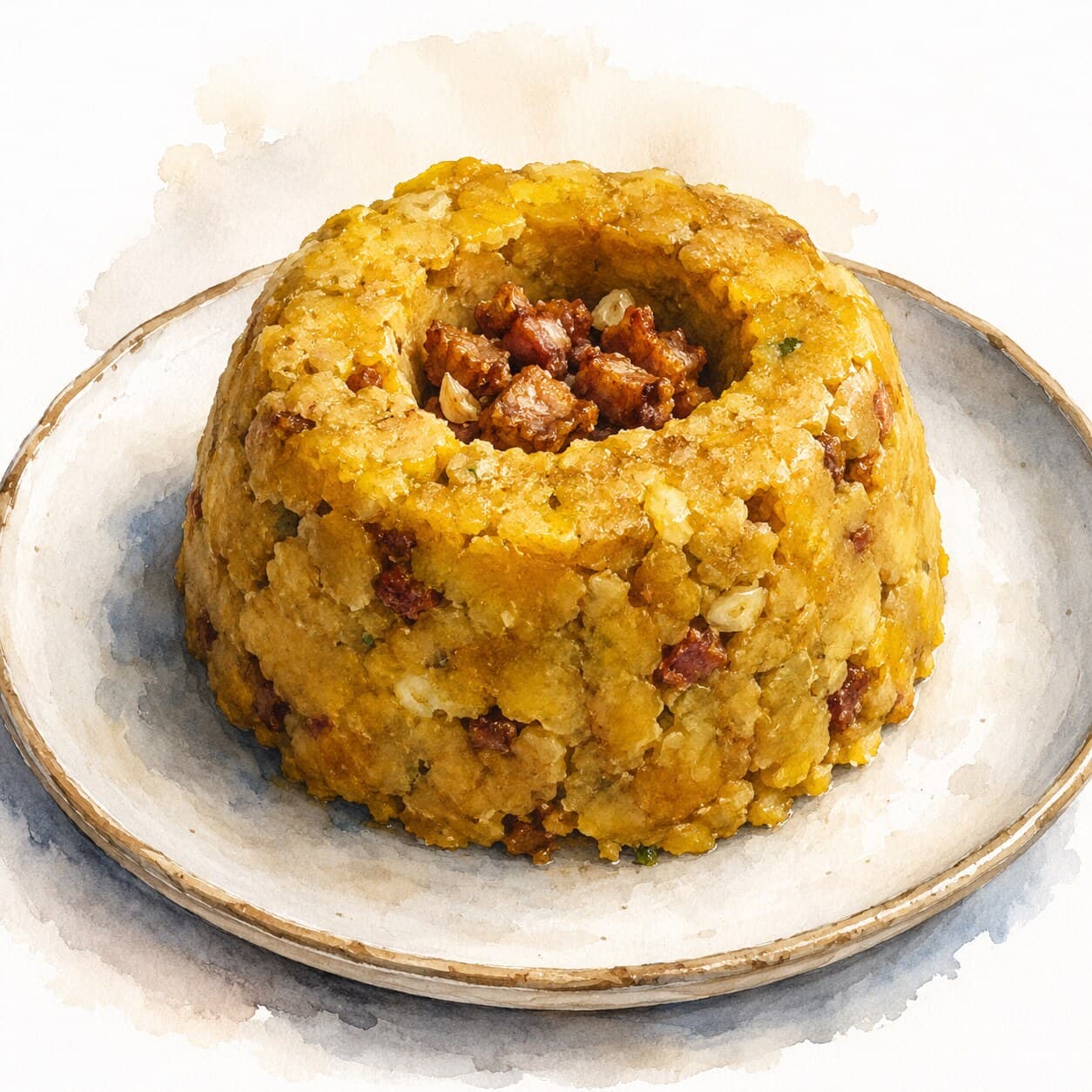
Mofongo is a traditional Puerto Rican dish made of fried green plantains, garlic, and chicharrón, often served with a savory filling.
Contents (5 sections)▾
Ingredients
- 4 green plantains, peeled and cut into 1-inch pieces
- 4 cloves garlic, minced
- 1 cup pork rinds (chicharrón), crushed
- 1/4 cup olive oil
- 1 teaspoon salt, or to taste
- 1 cup shrimp, cooked and seasoned (optional filling)
- 1 cup stewed meat, seasoned (optional filling)
Steps
In a large pot, heat oil over medium heat (around 180°C/350°F). Fry the green plantain pieces for about 5-7 minutes until they are golden and tender.
Remove the fried plantains and drain on paper towels. While still warm, mash the plantains in a large bowl with minced garlic, salt, and crushed chicharrón until smooth yet slightly chunky.
Shape the mofongo mixture into a dome, creating a well in the center for filling. If the mixture is too dry, add a little olive oil; if too wet, incorporate more chicharrón.
Fill the center with cooked shrimp or stewed meat, then cover with more mofongo mixture to seal. Serve warm.
Tools you'll want
Why this works
The technique of frying green plantains (a starchy cooking banana, firmer and less sweet than a dessert banana) until golden creates a robust flavor and texture that is essential for mofongo. The combination of garlic and chicharrón enhances taste and contributes to the dish's signature umami (deep savory taste) profile. Mashing while warm ensures a smoother consistency, allowing for easier shaping into a dome. If the mofongo mixture breaks apart while shaping, it may be too dry; adding a little olive oil can help bind it. Conversely, if it feels too wet, mixing in additional crushed chicharrón can give it the necessary structure. This balance of ingredients and technique is crucial to achieving the perfect mofongo that holds its shape. Additionally, the option to fill the mofongo with shrimp or meat adds an element of customization, making it versatile for various palates.
Common mistakes
Frying the plantains at too low a temperature.
Target: Keep the oil around 180°C/350°F so the plantain pieces turn deep gold and pierce easily with a fork in the 5-7 minutes the recipe calls for.
Why it matters: Oil that's too cool seeps into the plantain instead of sealing its surface, leaving pieces greasy and starchy at the center — they won't mash into the right texture no matter how long you pound them.
What to do: Test the oil with a small piece first; it should sizzle right away. Fry in batches so the temperature doesn't drop, and check that a piece is soft all the way through before draining.
Letting the plantains cool before mashing.
Target: Mash the plantains while they are still hot, straight from draining.
Why it matters: Warm plantain starch mashes smoothly and binds around the garlic and chicharrón (fried pork rinds); once it cools, the starch firms up and the mash turns stiff and gluey, resisting a good dome shape.
What to do: Have the garlic, salt, and chicharrón measured out and ready before frying, so you can mash immediately while the plantain is still steaming.
Filling the dome with a protein that isn't fully cooked.
Target: If filling with shrimp, cook it until fully opaque and curled into a "C" shape; if filling with stewed meat or pork, make sure it shows no pink and is cooked through before it goes into the well.
Why it matters: All the attention during shaping goes to the mash, but the mofongo itself is served warm, not baked — it won't finish cooking an underdone filling. An undercooked shrimp or meat center is a genuine food-safety risk, not just a texture issue.
What to do: Cook the filling fully in its own pan first and check it before spooning it into the dome; treat the mash and the filling as two separate cooking tasks that both need to reach doneness on their own.
Overworking the mash into a smooth paste.
Target: Mash just until the mixture holds together, with small flecks of plantain and chicharrón still visible.
Why it matters: Mofongo's texture is meant to be rustic — smooth yet slightly chunky, as the dish calls for. Pounding or processing it too long releases more starch and turns it gummy, closer to wallpaper paste than a dome with texture to bite into.
What to do: Use a fork, pilón (a wooden mortar and pestle traditionally used for this dish), or a few pulses of a food processor — stop as soon as the mixture comes together.
What to look for
- Plantain pieces that are deep gold outside and easily pierced with a fork. Pale or resistant centers mean they need more time in the oil before mashing.
- A mash that holds a dome shape but still shows small chunks of plantain and chicharrón. A completely smooth, gluey texture signals it was overworked or mashed cold.
- A filling — shrimp or meat — that is fully opaque with no pink or translucence. This is the sign it reached a safe, finished doneness before going into the dome.
- A dome that holds its shape once filled and closed. If it slumps or cracks, the mash needs a touch more chicharrón or a firmer hand when shaping.
A note on history
Mofongo's roots run through several of the cultures that met, often violently, in Puerto Rico's colonial history. When Spanish colonization devastated the island's Indigenous Taíno population, the Spanish brought enslaved West Africans to the island, who carried with them fufu — a pounded dish of boiled plantains, cassava, or yams, made using a mortar-and-pestle technique the Taíno already practiced with their own pilones (mortars). Over time, the Spanish contribution of sofrito (a base of sautéed onions, garlic, herbs, and peppers) joined the mix, and mofongo emerged from this layering of traditions. The food historian Cruz Miguel Ortíz Cuadra traces the dish's name itself to the Kikongo term mfwenge-mfwenge, meaning roughly "a great amount of anything at all" — a linguistic thread back to the Central African languages carried across the Atlantic by enslaved people (Smithsonian Magazine).
Get the essays in your inbox — free
Weekly notes on flavor, fermentation, and food history — the writing behind the Atlas of Flavor. No spam; unsubscribe anytime.