
Pao de Queijo (Brazilian Cheese Bread)
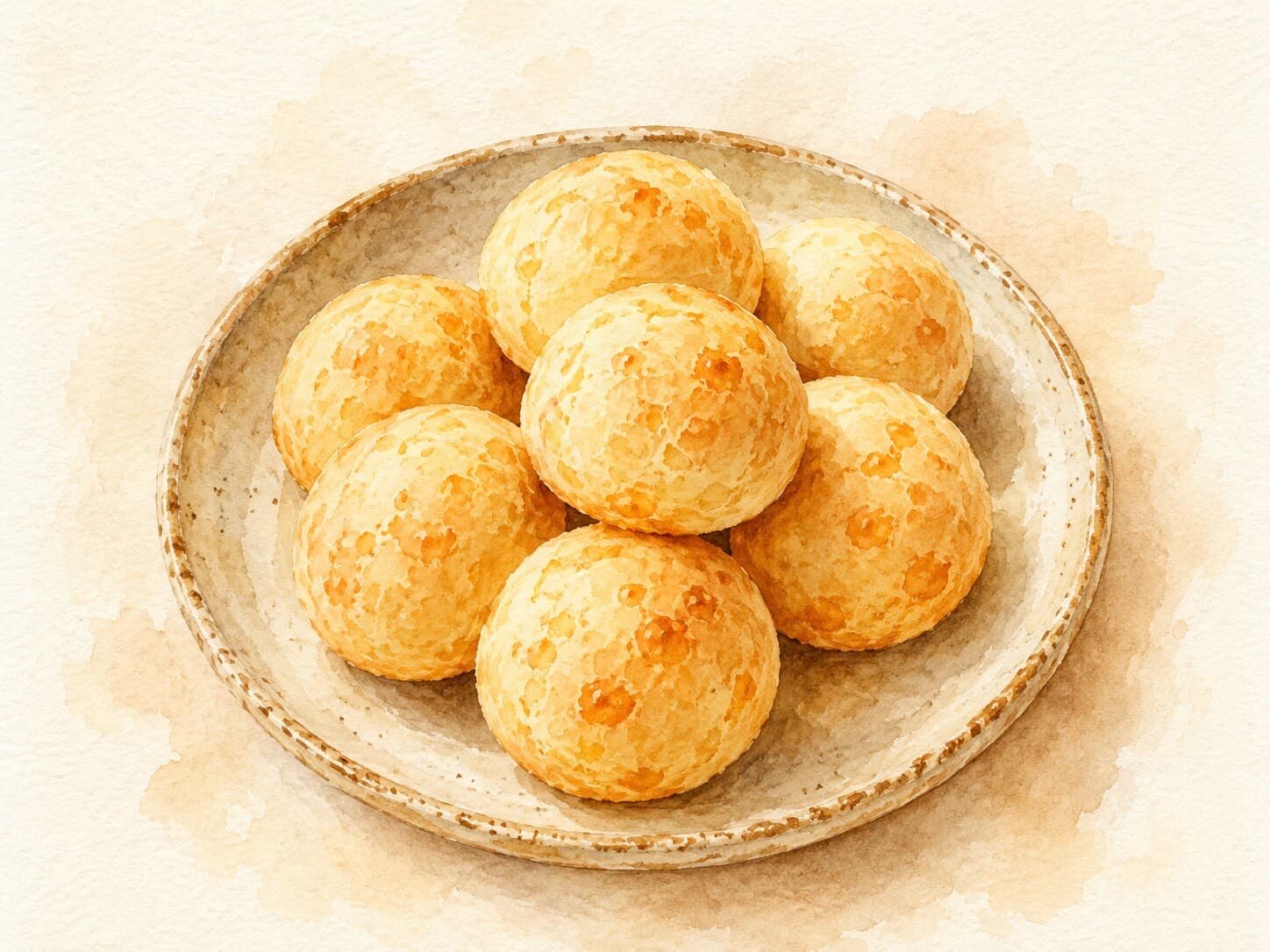
Pao de Queijo is a delightful Brazilian cheese bread made with tapioca starch, eggs, and cheese, resulting in a chewy, gluten-free treat.
Contents (5 sections)▾
Ingredients
- 250 g tapioca starch
- 200 ml milk
- 100 ml vegetable oil
- 1 tsp salt
- 2 large eggs
- 150 g grated cheese (e.g., Parmesan or mozzarella)
- 1/2 tsp baking powder (optional)
Steps
Preheat your oven to 180°C (350°F) and line a baking sheet with parchment paper.
In a medium saucepan, combine the milk, vegetable oil, and salt. Heat over medium until just boiling.
Remove from heat and gradually add the tapioca starch, stirring continuously until it forms a smooth dough.
Let the mixture cool for a few minutes, then add the eggs one at a time, mixing well after each addition.
Fold in the grated cheese and baking powder if using, until evenly combined.
Shape the dough into small balls (about the size of a golf ball) and place them on the prepared baking sheet.
Bake for 15-20 minutes, or until they puff up and turn golden brown.
Why this works
The magic of Pao de Queijo lies in the use of tapioca starch, which, when combined with hot liquids, gelatinizes to create a stretchy, chewy texture that is the hallmark of this gluten-free bread. The eggs contribute to the lift and structure of the rolls, while the cheese adds flavor and richness. It's important to ensure the tapioca starch is mixed well with the hot liquid to avoid clumps; if the dough seems too dry, you can add a little more milk to achieve the right consistency. Conversely, if it feels too wet, adding a bit more tapioca starch can help. The baking process allows steam to form within the dough, causing it to puff up into those delightful, hollow rolls that are perfect for snacking. These little breads are best enjoyed fresh from the oven, but they can be stored in an airtight container for a couple of days and reheated to bring back their chewiness.
Common mistakes
Pulling the rolls from the oven too early. Target: Deep golden tops, fully puffed, with a hollow tap and a cleanly set interior — about 15–20 minutes at 180°C (350°F) for golf-ball-sized rolls. Why it matters: Pao de queijo relies on a starch matrix (tapioca starch gelatinised by hot milk and oil) trapping steam from the wet dough; if you pull them at first puff, the inside has not finished setting and they collapse into a gummy core. Underbaked rolls are also a food-safety question — eggs and dairy in the centre must be fully cooked through. What to do: Wait for an even, deep gold top. Tap a finished roll — it should sound hollow. If in doubt, sacrifice one and tear it open; the inside should look stretchy and dry-ish, not wet.
Adding eggs while the dough is still scorching hot. Target: Cool the gelatinised tapioca paste until it is warm but comfortable to touch, then add eggs one at a time. Why it matters: Eggs are a protein emulsion (yolk lipids and water held together by lecithin); dropped into very hot dough they curdle into scrambled streaks instead of binding the mixture, and the final crumb goes patchy. Eggs also belong fully baked through here — not raw-streaked. What to do: Let the paste sit 5–10 minutes off heat. Test with a clean fingertip — warm, not painful.
Wet dough that spreads on the tray. Target: A sticky but holdable dough that just keeps a ball shape when you wet your hands and roll it. Why it matters: Tapioca starch needs the right ratio of hot liquid to fat — too wet, and the rolls spread into discs without rising; too dry, and they go dense and tough. The chew you want is created by the swelled starch granules (microscopic packets of starch that soak up water and balloon out when heated) holding their shape under steam pressure. What to do: If the dough pools, work in a little more tapioca by the tablespoon until it just holds. If it cracks dry, splash in a tablespoon of warm milk.
Slicing while piping hot. Target: Let the rolls rest 3–5 minutes on the tray after baking before tearing into them; serve warm, not lava-hot. Refrigerate any leftovers (eggs and cheese) within two hours. Why it matters: Fresh out of the oven the interior steam is still setting the crumb; cutting too early collapses the air bubbles and leaves a glue-like centre. A short rest finishes the structure. What to do: Bake. Rest. Pull apart with your fingers, not a knife.
What to look for
- A deep, even golden-brown top, not pale yellow. Pale rolls are still soft inside; deep gold means the surface starch has caramelised and the interior has set.
- An audibly hollow tap on the bottom. That hollow tells you the interior steam has finished its work and the crumb is open.
- A pull-apart interior that looks slightly translucent and stretchy, not gluey. Translucent stretch means the tapioca starch has gelatinised correctly.
- A sharp cheese aroma the moment you crack one open. If the cheese smell is muted, more grated cheese next time, or hold the bake another 2 minutes for stronger surface browning.
A note on history
Pao de queijo grew up in the state of Minas Gerais, the dairy heart of Brazil, with cassava (the source of tapioca starch) as its base. The bread's earliest forms trace back through colonial-period kitchens, where Afro-Brazilian cooks used cassava starch because wheat flour was scarce; only later, in the 19th century after the abolition of slavery, did the abundant milk, eggs and Minas cheese (a mild, slightly tangy fresh cow's-milk cheese named after the Brazilian state of Minas Gerais) of the region attach themselves to those starch rolls to become the recipe most people know today. From a regional snack it spread nationwide largely from the 1950s onward, with internal migration and improved transport (Wikipedia: Pão de queijo, TasteAtlas).
Get the essays in your inbox — free
Weekly notes on flavor, fermentation, and food history — the writing behind the Atlas of Flavor. No spam; unsubscribe anytime.