
Feijoada (Brazilian Black Bean Stew)
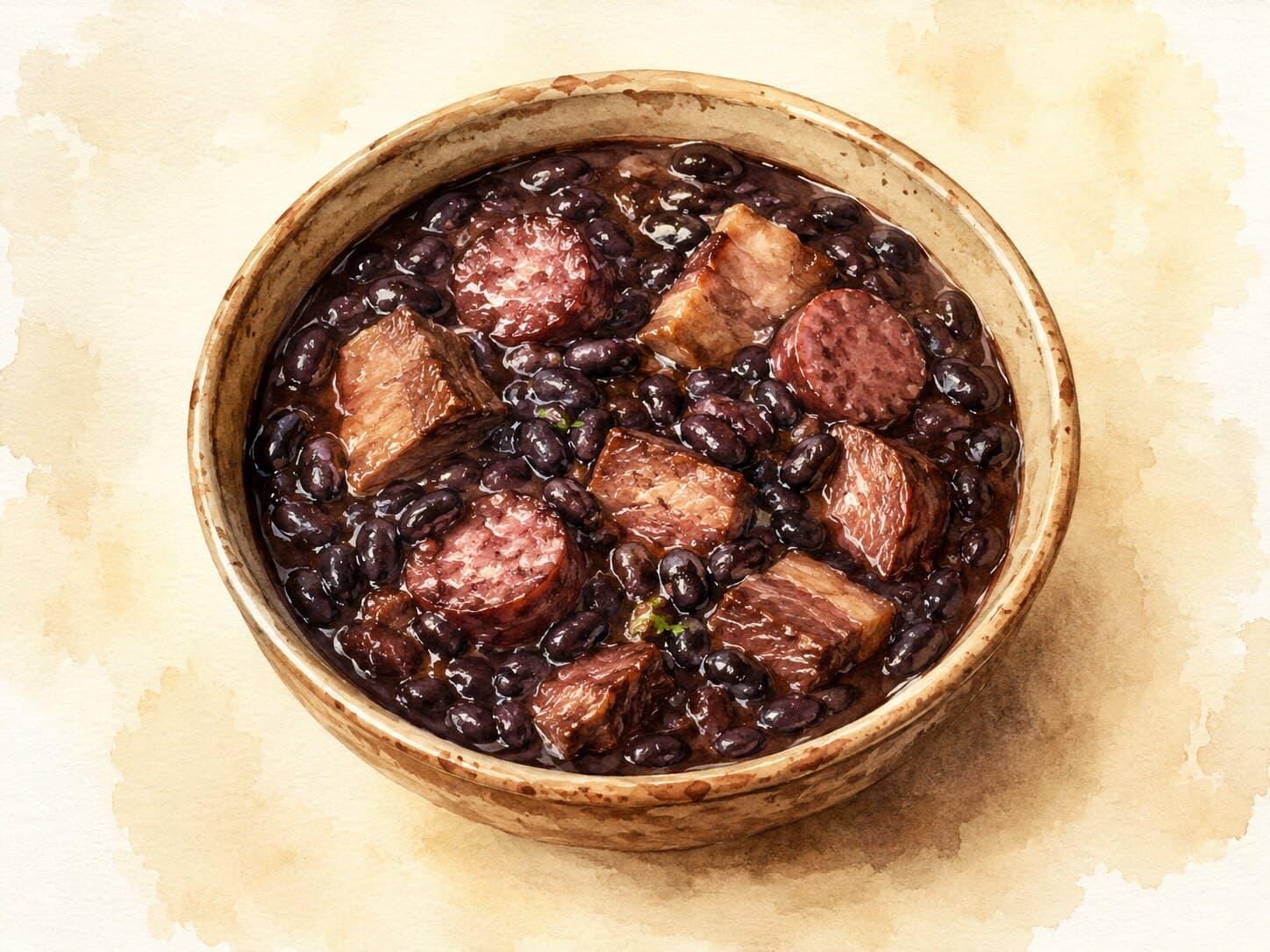
Feijoada is a rich Brazilian black bean stew, combining savory pork and spices, perfect for sharing with friends.
Contents (5 sections)▾
Ingredients
- 500 g black beans, soaked overnight
- 200 g smoked sausage, sliced
- 300 g pork shoulder, cubed
- 150 g bacon, chopped
- 100 g chorizo, sliced
- 1 large onion, diced
- 4 cloves garlic, minced
- 2 bay leaves
- 1 tsp black pepper
- 1 tsp paprika
- 1 tsp cumin
- 1-2 tbsp olive oil
- salt to taste
- 4 cups water
- 1 orange, sliced (for garnish)
- chopped parsley (for garnish)
Steps
In a large pot, heat olive oil over medium heat. Sauté the onion and garlic until translucent, about 5 minutes, which builds the flavor base.
Add the bacon and smoked sausage, cooking until browned, about 10 minutes. This step adds depth to the stew.
Incorporate the pork shoulder and chorizo, browning them for another 5 minutes. This enhances the savory profile.
Stir in the soaked black beans, bay leaves, black pepper, paprika, cumin, and salt. Mix well to combine the flavors.
Pour in 4 cups of water, bring to a boil, then reduce to low heat. Cover and let simmer for at least 3 hours, stirring occasionally. This slow simmering melds the flavors and thickens the broth.
Once the beans are tender and the broth is thick, adjust seasoning if necessary. Serve hot, garnished with orange slices and chopped parsley.
Why this works
Feijoada (a Brazilian black-bean-and-pork stew, pronounced fay-zhwah-DAH) is a dish that benefits immensely from slow cooking, allowing the flavors of the assorted salted and smoked pork cuts to infuse deeply into the black beans. The overnight soaking of the beans ensures they cook evenly and absorb the rich broth without disintegrating. As the stew simmers, the starches in the beans thicken the broth, creating a dark, luxurious texture. If the stew seems too thick during cooking, simply add a little water to reach your desired consistency. Conversely, if it appears too thin, let it simmer uncovered for a while longer to evaporate some liquid. The combination of spices like paprika and cumin adds complexity, while the acidity from the orange garnish brightens the dish.
Common mistakes
Under-soaking the beans, or salting them too early.
Target: Black beans soaked overnight (8–12 hours), and salt added only once the beans have begun to soften.
Why it matters: Soaking lets the dried beans rehydrate evenly so they cook through to a creamy center instead of staying chalky in the middle. Salt added at the very start can firm up the bean skins and slow softening, which is why it goes in later. A properly soaked, later-salted bean is what gives feijoada its tender, broth-thickening texture.
What to do: Soak overnight in plenty of water, drain, then simmer in fresh water. Season with salt once the beans are turning soft, and adjust again at the end.
Boiling hard instead of a low, steady simmer.
Target: A bare simmer (small bubbles breaking lazily at the surface, not a rolling boil) for the full long cook.
Why it matters: A violent boil knocks the beans against each other and bursts their skins, turning the stew muddy and pasty before the meat is tender. A gentle simmer keeps the beans whole while their released starch slowly thickens the broth into the dark, glossy body feijoada is known for. Low and slow is doing the work; high heat just damages it.
What to do: Bring it up to a boil once, then drop the heat so it barely bubbles, cover, and let time do the rest.
Not cooking the meats fully through.
Target: Pork shoulder, sausage, chorizo, and bacon all simmered until completely cooked and fork-tender — no pink at the center of the pork.
Why it matters: Feijoada combines several pork and cured-meat cuts, and undercooked pork is a food-safety risk, not just a texture problem. The long simmer exists precisely so collagen in the tougher cuts breaks down into gelatin (what makes slow-cooked meat silky and the broth rich) while every piece reaches a safe, fully-cooked state. Rushing the simmer leaves both tough meat and a safety hazard.
What to do: Give the stew its full simmer; check that the pork shoulder pulls apart easily and shows no pink before serving. If in doubt, an instant-read thermometer in the thickest cut should read 71°C / 160°F.
Skipping the acid and fresh garnish at the end.
Target: The bright orange slices and fresh parsley served alongside, not treated as optional decoration.
Why it matters: Feijoada is deep, fatty, and salty by design. The acidity from citrus cuts through that richness on the palate (acid balances fat and makes a heavy dish taste lighter), and traditionally orange is served with feijoada for exactly this reason. Leaving it off makes the stew feel heavy and one-note.
What to do: Serve with fresh orange slices and a scatter of parsley; a squeeze of citrus over each bowl resets the palate between bites.
What to look for
- The beans, when done: creamy and yielding when pressed, with the broth thick enough to coat a spoon. If the liquid is still thin and watery, simmer uncovered a little longer to concentrate it; if it is gluey, loosen with a splash of water.
- The pork shoulder: pulls apart with gentle pressure, no pink at the center. This is both the texture cue and the doneness/safety cue — they arrive together with a long enough simmer.
- The surface of the stew: a dark, glossy sheen rather than a dull, grey look. The shine comes from rendered fat and dissolved bean starch emulsifying into the broth — a sign the long cook has done its job.
- The seasoning at the end: deeply savory, then noticeably brighter once you add a squeeze of orange. If a bite of orange makes the whole bowl taste better, the acid balance was missing and the garnish is doing real work.
A note on history
Feijoada is widely treated as Brazil's national dish, but the romantic story that it was invented by enslaved people from the meat scraps discarded by plantation owners is not supported by historical research (The Culture Trip; Wikipedia: Feijoada). Most historians now place it in the broad European tradition of bean-and-pork pot stews — relatives include Portuguese cozido, Italian bollito, and French cassoulet — adapted in colonial Brazil to local ingredients such as black beans (The Culture Trip). It later became a fixture of Brazilian cooking, customarily eaten as a leisurely shared meal (Wikipedia: Feijoada (Brazilian dish)).
Get the essays in your inbox — free
Weekly notes on flavor, fermentation, and food history — the writing behind the Atlas of Flavor. No spam; unsubscribe anytime.