
Mohinga (Burmese Fish Noodle Soup)
Mohinga is a beloved Burmese fish noodle soup, traditionally enjoyed for breakfast with catfish and rice vermicelli.
Contents (5 sections)▾
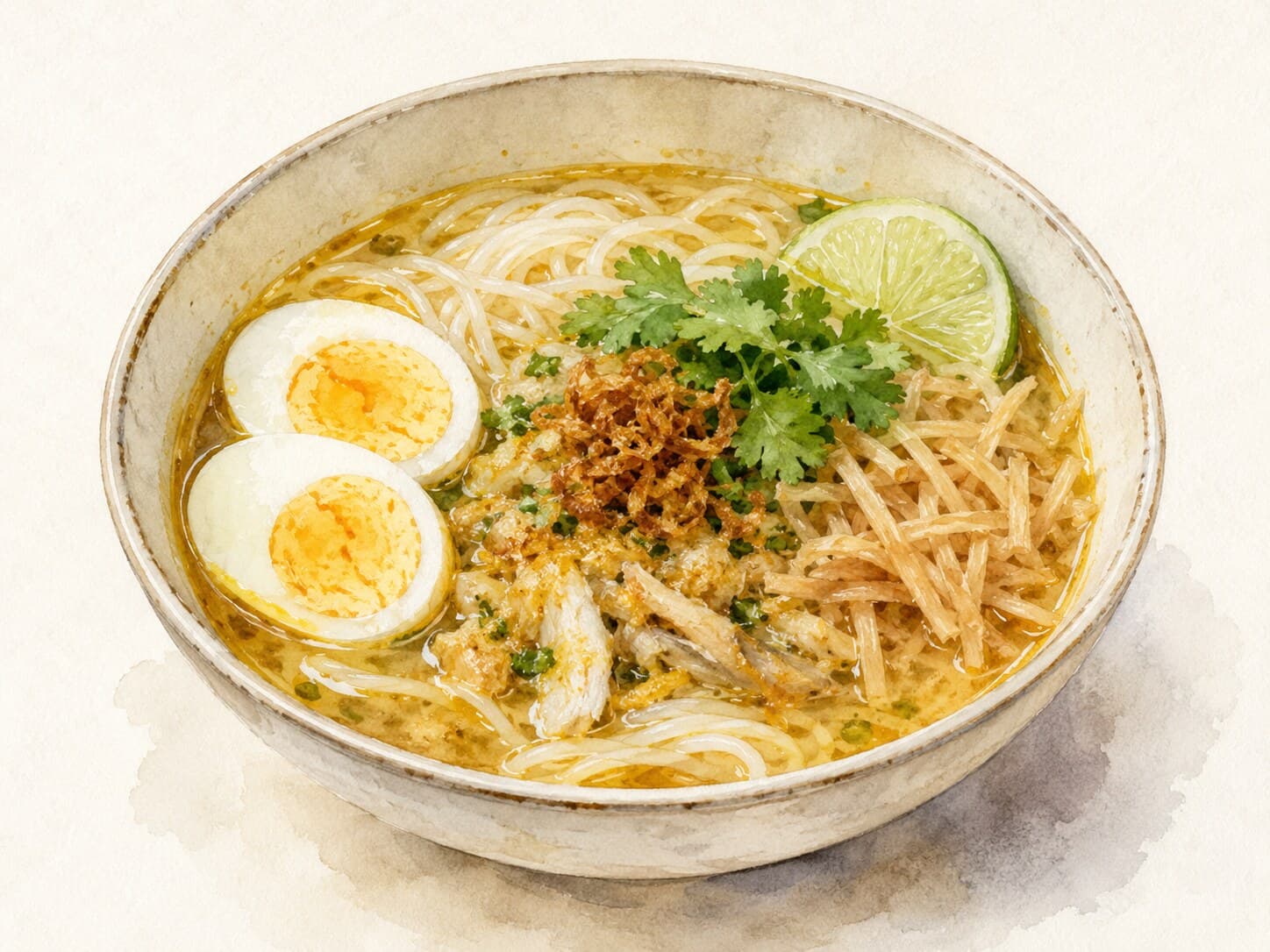
Ingredients
- 500 g catfish, cleaned and filleted
- 200 g rice vermicelli
- 4 cups water
- 100 g chickpea flour, toasted
- 200 g banana stem, crushed
- 2 tbsp fish sauce
- 1 onion, finely chopped
- 4 cloves garlic, minced
- 1 tsp turmeric powder
- Salt to taste
- Lime wedges, for serving
- Fresh coriander, for garnish
- Fried fritters, for topping
Steps
In a large pot, bring 4 cups of water to a simmer over medium heat. Add the catfish fillets and cook for about 10 minutes until cooked through.
Remove the catfish, letting it cool slightly before flaking into pieces. Strain the broth to remove impurities, then return it to the pot.
In a separate pan, toast the chickpea flour over low heat, stirring constantly for about 5 minutes until golden. This adds a nutty flavor and thickens the soup.
Add the crushed banana stem, toasted chickpea flour, fish sauce, turmeric, and chopped onion to the fish broth. Simmer for another 5 minutes, stirring well to combine.
Meanwhile, cook the rice vermicelli according to package instructions, then drain and set aside.
To serve, place a portion of rice vermicelli in a bowl, ladle the soup over it, and top with flaked catfish, fried fritters, coriander, and lime wedges.
Why this works
The combination of fish stock, chickpea flour, and banana stem creates a rich and hearty base (the deeply flavored foundational liquid that defines the dish's character) for Mohinga. The toasted chickpea flour thickens the soup and adds a unique nutty flavor that enhances the dish's overall profile. The banana stem contributes a subtle earthiness, balancing the fishiness of the catfish. If the soup seems too thick, you can easily adjust the consistency by adding a bit more water to reach your desired texture. This dish exemplifies the delicate balance of flavors and textures that define Burmese cuisine, making it a staple that’s both comforting and satisfying.
Common mistakes
Under-cooking the catfish. Target: poach catfish fillets in simmering broth (a steady, gentle bubble — around 90°C / 195°F) for a full 10 minutes minimum, until the flesh is opaque throughout and flakes apart easily with a fork. Why it matters: This is a freshwater fish in a fish-noodle soup eaten by the bowlful — the safety guardrail of the dish is that the catfish must be fully cooked through. Catfish, like other freshwater fish, can carry parasites and bacteria that are only neutralized by adequate heat (fish should reach 63°C / 145°F at the center, and a 10-minute simmer in active broth comfortably exceeds that). Pulling fillets while they still have translucent pink areas means part of your soup never reached safe temperature. What to do: Simmer fillets in a single layer in the broth, not stacked. Test by lifting one and pressing gently — it should break into clean flakes, not bend like jelly. If still translucent, return to the pot for another 2–3 minutes. After flaking the cooked fish back in, simmer the entire pot another 5 minutes once everything is combined.
Adding raw chickpea flour straight to the broth. Target: dry-toast the chickpea flour in a separate pan over low heat for 4–6 minutes until it turns one shade darker and smells faintly nutty, then whisk it into a small amount of cold broth to make a slurry before adding to the pot. Why it matters: Untoasted chickpea flour tastes raw and beany — a flat, slightly powdery off-note that competes with the fish. Tossing it directly into hot liquid also forms lumps that never disperse, because the starch granules on the outside of each lump swell instantly and seal in dry flour. The toasting step also lightly caramelizes some of the natural sugars and develops a nutty aroma (a Maillard reaction — the same browning that gives toast its flavor). What to do: Toast first in a dry skillet over low heat, stirring constantly. Once cooled slightly, whisk into a few ladles of cold or warm broth to make a smooth, lump-free slurry, then stir the slurry back into the simmering pot. The soup should visibly thicken within 2–3 minutes.
Pouring the soup onto cold, clumped noodles. Target: cook rice vermicelli just before serving — drain, rinse with hot (not cold) water, and portion into warm bowls immediately. Why it matters: Rice vermicelli starts sticking together the moment it comes out of hot water. Cold, sticky noodles thicken and chill the soup the second the broth hits them, and they form dense clumps in the bottom of the bowl. Done right, the noodles stay loose and slippery, and the broth pours over them like a stream rather than congealing. What to do: Time the noodles to finish in the last 3 minutes of cooking. Drain, rinse briefly with hot water (not cold — cold water tightens starch and locks the noodles together), portion into bowls, and ladle the simmering broth on top right away.
Topping the bowl while the broth is barely warm. Target: broth served piping hot — actively steaming — and toppings (lime, coriander, fritters) added at the table. Why it matters: Mohinga is built for hot service. Fritters get soggy quickly once submerged, lime juice loses its bright top notes within minutes of contact with hot broth, and fresh herbs wilt and dull. Serving a tepid bowl flattens every accent the dish depends on. What to do: Ladle steaming broth over noodles and immediately bring to the table with toppings on the side. Let each eater squeeze the lime, sprinkle herbs, and crack the fritters over the bowl just before eating — that final assembly is part of the recipe.
What to look for
- A broth thick enough to coat a spoon, not soupy-thin. Properly thickened mohinga has the consistency of a pourable gravy — the chickpea-flour slurry pulls the liquid together so it clings briefly to the back of a spoon before dripping off. If it runs off like clear stock, the slurry needs another minute of simmering to fully hydrate.
- Fish that flakes cleanly into pearly white chunks. When you lift a cooked piece with a slotted spoon, it should break apart along its natural grain into opaque white flakes with no glassy translucent center. A pink core means undercooked; mushy disintegration means over-poached past 12–15 minutes total.
- A warm, golden hue from turmeric and chickpea flour. A correctly built broth glows a pale honey-yellow — turmeric and toasted chickpea flour together produce that color. Drab gray-beige means either the chickpea flour was not toasted enough or the turmeric was added too late and never bloomed in oil.
- Layered aromatics in the smell — lemongrass and garlic on top, fish and chickpea underneath. Lift a spoonful and you should smell citrus-grass first, then the savory base. A flat, fishy aroma alone means the aromatics burned off during long simmering and need refreshing — a splash of fresh garlic-oil at the end can rescue it.
A note on history
Mohinga is widely regarded as the national dish of Myanmar and is the country's most popular breakfast. The earliest written reference is found in the alinga verses of the Konbaung-era poet U Ponnya, and the food historian Khin Maung Nyunt notes that no royal-archive recipe for mohinga survives — strongly suggesting it began as a commoners' dish in pre-colonial times rather than a court preparation. Today it is sold from street carts, tea shops, and home kitchens across Myanmar from before dawn, and although it began as a breakfast food it is now eaten at any hour (Wikipedia, TasteAtlas).
Get the essays in your inbox — free
Weekly notes on flavor, fermentation, and food history — the writing behind the Atlas of Flavor. No spam; unsubscribe anytime.