
Lahpet Thoke (Burmese Tea Leaf Salad)
Experience the unique flavors of Lahpet Thoke, a savory Burmese salad featuring fermented tea leaves and a delightful mix of crunchy ingredients.
Contents (5 sections)▾
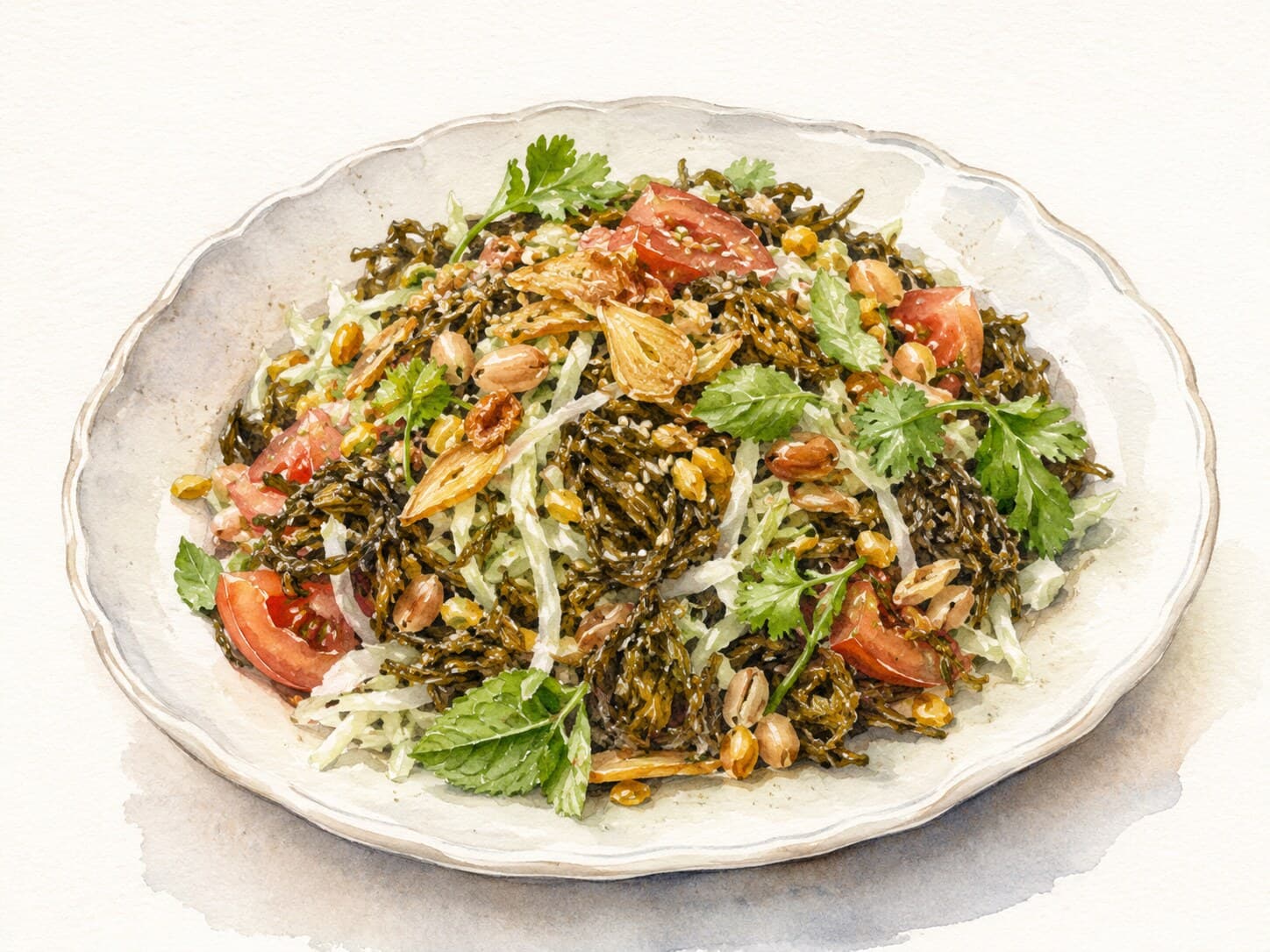
Ingredients
- 100 g fermented tea leaves, drained
- 50 g roasted chickpeas
- 50 g toasted peanuts
- 30 g sesame seeds
- 2 cloves garlic, minced
- 30 ml vegetable oil
- 1 tbsp fish sauce
- 1 tbsp lime juice
- 1 tsp salt
- 1 tsp chili flakes, or to taste
- fresh coriander, for garnish
Steps
In a skillet over medium heat, heat the vegetable oil for about 2 minutes until shimmering, then add the minced garlic and fry for 1-2 minutes until golden and fragrant.
Add the roasted chickpeas, toasted peanuts, and sesame seeds to the skillet, stirring frequently for about 3-4 minutes to enhance their crunch.
In a large bowl, combine the drained fermented tea leaves, fried mixture, fish sauce, lime juice, salt, and chili flakes. Toss everything together for 2-3 minutes to ensure even distribution.
Transfer to a serving dish and garnish with fresh coriander. Serve immediately for the best texture and flavor.
Why this works
The combination of fermented tea leaves (tea leaves aged with salt until they turn tangy and savory, not bitter) and various crunchy elements creates a complex textural experience in Lahpet Thoke. The tea leaves add a unique umami flavor with a slight bitterness that contrasts beautifully with the nuttiness of the peanuts and chickpeas, while the garlic introduces aromatic depth. This salad thrives on its crunch, so be sure not to overcook the garlic; it should remain golden and fragrant. If the salad seems too dry, consider adding a touch more lime juice or fish sauce to enhance the moisture and flavor balance. The key is to mix the ingredients thoroughly, allowing each bite to showcase the harmony of flavors. This dish is a delightful introduction to the versatility of tea and a celebration of Burmese culinary traditions.
Common mistakes
Burning the garlic.
Target: Garlic fried just to pale gold, then pulled off the heat — about 1–2 minutes over medium.
Why it matters: Garlic goes from sweet-fragrant to acrid in seconds because its sugars and amino acids brown fast in hot oil. Burnt garlic turns the whole salad bitter, and that bitterness compounds the natural edge of the fermented tea leaves instead of balancing it.
What to do: Start garlic in oil that is warm, not screaming hot, and stir constantly. The instant it turns light gold, take the pan off the heat — residual heat finishes it.
Not draining the tea leaves.
Target: Fermented tea leaves squeezed of excess liquid before they go in the bowl.
Why it matters: Jarred laphet carries brine and oil. Undrained, that liquid pools at the bottom, makes the salad soggy, and dulls the crunch that is the entire point of the dish. Wet leaves also over-salt the final toss.
What to do: Lift the leaves out and press them gently against a sieve, or squeeze in your hand, before combining. Taste before adding the full teaspoon of salt — the leaves and fish sauce (a salty, savory liquid made from fermented fish) already bring saltiness.
Tossing the crunchy elements in too early.
Target: Fold the fried nuts, chickpeas, and sesame in just before serving, not minutes ahead.
Why it matters: Peanuts and chickpeas are crisp because they are dry. Sitting in the dressing of lime, fish sauce, and tea-leaf moisture, they soften — and the textural contrast against the soft leaves is what makes the salad work.
What to do: Keep the toasted components separate until the last moment. If you are making it ahead, store the crunch apart and combine at the table.
Going heavy-handed with the dressing.
Target: Just enough fish sauce and lime to season — the salad should glisten lightly, not swim.
Why it matters: Laphet thoke is built on layered dry textures, not a wet dressing. Too much liquid drowns the crunch and flattens the distinct components into one muddy bite.
What to do: Add lime and fish sauce a little at a time, tasting as you go. You can always add more; you cannot un-soak the nuts.
What to look for
- The garlic in the oil: pale gold and fragrant, never browning at the edges. Gold is sweet and nutty; brown is bitter. Pull it the second it reaches color.
- The drained tea leaves: glossy and loose, not sitting in a puddle of brine. Properly drained leaves cling to the other ingredients instead of pooling at the bottom of the bowl.
- The tossed salad: every component visibly coated but distinct — nuts still dry-looking, leaves dark and separate. If it looks wet or clumped, there is too much dressing.
- The first bite (texture check): audible crunch from the nuts and chickpeas against the soft, slightly chewy leaves. That contrast of crisp-against-soft is the signature of the dish.
A note on history
Laphet — fermented tea leaves — is central to Burmese culture, with the practice of pickling tea traced to the Shan State, a major tea-growing region, and tea leaves traditionally steamed and fermented for months in bamboo vats (196 Flavors; Wikipedia: Lahpet). It is one of the few foods in the world where tea is eaten rather than drunk, and historically fermented tea served as a peace offering between rival kingdoms; a tray of laphet remains a traditional gesture of hospitality to guests (The Chopping Block: History of Laphet Thoke).
Get the essays in your inbox — free
Weekly notes on flavor, fermentation, and food history — the writing behind the Atlas of Flavor. No spam; unsubscribe anytime.