
Khachapuri Adjaruli
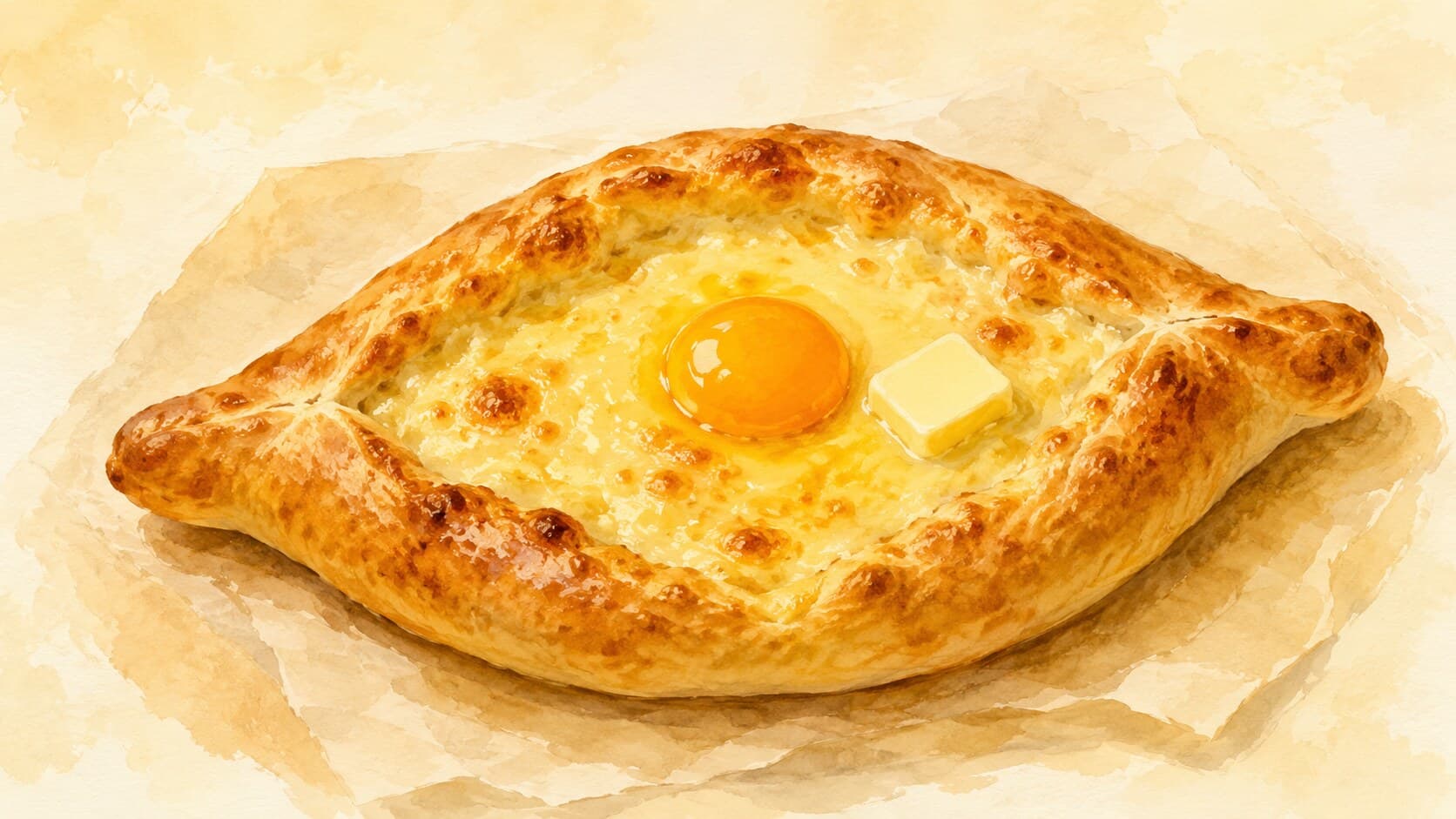
Khachapuri Adjaruli is a traditional Georgian bread filled with melted cheese, topped with an egg yolk and a pat of butter.
Contents (5 sections)▾
Ingredients
- 250 g all-purpose flour
- 5 g active dry yeast
- 150 ml warm water
- 1 tsp sugar
- 1 tsp salt
- 30 g unsalted butter, melted
- 200 g sulguni cheese (or mozzarella), shredded
- 1 egg yolk per serving
- 30 g unsalted butter, for topping
- Black pepper, to taste
Steps
In a bowl, combine warm water, sugar, and yeast. Let it sit for 10 minutes until bubbly, activating the yeast for better rise.
In a separate bowl, mix flour and salt. Create a well in the center, then add the yeast mixture and melted butter. Mix until a dough forms.
Knead the dough on a floured surface for about 10 minutes until smooth and elastic. This develops gluten, which gives the bread its structure.
Place the dough in a lightly greased bowl, cover with a cloth, and let it rise in a warm area for about 1 hour, until doubled in size.
Preheat the oven to 220°C (428°F).
Once risen, punch down the dough and divide it into two equal pieces. Roll each piece into an oval shape and fold the edges to form a boat shape.
Fill the center of each shaped dough with the shredded cheese, leaving space for the egg yolk. Bake for 15 minutes until golden brown.
Remove from the oven and immediately place an egg yolk on top of each khachapuri, then add a pat of butter and season with black pepper before serving.
Why this works
The key to a successful Khachapuri Adjaruli (the open boat-shaped Georgian cheese bread, topped with a runny egg yolk and butter) lies in the dough and cheese filling. Using warm water activates the yeast, allowing the dough to rise well, creating a light and airy texture. Kneading is essential as it develops gluten, which gives the bread its characteristic chewiness. The high-temperature baking ensures that the exterior becomes beautifully golden and crispy while keeping the cheese filling gooey and melty. If the dough seems too sticky during kneading, add a little more flour, but avoid adding too much, as it can lead to a dry texture. The cheese mixture should be generous, allowing it to melt and create a creamy filling. The egg yolk on top adds richness and a beautiful presentation, but be cautious not to overcook it; it should remain slightly runny for the best experience.
Common mistakes
Adding the egg to a cooled boat (food-safety issue). Target: The cheese filling must still be visibly bubbling and audibly sizzling when the egg slips in — surface temperature roughly piping-hot, well above 70 °C / 160 °F. Why it matters: The egg in adjaruli (Adjaran-style khachapuri) cooks from contact with the molten cheese and the radiant heat of the bread. If the boat has cooled on the counter while you set the table, the white never sets through and the yolk stays glassy raw — a real Salmonella risk, especially for pregnant, immune-compromised, elderly, and very young eaters. What to do: Crack the egg straight from the oven onto the bubbling cheese, then return the boat to the hot oven for 1–3 minutes until the white is fully opaque and set throughout. The yolk should be at minimum just-set — no glassy raw whites. Vulnerable readers should cook the yolk fully through. If anyone at the table needs a safer egg, use a pasteurized whole egg.
Under-kneaded dough that won't hold the boat. Target: A smooth, slightly tacky ball that springs back slowly when poked — about 8–10 minutes of steady kneading. Why it matters: The boat shape relies on gluten — the stretchy protein network formed when flour proteins hydrate and align under kneading. Under-kneaded dough tears at the seams during baking and the cheese leaks out before it has a chance to melt into a pool. What to do: Knead until the surface looks satin, not floury. The windowpane test (stretch a small piece thin enough to see light through without tearing) confirms readiness.
Sealing the boat too tightly around the cheese. Target: Open boat with a generous central well; pinched ends only, not pinched edges. Why it matters: Khachapuri adjaruli's signature is the molten cheese pool — the open top lets steam escape so the cheese browns rather than poaching into a soggy mass. A fully sealed boat traps moisture and you get a wet, pale filling that no egg-and-butter swirl can rescue. What to do: Roll an oval, fold the long edges inward to form a rim, then twist only the two ends together to give the boat its pointed prow and stern. Leave the middle wide open.
Underbaked bread that goes soggy when the cheese is added. Target: A deeply golden crust before the egg goes in — the dough should sound hollow when tapped underneath. Why it matters: The bread is the structural vessel. If the dough hasn't set into a firm crust, the wet cheese soaks the interior crumb and the boat collapses on the plate. What to do: Bake at 220 °C / 428 °F on a preheated stone or heavy sheet — radiant heat from below is what sets the bottom crust. If your oven runs cool, push to 230 °C and give it the full 15 minutes before opening.
What to look for
- Dough after the first rise: visibly doubled, slightly domed, springy to the touch. A finger poke leaves a slow-filling dent — not a flat puddle and not a stiff resistant ball.
- Cheese filling at the moment of egg-cracking: actively bubbling, glossy, edges browning toward gold. This is the visual signal that the surface is hot enough to set the egg white safely.
- Egg white after the final oven pass: fully opaque, white, no translucent jelly. The yolk may be just-set or fully cooked — both are fine, both are safe.
- Finished crust: deeply golden, hollow when tapped, no doughy give in the corners. The boat should hold its shape when lifted, not buckle.
A note on history
Adjaruli khachapuri comes from Adjara, the Black Sea coastal region of western Georgia historically known for its boat-building traditions, and the open boat shape is read locally as a vessel of the sea filled with cheese and crowned by a golden-yolk sun (Going.com). The wider khachapuri family — "khacho" (cheese curds) + "puri" (bread) — has several regional siblings, including the round closed-pie imeruli of Imereti and the cheese-topped megruli of Mingrelia, each shaped by local cheeses and customs (Wikipedia; Cyprus Mail). Khachapuri is so central to Georgian table culture that the country observes a National Khachapuri Day on February 27 (Going.com).
Get the essays in your inbox — free
Weekly notes on flavor, fermentation, and food history — the writing behind the Atlas of Flavor. No spam; unsubscribe anytime.