
Birria Tacos
Savor the rich flavors of birria tacos, featuring tender, chile-braised beef and crispy tortillas.
Contents (5 sections)▾
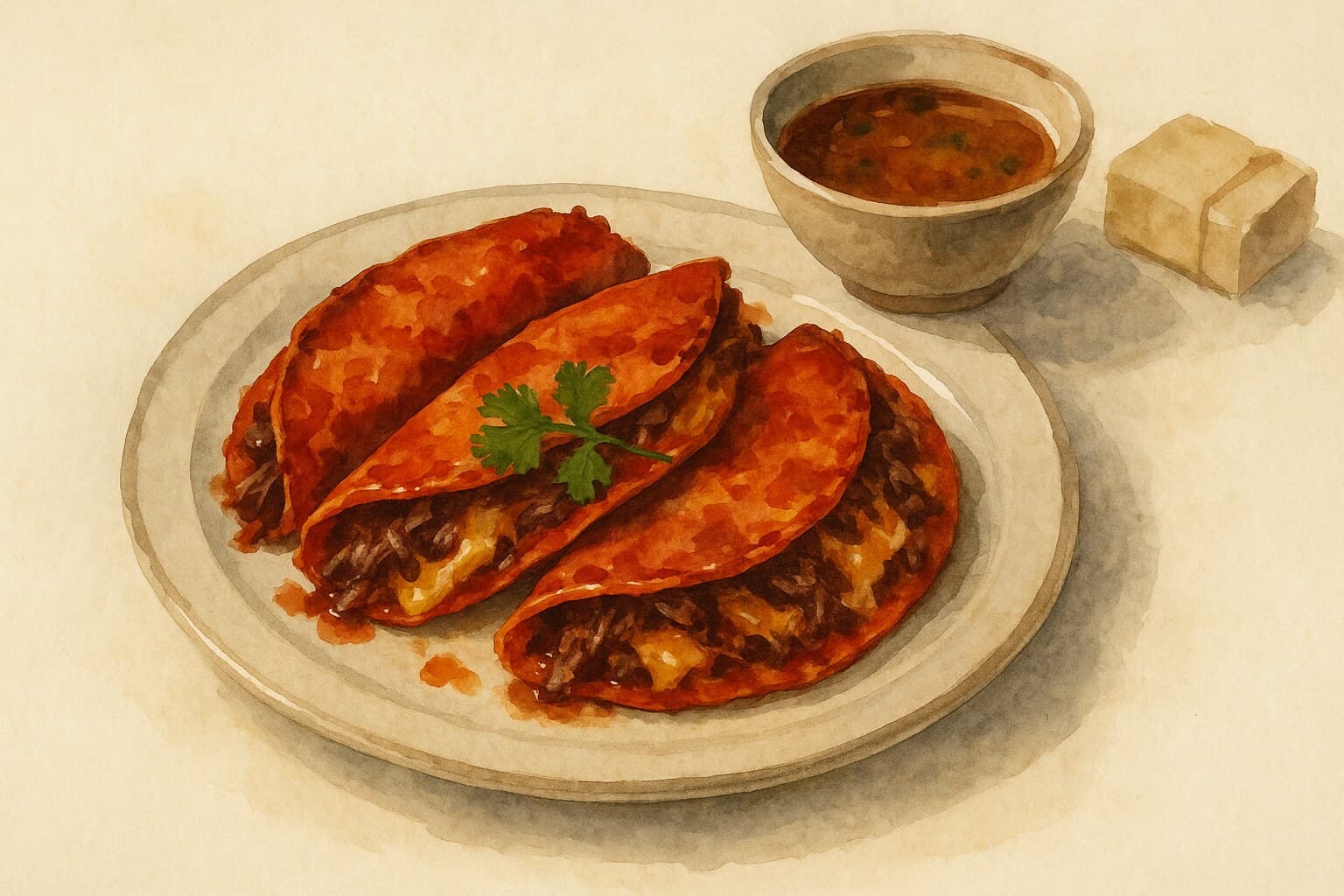
Ingredients
- 1 kg beef chuck or short rib
- 4 dried guajillo chiles
- 2 dried pasilla chiles
- 1 clove garlic, minced
- 1 onion, quartered
- 2 cups beef broth
- 1 tsp cumin
- 1 tsp oregano
- 1 tbsp vegetable oil
- 12 corn tortillas
- 200 g shredded cheese (e.g. Oaxaca or mozzarella)
- Salt to taste
- Lime wedges for serving
- Cilantro for garnish, to taste
Steps
Start by rehydrating the dried chiles in hot water for about 15 minutes until soft. This enhances their flavor and makes them easier to blend.
Drain the chiles and blend them with garlic, onion, beef broth, cumin, oregano, and salt until smooth. This will create a rich sauce.
In a large pot, heat vegetable oil over medium heat and sear the beef until browned on all sides, about 5-7 minutes. Browning adds depth of flavor through the Maillard reaction.
Pour the blended chile sauce over the beef, cover, and let it braise on low heat for about 2 hours or until the beef is tender and shreds easily. Stir occasionally to prevent sticking.
Once cooked, remove the beef and shred it with two forks. Strain the sauce to remove any solids and reserve the liquid for dipping.
In a skillet, heat the rendered fat from the braising liquid. Dip each tortilla briefly in the fat, then griddle them over medium-high heat until crispy, about 1-2 minutes per side.
Fill the crispy tortillas with shredded beef and sprinkle with cheese. Fold and serve hot with the reserved consomme, cilantro, and lime wedges.
Why this works
Braising (cooking slowly in liquid in a covered pot) the beef in a rehydrated (soaked back to soft in warm water) dried-chile sauce transforms tough cuts like chuck or short rib into succulent, tender shreds infused with deep, complex flavors. The prolonged cooking at low temperatures allows the collagen (the tough connective tissue in the meat) to break down, while the spices meld beautifully, enhancing the overall taste. Dipping the tortillas in the rendered fat (the fat that melts out of the meat as it cooks) before griddling them gives a delectable crispness and ensures that the aromatic essence of the beef and chiles clings to the outside. This technique creates a wonderful contrast between the crunchy exterior and the tender, juicy filling. If the beef seems too tough after braising, ensure to continue cooking it at low heat until it reaches the desired tenderness; patience is key in this technique. Ultimately, the combination of flavors and textures creates a remarkable taco experience that captivates the palate and encourages second servings.
Common mistakes
Under-soaking the dried chiles, or blending in the bitter parts.
Target: Dried guajillo and pasilla chiles rehydrated (soaked back to soft) in hot water until fully pliable, about 15 minutes, with stems and most seeds removed first.
Why it matters: A chile that is still leathery won't blend smooth, leaving gritty flecks instead of a silky sauce. The seeds and the papery stem end carry a harsh, dusty bitterness that doesn't cook out — it just sits under the flavor.
What to do: Tear off the stems, shake out the seeds, then soak the chiles submerged under hot water (weigh them down with a small plate) until floppy. Blend with a little of the soaking water until completely smooth.
Rushing the braise so the beef stays tough.
Target: Beef chuck or short rib braised (cooked slowly in liquid in a covered pot) on low heat until it shreds with almost no resistance — count on roughly 2 hours, sometimes more.
Why it matters: These cuts are dense with collagen, the connective tissue that makes them chewy. Only long, gentle heat melts that collagen into soft gelatin (the silky substance that makes braised meat feel tender and juicy); pull the meat early and it is both tough and not yet safely cooked through.
What to do: Keep the liquid at a bare simmer, lid on, and test with two forks — if it does not pull apart easily, it simply needs more time. Add a splash of broth if the level drops too low.
Dipping the tortilla in too little fat, or griddling it cold.
Target: Each tortilla swiped through the red-stained fat that rises to the top of the braise, then griddled on a properly hot, dry pan until the edges crisp.
Why it matters: That layer of seasoned fat is what fries the tortilla to a crisp, color-stained shell and carries the chile-beef flavor onto the outside. Too little fat and it dries out leathery; too cool a pan and it steams limp instead of crisping.
What to do: Let the braise settle so the orange fat pools on top, and spoon some off if there isn't enough. Heat the pan until a drop of water dances, dip the tortilla, then griddle 1–2 minutes a side until it stiffens and browns.
Overstuffing the tacos.
Target: A modest line of shredded beef and cheese down the center, leaving room to fold the tortilla flat.
Why it matters: An overstuffed taco can't close, so the inside steams instead of crisping and the filling spills into the pan and burns. The crisp-edged fold is half the point of a birria taco.
What to do: Use less filling than feels right, fold into a half-moon, and press gently with a spatula so the cheese melts and glues it shut while the outside crisps.
What to look for
- The chiles after soaking: soft and floppy enough to fold without cracking — leathery spots mean they need more time in the hot water before they will blend smooth.
- The blended sauce: deep brick-red and velvety, with no gritty bits when you rub a drop between two fingers — that smoothness is what coats the meat evenly.
- The beef when ready: it falls into soft strands under two forks with almost no pull — fully tender and cooked through, never stringy-tough or chewy.
- The fat on the braise: a vivid orange-red layer floating on top — that is what you dip the tortillas in for crispness and color.
- The griddled taco: edges gone crisp and blistered, the surface stained red, cheese molten at the seam — stiff enough to hold its fold, not floppy or pale.
A note on history
Birria began in the Mexican state of Jalisco, where cooks turned goats — animals brought by Spanish colonizers and considered tough and gamey — into something tender by slow-cooking the meat with chiles and spices, often in a pit. As the dish spread north, it adapted: in 1950s Tijuana, cooks began making it with more affordable beef and a soupier consommé (the rich strained broth the meat cooks in), and the now-famous birria taco — tortillas dipped in that red consommé, griddled, and served with more of it for dunking — rose to popularity in places like Los Angeles within roughly the last decade. (Wikipedia: Birria, Mashed: The Untold Truth of Birria)
Get the essays in your inbox — free
Weekly notes on flavor, fermentation, and food history — the writing behind the Atlas of Flavor. No spam; unsubscribe anytime.