
Bigos (Polish Hunter's Stew)
Bigos, or Polish Hunter's Stew, combines sauerkraut and various meats, developing deeper flavors through a slow-simmering process over several days.
Contents (5 sections)▾
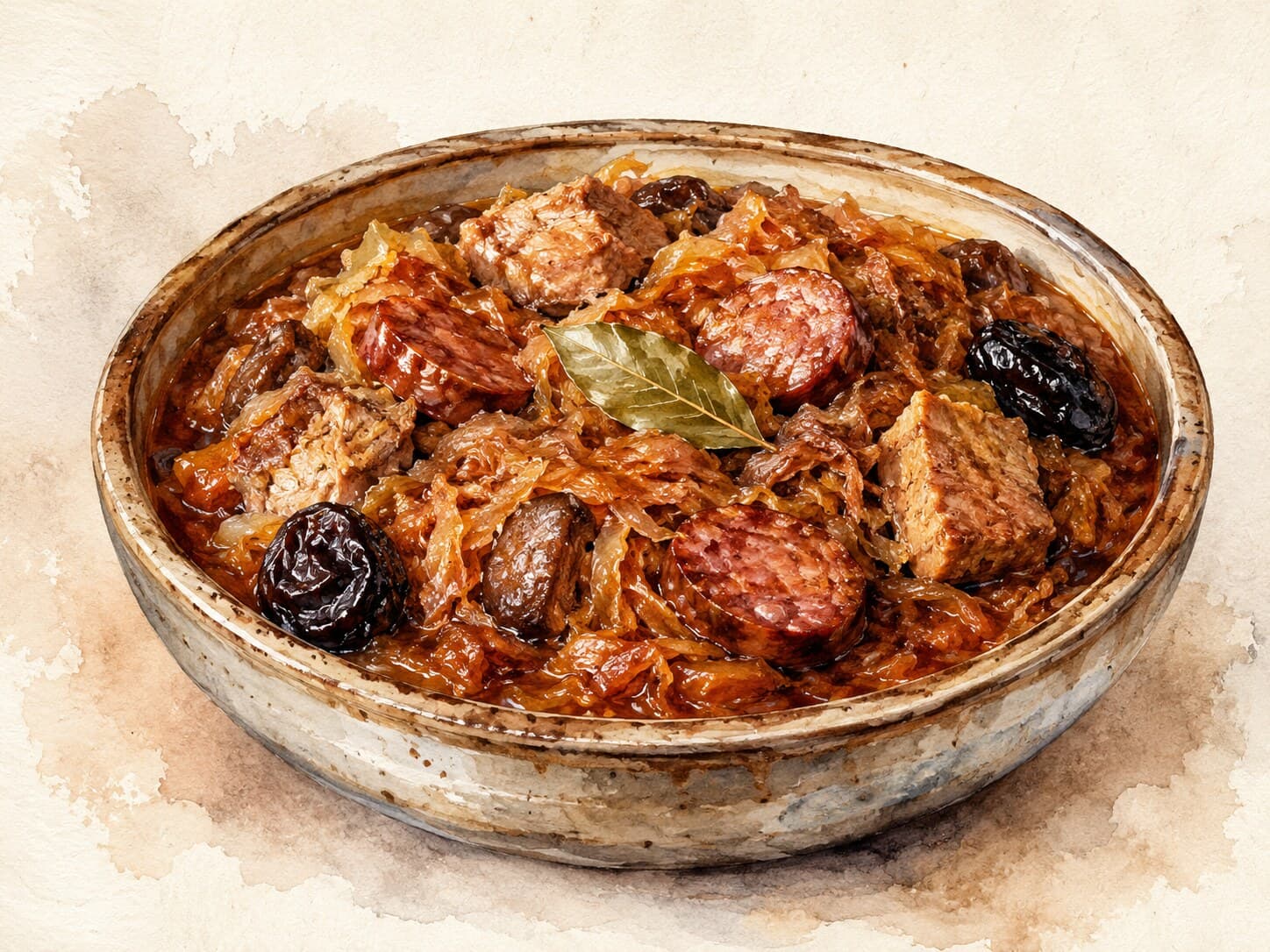
Ingredients
- 500 g sauerkraut, drained
- 250 g fresh cabbage, chopped
- 300 g pork shoulder, cut into cubes
- 200 g beef, cut into cubes
- 150 g smoked sausage, sliced
- 150 g bacon, diced
- 2 medium onions, chopped
- 3 cloves garlic, minced
- 1 tbsp tomato paste
- 1 tsp dried marjoram
- 1 tsp black pepper
- 2 bay leaves
- 500 ml beef broth
- to taste salt
- to taste pepper
Steps
In a large pot, brown the bacon over medium heat for about 5 minutes until crispy. This step adds depth and flavor to the stew.
Add the onions and garlic, cooking for an additional 3-4 minutes until softened and fragrant.
Stir in the pork and beef cubes, browning them for about 5-7 minutes. This initial searing builds flavor and color through browning.
Combine the sauerkraut, fresh cabbage, sausage, tomato paste, marjoram, black pepper, bay leaves, and beef broth. Mix well.
Bring the mixture to a simmer, cover, and reduce heat to low. Let it cook for at least 1 hour, stirring occasionally.
Cool the stew and refrigerate overnight. Reheat over low heat the next day, allowing the flavors to meld further. Repeat this process for 2-3 days for best results.
Why this works
Bigos, or Polish Hunter's Stew, has complex flavors that deepen over time. The initial slow-simmering process melds the distinct flavors of meats and sauerkraut while allowing the acidity of the sauerkraut to balance the richness of the meats. Cooling and reheating enables the stew to mature, as the ingredients interact, creating a harmonious dish. If it seems too acidic after a few days, adding a touch of sugar can help balance the flavors. This dish also benefits from a variety of meats, as each contributes unique notes, making Bigos a versatile and comforting meal.
Common mistakes
Crowding the meat so it steams instead of browning.
Target: Sear the pork, beef, and bacon in a single uncrowded layer, in batches if needed, until each piece has a deep brown crust.
Why it matters: Browning is the Maillard reaction (the flavor-building chemistry that turns meat surfaces brown and savory under dry heat). It only happens when the surface is hot and dry. Pile the pot too full and the meat releases water, the temperature drops, and you get pale, boiled-tasting cubes — the single biggest flavor loss in the whole stew.
What to do: Wait until the fat shimmers, add meat in a loose layer, and leave it alone until it lifts cleanly with a brown face before turning. Brown in two or three rounds rather than all at once.
Throwing away the browned bits stuck to the pot.
Target: Those dark stuck-on bits (the fond) loosened back into the stew with a splash of broth.
Why it matters: The brown film welded to the bottom after searing is concentrated, roasted flavor. Leave it dry and it scorches bitter; lose it down the drain and the broth tastes thin.
What to do: Before the pot dries out, pour in a little of the beef broth and scrape the bottom with a wooden spoon until the bits dissolve (this is called deglazing). That scraped-up flavor goes into the stew.
Drowning out — or ignoring — the sauerkraut's sourness.
Target: A finished balance where the sauerkraut's tang lifts the rich meat without puckering your mouth.
Why it matters: Sauerkraut (fermented, sour cabbage) is the acid backbone of bigos — it cuts the fat so the stew doesn't feel heavy. Rinse it to nothing and the dish turns flat and greasy; leave it raw-sharp and untamed and it stings.
What to do: Taste the sauerkraut first. If it is aggressively sour, rinse it once and squeeze; if mild, add it straight with its brine. After a day, if it still bites too hard, a small spoon of sugar rounds it off.
Stopping when the meat is browned instead of when it is tender.
Target: Pork and beef simmered gently until they are fully cooked through and pull apart easily with a fork.
Why it matters: Searing colors the outside but leaves the inside tough; these cuts are full of collagen (the connective tissue that makes cheap cuts chewy) that only melts into softness after a long, slow simmer. Under-simmered bigos is both chewy and not yet safely cooked through.
What to do: Keep the stew at a slow, lazy bubble — never a hard boil, which squeezes the meat tight — and give it the full hour-plus until a cube yields with no resistance. The overnight rest-and-reheat cycles only improve it from there.
What to look for
- The meat as it sears: a deep mahogany crust that releases from the pot on its own — if it sticks and tears, it needs another minute; forcing it strips the crust off.
- The bottom of the pot after browning: a sticky brown film, golden-dark but not black — that is flavor to deglaze; black and acrid means the heat was too high.
- The stew at a simmer: slow bubbles breaking lazily at the surface, never a rolling boil — gentle heat keeps the meat from seizing up tough.
- The meat when done: a cube pulls into soft strands with light fork pressure — fully tender and cooked through, not rubbery or pink at the center.
- The balance after resting: the sourness reads as brightness, not a sharp sting — the tang lifts the richness instead of fighting it.
A note on history
Bigos is widely regarded as the unofficial national dish of Poland, though its roots are tangled: the name has been linked to the old German bîbôz (related to Beifuß, mugwort, a common medieval cooking herb), and the stew's lineage is usually traced to medieval hunting feasts, where game was cooked down for hours with cabbage that could survive the winter. Its place in Polish culture is cemented by Adam Mickiewicz's epic poem Pan Tadeusz, in which a party of hunters feasts on bigos in the forest. (Wikipedia: Bigos, Teatime History: The Contested History of Polish Bigos)
Get the essays in your inbox — free
Weekly notes on flavor, fermentation, and food history — the writing behind the Atlas of Flavor. No spam; unsubscribe anytime.