
Pierogi (Polish Dumplings)
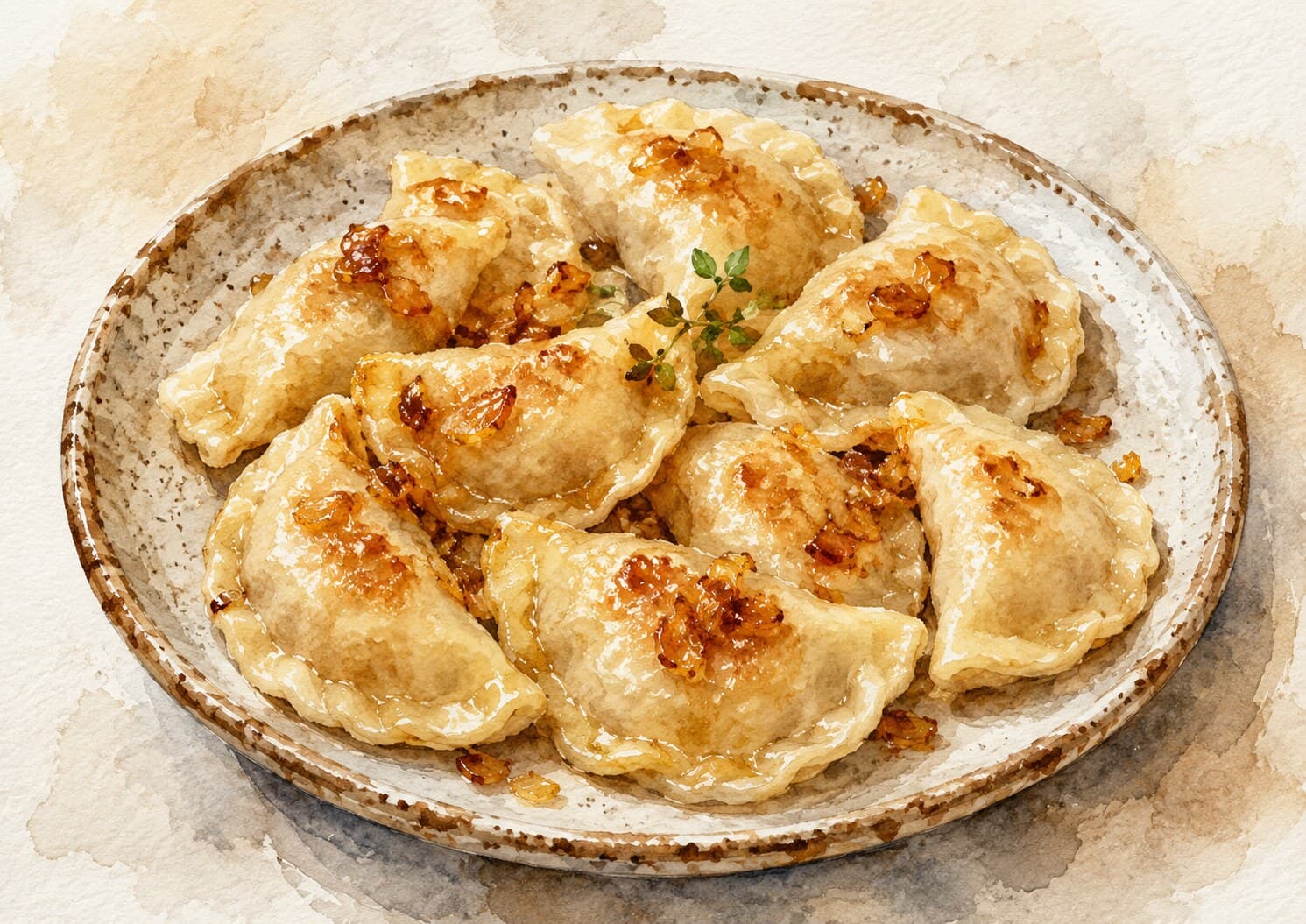
Delight in homemade pierogi filled with creamy potato and cheese, boiled, and pan-fried to perfection.
Contents (5 sections)▾
Ingredients
- 500 g all-purpose flour
- 200 ml water
- 1 large egg
- 1 tsp salt
- 600 g potatoes, peeled and cubed
- 200 g cottage cheese
- 1 medium onion, finely chopped
- 50 g butter
- Salt to taste
- Black pepper to taste
Steps
In a bowl, mix the flour and salt. Make a well in the center, add the egg and water, then mix until a dough forms. Knead for about 5-7 minutes until smooth.
Boil the cubed potatoes in salted water for 15-20 minutes until tender. Drain and mash them, then mix in the cottage cheese, salt, and black pepper.
Roll out the dough on a floured surface to about 2 mm thick. Cut into circles using a glass or cutter, about 7-8 cm in diameter.
Place a spoonful of the potato-cheese filling in the center of each circle. Fold the dough over to create a half-moon shape, and seal the edges by pressing firmly.
Bring a large pot of salted water to a boil. Add the pierogi in batches, boiling them for 5-7 minutes or until they float to the surface.
In a skillet, melt the butter over medium heat. Add the finely chopped onion, cooking until golden brown. Add the boiled pierogi to the skillet, frying for about 3-5 minutes on each side until golden.
Why this works
The technique of making pierogi involves a delicate balance between dough and filling; the dough must be tender yet strong enough to hold the filling without breaking. The initial boiling ensures the pierogi are cooked through and soft, while the pan-frying adds a crunchy texture and depth of flavor from the butter and onions. If the dough tears when folding, it may be too thin; simply patch it with a bit of additional dough or roll it out less. The use of cottage cheese in the filling complements the potatoes, creating a creamy consistency that contrasts well with the crispy edges. Adjust the seasoning to achieve a balance that enhances the fillings, making them flavorful without overpowering the dish.
Common mistakes
Pulling pierogi out the moment they float — dough still raw at the seam. Target: boil 5–7 minutes total; after they float to the surface, give them another 2 minutes of gentle simmer. The dough at the thickest pinch should look uniformly translucent, not chalk-white. Why it matters: floating tells you the dumpling is buoyant, not that the dough has fully cooked through. The pinched seam is double-thick, and undercooked flour-and-water dough tastes raw and pasty. If your filling includes raw meat (some traditional variants do), the meat must also reach a safe internal temperature — 71 °C / 160 °F for ground meat, measured with an instant-read thermometer (cutting one open to check for no pink is a supporting sign, not a substitute). What to do: lift one out, cut along the seam, and check the dough texture — soft and cooked through, not gummy. The pan-fry that follows is optional flavor and texture, not a way to finish raw dough.
Overworking the dough — chewy, tough pierogi. Target: knead just until smooth and elastic, about 5–7 minutes, then rest covered for at least 30 minutes. Why it matters: kneading develops gluten (the wheat-protein network that gives chew); too much makes the wrapper rubbery and hard to roll thin. The rest period lets the gluten relax so the dough rolls evenly without springing back. What to do: if the dough fights the rolling pin and snaps back, cover it and walk away for 15 more minutes — patience saves more pierogi than force.
Watery filling that leaks through the seam. Target: drain boiled potatoes well, then return them to the hot pan over low heat for a minute to drive off surface moisture before mashing. The finished filling should hold its shape when scooped, not slump. Why it matters: water in the filling creates steam during boiling that splits the seam, and the resulting gap floods the wrapper with cooking water — soggy dumplings, leaking insides. What to do: if your filling is too wet, fold in a tablespoon of toasted breadcrumbs or a little extra mashed potato to absorb the moisture.
Pan-frying without first draining the boiled pierogi. Target: lift cooked pierogi out with a slotted spoon, let surface water drip off, then place into the butter-and-onion pan. The butter should sizzle on contact, not steam. Why it matters: water in butter at high heat sputters dangerously and prevents the dumpling from browning — you get pale, greasy pierogi instead of golden, crisp-edged ones. Pierogi shipped to a hot pan still dripping water also lower the pan temperature and the onions stew rather than brown. What to do: drain on a clean kitchen towel for 30 seconds; fry in batches so the pan stays hot.
What to look for
- Edges that look slightly translucent. Cooked pierogi turn glossy and let the filling color show through the rim. Chalky white edges mean more boiling time.
- A seam that stays sealed. A well-made seam shows a small, raised rope of dough; popped seams have a flat, splayed look and the filling has begun to escape.
- A clear butter sizzle when you add to the pan. A sharp, steady sizzle (not a snap-and-spit) means the surface is dry and the butter hot. Quiet pan equals soggy pierogi.
- Onions that go from translucent to golden as the pierogi finish. They are the cook's timer in the same pan — pale onions mean stop early; deep-mahogany onions mean you've gone past golden.
A note on history
Pierogi (Polish stuffed dumplings — a soft round of boiled dough wrapped around a savory or sweet filling) have been a fixture of Polish home cooking for centuries; their first written mention in Polish sources dates to the 13th century, and a formal recipe appears in the 1682 cookbook Compendium Ferculorum (Britannica). Polish tradition attributes their introduction to St. Hyacinth of Poland, a 13th-century Dominican friar (a member of a Catholic preaching order founded in 1216) who, by legend, served pierogi to villagers after a crop-saving miracle in 1238 (Wikipedia, Polka Deli). The broader family of filled dumplings likely arrived in Central Europe along trade and migration routes from further east, but the Polish form — and the specific potato-and-cheese filling known as pierogi ruskie (the most common everyday version, despite the name meaning "Ruthenian-style") — became a distinctive tradition of its own.
Get the essays in your inbox — free
Weekly notes on flavor, fermentation, and food history — the writing behind the Atlas of Flavor. No spam; unsubscribe anytime.