
Beef Stroganoff
This Beef Stroganoff features quickly seared tenderloin in a rich mushroom-mustard sauce, finished with smooth sour cream.
Contents (5 sections)▾
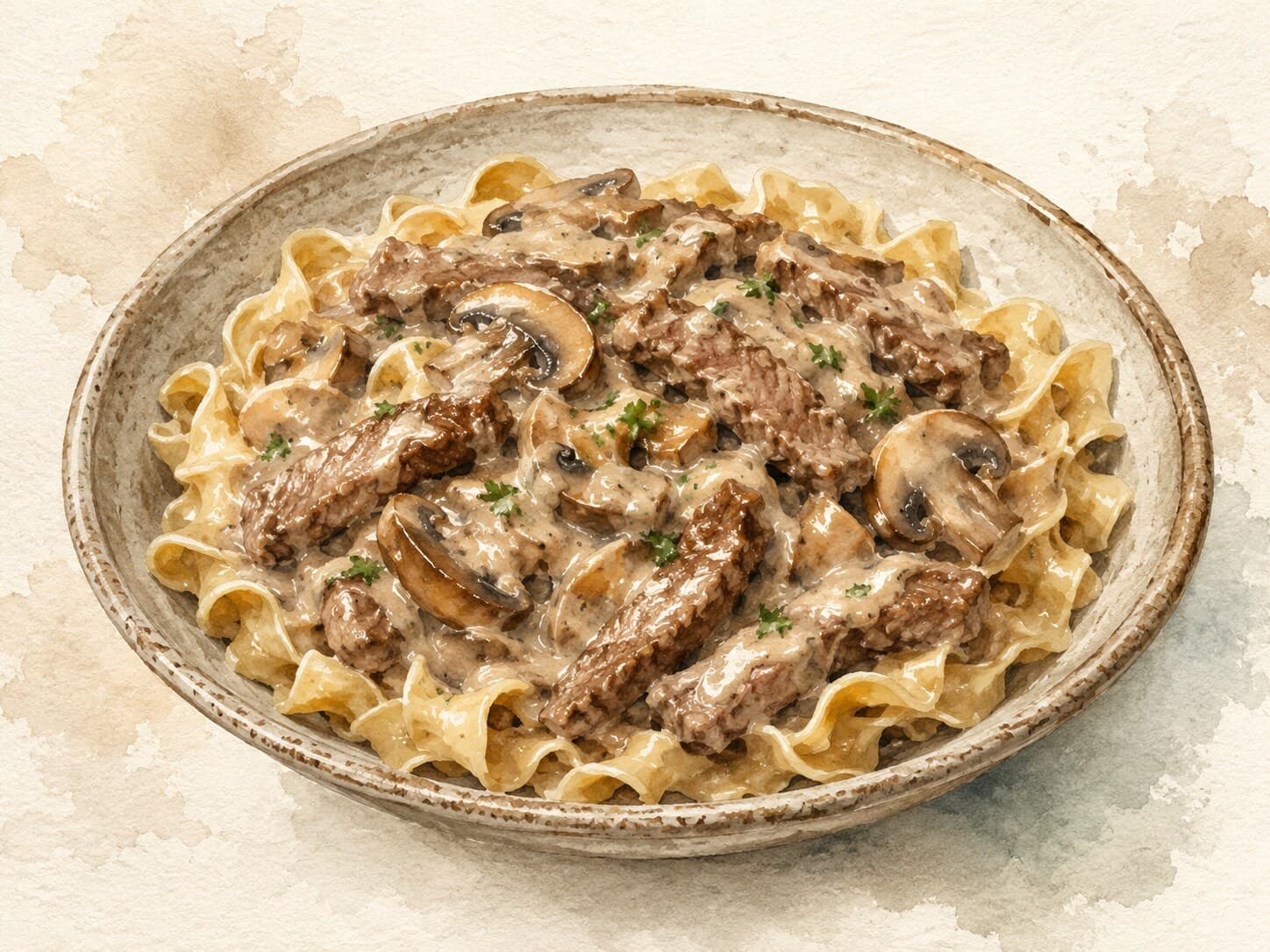
Ingredients
- 500 g beef tenderloin, cut into strips
- 200 g mushrooms, sliced
- 1 medium onion, finely chopped
- 2 tbsp Dijon mustard
- 200 ml beef broth
- 200 ml sour cream
- 2 tbsp olive oil
- Salt, to taste
- Black pepper, to taste
- Parsley, chopped, for garnish
Steps
Heat 2 tablespoons of olive oil in a large skillet over medium-high heat until shimmering.
Season the beef strips with salt and black pepper, then sear them in the hot skillet for about 2-3 minutes on each side until browned.
Remove the beef from the skillet and set aside, leaving the juices in the pan.
Add the chopped onion and sliced mushrooms to the skillet, cooking for about 5 minutes until softened and browned.
Stir in the Dijon mustard and cook for another minute to combine.
Pour in the beef broth, scraping up any browned bits, and let it simmer for 2-3 minutes until slightly reduced.
Remove the skillet from heat and stir in the sour cream until smooth; then return the beef to the sauce.
Toss to coat the beef in the sauce, garnish with parsley, and serve immediately.
Why this works
The key to a successful Beef Stroganoff lies in the quick searing (browning the surface fast in a hot pan) of the beef, which builds deep, browned flavor through the Maillard reaction. By cooking the beef at a high temperature for a short period, you're able to achieve a perfect crust while keeping the meat tender. If the sauce breaks and appears curdled, that's often due to overheating the sour cream; simply remove it from the heat and whisk in a bit of the hot broth to temper it (warm it gradually so it doesn't curdle from a sudden jump in heat) before adding it back to the sauce. This dish celebrates the harmony of flavors; the mustard provides a tangy kick, while the sour cream offers a creamy finish that complements the savory beef and earthy mushrooms. Timing is crucial; the beef should be added back to the sauce just before serving to maintain its tenderness and warmth, ensuring a delightful texture and flavor with every bite.
Common mistakes
Crowding the pan when you sear the beef.
Target: A single, spaced-out layer of strips in a hot pan — cook in two or three batches if needed.
Why it matters: Browning (the Maillard reaction — the savory crust and deep flavor that form when meat surface meets high, dry heat) only happens above the boiling point of water. Pile the strips in and they release moisture faster than it can evaporate; the beef steams in its own juices and turns grey instead of browning. No crust means no fond, and the sauce loses its backbone of flavor.
What to do: Give each piece room and let it sit undisturbed for a minute before turning. Sear in batches, setting each one aside, rather than dumping it all in at once.
Overcooking the tenderloin.
Target: A quick sear that browns the outside while the strips stay just cooked through and tender; then they go back in only to warm at the end.
Why it matters: Tenderloin is lean and low in connective tissue, so it has nothing to gain from long cooking — heat only tightens the muscle fibers and squeezes out moisture, turning a tender cut tough and dry. This is the opposite of a braise. Speed protects the texture.
What to do: Sear hot and fast, pull the beef out while it's done but still juicy, build the sauce separately, and return the meat just before serving to heat through — not to keep cooking.
Boiling the sauce after the sour cream goes in.
Target: Stir the sour cream in off the heat (or on the gentlest warmth) so the sauce stays smooth and never simmers once it's added.
Why it matters: Sour cream is an emulsion (a smooth, stable mix of fat and water-based liquid that would normally separate) of fat, water, and protein. Bring it to a boil and the proteins denature and clump (the same thing that happens to a fried egg white), breaking the sauce into a grainy, curdled mess with oil weeping out.
What to do: Take the pan off the heat before adding the sour cream. If you must reheat, keep it well below a simmer. Letting the sour cream lose its fridge chill first also helps it blend in smoothly.
Pouring out the browned bits with the pan juices.
Target: Keep the fond — the browned residue stuck to the pan after searing — and dissolve it into the sauce.
Why it matters: That sticky brown layer is concentrated, roasted meat flavor. Discard it and you've thrown away the single most flavorful thing in the pan; the sauce ends up thin and one-note.
What to do: After the mushrooms and onion soften, pour in the broth and scrape the bottom of the pan with a spoon (deglazing) so every bit lifts off and melts into the sauce.
What to look for
- A deep brown crust on the seared strips, and a sizzle that stays loud: that sound means the surface is hot and dry enough to brown. If the sizzle goes quiet and damp, the pan has cooled or is crowded — the beef is stewing, not searing.
- The mushrooms give up their water, then start to brown: mushrooms release a lot of liquid first; only once that cooks off do they brown and turn savory. Wait for the dry, golden stage before moving on.
- The broth thickens slightly and coats the back of a spoon: a brief simmer reduces it just enough to carry the sauce. Watery and thin means it needs another minute of reduction before the sour cream goes in.
- A smooth, glossy, pale-tan sauce after the sour cream: evenly creamy with no grainy specks or oily streaks tells you the sour cream went in gently enough and the sauce never broke.
A note on history
The dish is named for the Stroganovs, a wealthy Russian noble family, and the first known printed recipe appears in Elena Molokhovets' classic cookbook A Gift to Young Housewives, in its 1871 edition — there the beef is cut in cubes and sautéed, then served in a mustard-and-sour-cream sauce (The Moscow Times; Wikipedia). The name "Stroganoff" was popularized through a recipe sent by a chef working in St. Petersburg to a French culinary magazine around 1891, reflecting how French-trained chefs in wealthy Russian households shaped the dish (The Moscow Times).
Get the essays in your inbox — free
Weekly notes on flavor, fermentation, and food history — the writing behind the Atlas of Flavor. No spam; unsubscribe anytime.