
Ajika
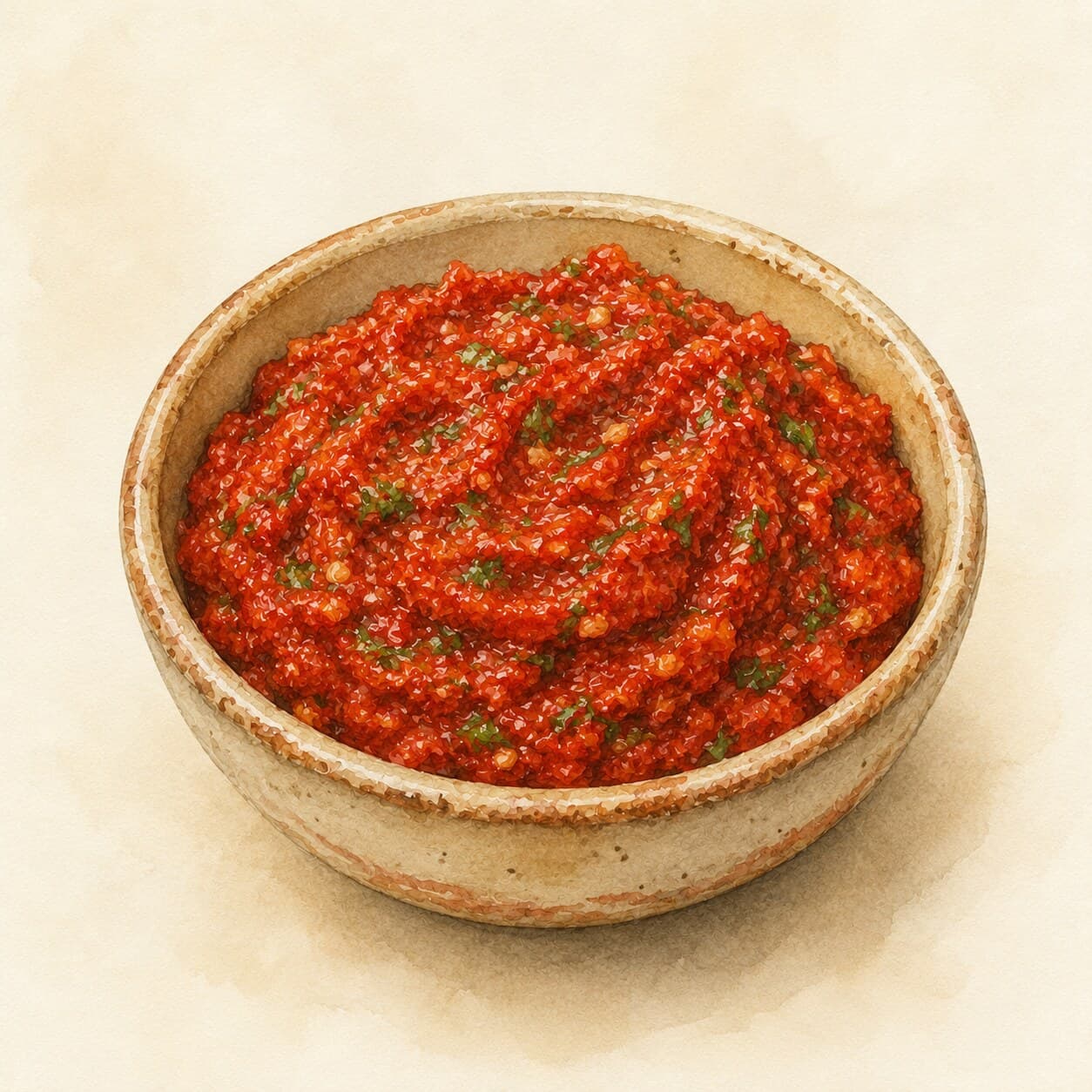
Ajika is a vibrant Georgian red chile paste made from a blend of spices and nuts, perfect for enhancing various dishes.
Contents (5 sections)▾
Ingredients
- 150 g red chiles, dried, seeds removed
- 5 cloves garlic, peeled
- 100 g walnuts, shelled
- 1 tsp coriander seeds
- 1 tsp blue fenugreek
- 1 tsp salt, or to taste
Steps
In a mortar and pestle or food processor, combine the dried red chiles and garlic. Pound or process for about 2-3 minutes until a coarse paste forms.
Add the walnuts, coriander seeds, blue fenugreek, and salt to the mixture. Continue to pound or process for an additional 3-4 minutes until well combined and smooth. Adjust salt to taste.
Transfer the ajika to a bowl and let it rest for 10 minutes to allow the flavors to meld.
Why this works
Ajika's vibrant flavor comes from the careful melding of its raw ingredients, which are pounded or processed rather than cooked. This technique preserves the fresh, aromatic qualities of the chiles and garlic while the walnuts add a rich, creamy texture. The spices—coriander and blue fenugreek (a mild, slightly sweet dried Georgian spice)—contribute unique earthy notes that add to the paste’s taste profile. If the mixture seems too dry, add a tiny splash of water or olive oil to achieve the desired consistency. This recipe showcases how the balance of heat from the chiles and the richness from the walnuts creates a harmonious condiment that complements various dishes. Properly executed, ajika can be a versatile addition to meats, breads, and vegetables, enhancing each with a robust flavor. If the paste is too spicy for your palate, consider adding more walnuts to mellow the heat without compromising the dish's integrity. Moreover, ensuring the right texture is crucial; if your paste is too chunky after processing, continue to blend for an additional minute or two until it reaches the desired smoothness.
Common mistakes
Trying to grind bone-dry chiles straight from the bag.
Target: chile flesh that is soft and leathery, not brittle, before you start pounding.
Why it matters: Fully dried chiles are brittle, so they shatter into sharp little flakes instead of breaking down into a smooth paste — you end up with a gritty mix where one bite is scorching and the next is bland.
What to do: Cover the deseeded chiles with just-boiled water for 15–20 minutes until they feel pliable, then squeeze out the water before grinding. (If your chiles are already soft and bendy, you can skip this.)
Leaving the garlic in visible chunks.
Target: chiles and garlic worked to an even, smooth paste before anything else goes in.
Why it matters: Raw garlic is powerful, and a stray chunk delivers a harsh, sharp hit that buries the fruity chile flavor. Ajika is meant to taste like one blended thing, not separate pieces.
What to do: Pound the chiles, garlic, and salt together first, until you cannot see any white flecks, and only then add the walnuts and spices.
Grinding the walnuts into an oily butter.
Target: walnuts broken down to a coarse, damp rubble that binds the paste together.
Why it matters: Walnuts are roughly two-thirds oil. Work them too long and that oil floods out, turning the paste greasy and slick and muffling the fresh chile-and-garlic top notes; over-ground walnuts can also taste faintly bitter.
What to do: Add the walnuts near the end and pound just until they disappear into the paste, about 1–2 minutes. A little texture is a good thing here.
Under-salting.
Target: the full teaspoon, then adjusted to taste at the end.
Why it matters: In ajika, salt does more than season — it pulls water out of the garlic and chile cells (osmosis, water moving toward the salt), which helps them break down, and it is the traditional preservative that lets the paste keep in the fridge. Under-salted ajika tastes flat and will not last as long.
What to do: Add salt at the start with the chiles and garlic, taste at the end, and add a pinch more if it tastes dull rather than lively.
Serving it the second it's blended.
Target: at least the 10-minute rest the recipe calls for.
Why it matters: Straight after grinding, the raw garlic is at its sharpest and the flavors sit as separate layers. A short rest lets them settle into one another and rounds off that raw edge.
What to do: Scrape it into a bowl, wait 10 minutes, then taste again before adjusting salt or heat.
What to look for
- Chile-and-garlic base (before the walnuts): deep brick-red, glossy, and smooth, with no white garlic flecks left. It should smell sharply of raw garlic and fruity, hot pepper.
- Once the walnuts are in: the color lightens a shade toward russet and the paste turns thick and creamy, holding a soft peak on the spoon rather than weeping oil.
- Right consistency: spoonable and cohesive, like a thick pesto (the pounded basil-and-nut sauce) — not runny, not dry and crumbly. If it is crumbly, work in water or oil a few drops at a time; if it is loose, add a few more walnuts.
- After the 10-minute rest: the aroma is rounder and less raw — the harsh garlic edge softens and the earthy coriander-and-fenugreek warmth comes forward.
A note on history
Ajika takes its name from the Abkhaz word for "salt," a clue to its origin: it is traditionally traced to shepherds in Abkhazia, on the Black Sea side of the Caucasus mountains, who stretched their precious salt by mixing it with the region's abundant red peppers, garlic, and wild herbs. Georgia added ajika to its national list of intangible cultural heritage in 2018. (Source: Ajika — Wikipedia)
Get the essays in your inbox — free
Weekly notes on flavor, fermentation, and food history — the writing behind the Atlas of Flavor. No spam; unsubscribe anytime.