
Zucchini Fritters
Zucchini fritters made by grating zucchini, removing moisture, mixing with flour and eggs, then frying until golden brown.
Contents (5 sections)▾
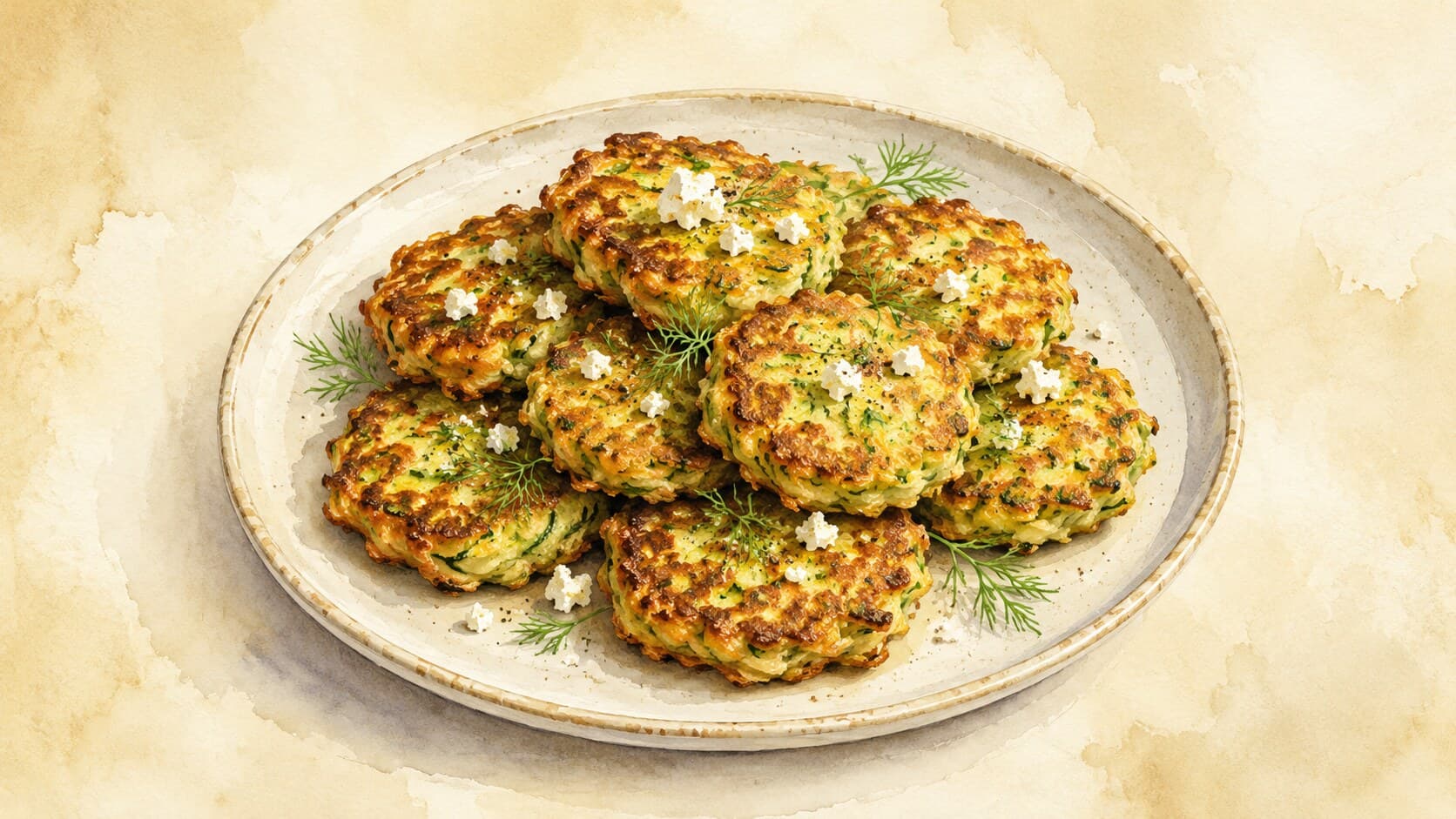
Ingredients
- 500 g zucchini, grated
- 1 tsp salt
- 100 g all-purpose flour
- 2 large eggs
- 50 g grated Parmesan cheese
- 2 tbsp fresh parsley, chopped
- 1 tsp black pepper
- Oil for frying, as needed
Steps
Grate the zucchini and sprinkle with salt. Let it sit for 10 minutes to draw out excess moisture, which helps achieve a crispier fritter.
After 10 minutes, use a clean kitchen towel to squeeze out as much moisture from the zucchini as possible.
In a mixing bowl, combine the drained zucchini, flour, eggs, Parmesan, parsley, and black pepper until well mixed.
Heat oil in a non-stick skillet over medium heat (about 180°C/350°F).
Scoop tablespoon-sized portions of the mixture into the hot oil, flattening them slightly. Cook for about 3-4 minutes on each side until golden brown.
Remove fritters from the skillet and drain on paper towels to absorb excess oil before serving.
Why this works
The key to achieving crispy zucchini fritters lies in properly removing excess moisture from the zucchini. By salting and resting the grated zucchini, you allow it to expel water, resulting in a firmer batter that fries beautifully. If the fritters seem too wet after mixing, you can add a bit more flour to bind them better. Cooking them in a hot skillet ensures a quick sear, developing a golden, crisp crust. If they break during frying, it often means the mixture is too wet; simply add more flour to help them hold together. For a flavor twist, consider adding different herbs or spices to the batter, enhancing the summer vegetable profile with each batch you make. Remember, the texture is important; too much moisture leads to soggy fritters, while proper squeezing gives you that satisfying crunch.
Common mistakes
-
Under-draining the zucchini.
- Target: After salting and resting, you should be able to squeeze a handful and have only a few drops of liquid come out.
- Why it matters: Zucchini is more than 90% water. Any moisture left in the shred turns into steam inside the fritter and the crust never crisps — you get pale, soggy disks instead of golden ones.
- What to do: Salt the shred, rest 10 minutes, then wring it hard in a clean kitchen towel or several squeezes in a fine sieve. Press until the towel is heavy and the zucchini looks dry and fluffy.
-
Oil that is too cool.
- Target: Around 175-185°C / 350-365°F — a fritter should sizzle audibly the instant it hits the pan.
- Why it matters: Cool oil seeps in instead of searing. The fritters absorb fat, the crust never sets, and they fall apart when you try to flip them.
- What to do: Wait until a single shred dropped in the oil bubbles vigorously. If the surface goes still after the first fritter, lift them out and let the oil come back up before continuing.
-
Crowding the pan.
- Target: Leave at least a fritter's width of space between portions.
- Why it matters: Each fritter sheds moisture as it cooks; crowded pans trap that steam and the temperature drops sharply.
- What to do: Fry in batches and resist the urge to fill the pan. Keep the finished fritters on a wire rack (not paper towels) in a low oven so the steam from underneath escapes.
-
Flipping too early.
- Target: First side a deep, even gold-brown before you turn — usually 3-4 minutes.
- Why it matters: The egg-and-flour binder needs time to set against the hot surface. Flip too soon and the fritter tears, leaving a wet center.
- What to do: Resist nudging. When the edges look set and the bottom rim is dark gold, slide a thin spatula under and turn once, gently.
What to look for
- A shred of zucchini that holds its shape when squeezed — no fresh drips after the towel-press.
- An audible, steady sizzle the moment a portion lands in the oil, with bubbles rising at the edges.
- Deep golden, lacy edges and a crisp set crust before you flip.
- A clean snap or crackle from the crust when you cut into a finished fritter, with steam — not water — rising from the interior.
A note on history
Zucchini fritters (shredded courgette held together with egg, flour, and cheese, then pan-fried) are a Mediterranean and Eastern Mediterranean family rather than a single national dish. In Greece they appear as kolokithokeftedes (κολοκυθοκεφτέδες), strongly associated with Crete and the islands, often bound with feta or local cheeses. In Turkey they are mücver, with roots described back to Ottoman vegetable-fritter traditions and now common across the country, sometimes made with corn, spinach or other greens depending on the region. Italy has its own fritters of zucchini and flowers (frittelle di zucchine / zucchini-flower fritters), all part of the same cucina povera (literally "poor cooking" — the Italian tradition of resourceful peasant-pantry dishes) logic of turning a glut of summer squash into something crisp and satisfying.
Get the essays in your inbox — free
Weekly notes on flavor, fermentation, and food history — the writing behind the Atlas of Flavor. No spam; unsubscribe anytime.