
Appam
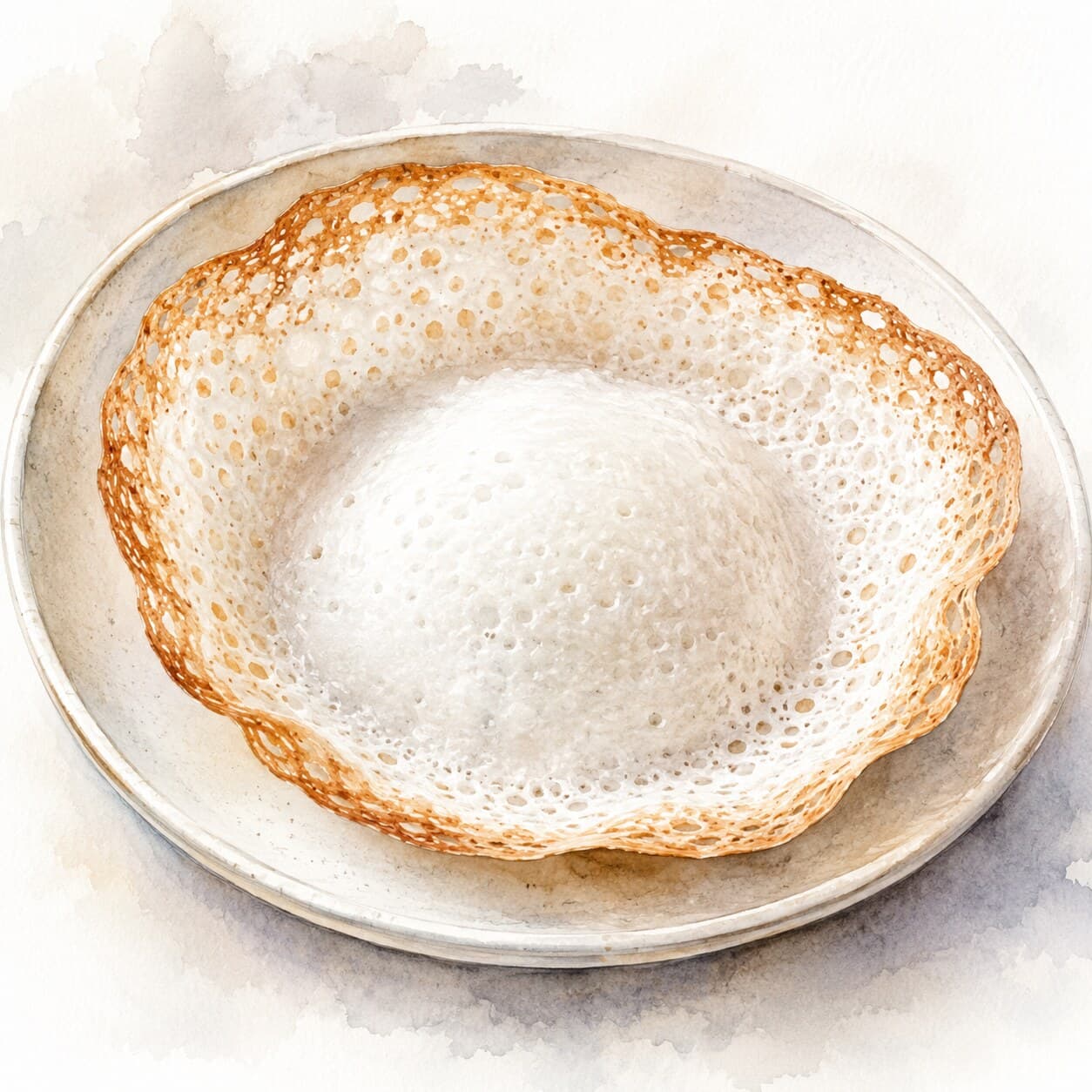
Appam is a traditional Keralan pancake with a crispy edge and soft center, perfect for pairing with curry or kadala.
Contents (5 sections)▾
Ingredients
- 200 g rice
- 100 g grated coconut
- 1 tsp yeast (or fermented batter)
- 1 tsp salt
- 300 ml coconut milk (for serving)
- water (as needed for soaking and blending)
Steps
Soak the rice in water for at least 6 hours, or overnight, to ensure proper fermentation and texture.
After soaking, drain the rice and blend it with grated coconut, adding a little water to create a smooth batter.
Mix in the yeast and salt, then let the batter ferment in a warm place for 2 hours, until it becomes airy and bubbly.
Heat the appachatti (small wok-bowl) over medium heat until hot, then pour in a ladle of batter, swirling to cover the sides.
Cover and cook for about 2-3 minutes, until the edges are crispy and the center is softly set.
Serve hot with coconut milk and your choice of curry or kadala.
Why this works
The process of soaking rice hydrates the grains and begins the fermentation process, which is crucial for developing the unique flavor and texture of appam. The addition of grated coconut enriches the batter, providing a subtle sweetness and enhancing the overall taste. As the batter ferments, it becomes airy due to the natural yeast, which contributes to the light and soft center of the appam. Cooking in an appachatti allows for even heat distribution, resulting in crispy edges. If the edges burn, ensure that your cooking temperature is not too high; if they seem too thick, you can add a bit more water to the batter to achieve the desired consistency. A well-cooked appam should have a delicate balance of texture, with a crispy exterior and a soft, fluffy interior that pairs beautifully with curry or kadala.
Common mistakes
Rushing or skipping the fermentation.
Target: Let the batter rise until it looks visibly puffed, doubled, and covered in small bubbles — not just "rested."
Why it matters: Fermentation (the process by which natural yeasts and bacteria produce gas and acid in the batter) is what gives appam its signature lace-thin, crisp edge and soft, spongy center. Batter that hasn't fermented long enough cooks flat and dense, closer to a plain rice crepe than a true appam.
What to do: Give the batter its full rest in a warm spot — an oven with just the light on works well — and check for visible puffing and a faint sour smell before you start cooking.
Getting the batter consistency wrong.
Target: Aim for a thin, pourable batter, similar to a crepe batter — loose enough to swirl up the sides of the pan, but with enough body to hold a soft pool in the center.
Why it matters: Batter that's too thick won't swirl into a thin lace along the sides and stays doughy; batter that's too thin has no structure to set a soft center, so the appam turns holey or tears when you try to lift it.
What to do: Adjust with small splashes of water after fermenting, testing one appam first before committing the rest of the batch.
Cooking in a pan that's the wrong temperature.
Target: Preheat the appachatti (the deep, curved pan traditionally used for appam) until a drop of batter sizzles on contact, then ease the heat down slightly before pouring.
Why it matters: A pan that's too cool lets the batter soak in without crisping, giving a pale, chewy edge; a pan that's too hot scorches the lace before the center has finished steaming through.
What to do: Heat the pan for a couple of minutes over medium, test with a small drop of batter, and adjust the flame before pouring the full ladle.
Not swirling the batter fast enough.
Target: Pour a ladleful into the center, then immediately tilt and rotate the pan so the batter climbs the sides in one smooth motion.
Why it matters: The thin edges that climb the pan are what turn crisp and lacy; if the batter sets before you swirl it, you're left with a flat, uniform pancake instead of the characteristic bowl shape with a crisp rim and soft base.
What to do: Work quickly and confidently right after pouring — a few seconds of swirling before the batter sets is all it takes.
What to look for
- A lacy, golden edge that lifts cleanly away from the pan. Crisp, pale-golden lace at the rim (versus a pale, limp edge) tells you the batter's fermentation and the pan's temperature were both right.
- A soft, slightly spongy, well-risen center dotted with tiny air holes. That texture comes directly from fermentation; a dense, flat center means the batter needed more time to rise.
- A dome that sets from the rim inward while covered. Watching the center firm up under its own steam, rather than needing a flip, is the sign the appam is nearly done — appam is traditionally cooked on one side only.
A note on history
Appam's roots trace to Kerala on India's Malabar coast. Food historians point to mentions of a related fermented pancake in classical Tamil poetry from the Sangam period, roughly two thousand years ago, and to communities that fermented rice batter with palm toddy (fermented palm sap) rather than commercial yeast. From Kerala, the same fermented rice-and-coconut pancake traveled to Sri Lanka, where it became known as the "hopper" — a name that took hold during the island's period as British Ceylon.
Today the dish is a shared staple across Kerala and Sri Lanka, traditionally cooked in the curved appachatti and served alongside a stew, curry, or kadala (spiced black chickpeas) for breakfast or dinner. Modern kitchens often substitute commercial yeast or baking soda for toddy, but the goal remains a batter alive enough to rise into a soft center with a crisp, lacy edge.
Get the essays in your inbox — free
Weekly notes on flavor, fermentation, and food history — the writing behind the Atlas of Flavor. No spam; unsubscribe anytime.