
Bún Bò Nam Bộ
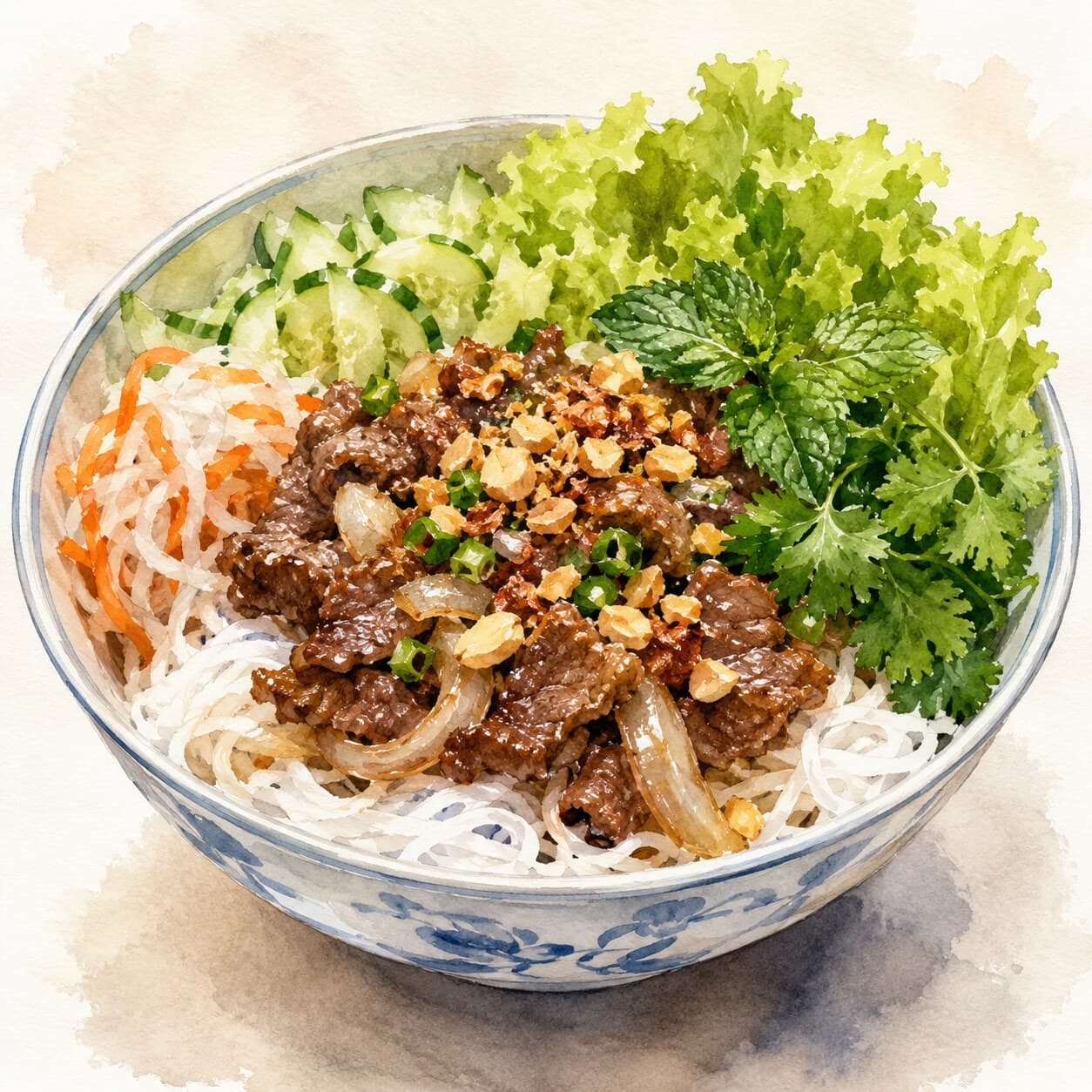
Bún Bò Nam Bộ is a vibrant Southern Vietnamese dish featuring warm lemongrass beef over rice vermicelli, fresh herbs, and a tangy nước chấm sauce.
Contents (5 sections)▾
Ingredients
- 200 g rice vermicelli
- 250 g beef sirloin, thinly sliced
- 2 stalk(s) lemongrass, finely chopped
- 1 tbsp vegetable oil
- 50 g fresh mint leaves
- 50 g fresh basil leaves
- 50 g perilla leaves
- 30 g crushed peanuts
- 120 ml nước chấm (Vietnamese dipping sauce)
- to taste salt and pepper
Steps
Soak the rice vermicelli in warm water for about 15 minutes until soft, then drain and set aside.
In a hot skillet over medium-high heat, add vegetable oil and sauté the chopped lemongrass for about 1 minute until fragrant.
Add the sliced beef to the skillet, season with salt and pepper, and stir-fry for 3-5 minutes until cooked through.
Place the soaked rice vermicelli in a bowl, top with the hot lemongrass beef, and garnish with fresh herbs and crushed peanuts.
Drizzle the nước chấm over the bowl just before serving to enhance flavors.
Why this works
The beauty of Bún Bò Nam Bộ lies in its contrasting temperatures and fresh ingredients. The warm, flavorful stir-fried beef, infused with the aromatic essence of lemongrass, pairs perfectly with the cool, delicate rice vermicelli at the bottom, creating a delightful eating experience. The fresh herbs add flavor, while the crushed peanuts provide a crunchy texture. If the beef seems too dry during cooking, adding a splash of water or a little more oil can help keep it moist and tender. This dish is also versatile; feel free to adjust the amount of herbs or peanuts according to your preference. The nước chấm, a tangy dipping sauce, serves as the final touch, unifying all elements with its brightness and acidity. Each bite offers a refreshing contrast that celebrates the essence of Vietnamese cuisine.
Common mistakes
Slicing the beef with the grain, or too thick.
Target: Slice the sirloin thinly against the grain (cutting across, rather than parallel to, the muscle fibers) — almost shaving-thin.
Why it matters: A quick, high-heat stir-fry doesn't give tough muscle fibers time to break down the way a slow braise does, so if the beef is cut with the grain or too thick, it stays chewy no matter how well it's cooked.
What to do: Chill the beef for 15–20 minutes to firm it up, then slice thinly against the visible grain so each piece turns tender after just a couple of minutes in the pan.
Crowding the skillet so the beef steams instead of searing.
Target: Cook the beef in a very hot, wide skillet or wok, in a single layer or in small batches.
Why it matters: Thin slices of beef release moisture quickly; in a crowded or lukewarm pan, that moisture has nowhere to go and the beef greys and simmers in its own liquid rather than browning, losing the savory seared edge that carries much of the dish's flavor.
What to do: Heat the pan until it's shimmering before the oil goes in, and cook the beef in two batches if your pan isn't large enough to hold it in one layer.
Skipping the lemongrass bloom, or burning it.
Target: Sauté the finely chopped lemongrass in the hot oil for about a minute, just until fragrant, before the beef goes in.
Why it matters: Lemongrass needs brief contact with hot oil to release its aromatic oils into the dish; added raw it tastes grassy and fibrous, and left too long in the pan it turns bitter.
What to do: Add it to hot oil over medium-high heat, stir constantly, and pull it as soon as the aroma turns bright and citrusy.
Assembling the bowl in the wrong order.
Target: Drain the soaked vermicelli well, plate the cool noodles and herbs first, and add the hot beef on top just before serving.
Why it matters: The dish depends on the contrast between warm, savory beef and cool noodles, herbs, and peanuts; noodles left wet dilute the nước chấm (the tangy, fish-sauce-based dressing), and beef added too early steams the noodles and erases that contrast.
What to do: Shake or blot the noodles dry after draining, build the bowl cold-to-warm from the bottom up, and drizzle the nước chấm on right before the dish reaches the table.
What to look for
- Beef that's browned at the edges, with no pink or red remaining in the thickest slice. That's the sign it's fully cooked through and properly seared, not just heated.
- A clear temperature contrast in the bowl — noodles and herbs still cool, beef still warm from the pan — rather than a bowl that's gone lukewarm all over.
- Lemongrass that smells bright and citrusy, not raw-grassy or scorched. Either extreme means the timing in the pan was off.
- Peanuts that stay audibly crunchy rather than softened from sitting too long under the sauce.
A note on history
Bún bò Nam Bộ belongs to Vietnam's broad family of bún dishes — rice vermicelli built up in a bowl with herbs, a savory topping, and a dressing, rather than served in broth. Newspaper accounts place a similar noodles-with-sautéed-beef dish in Saigon (in the region then called Cochinchina) as early as the 1920s. The specific name "Nam Bộ" — which literally names the southern region of Vietnam — is often linked, in local telling, to a Hanoi street vendor who began serving a beef-noodle dish in the early 1980s on a street once called Nam Bộ, after which the name spread and many came to assume it referred to the region rather than the street. Food writers today generally agree the dish's flavor, with its notes of sweetness, fits the culinary character of the south, even if the popular name has a more tangled history than it first suggests.
Get the essays in your inbox — free
Weekly notes on flavor, fermentation, and food history — the writing behind the Atlas of Flavor. No spam; unsubscribe anytime.