
Bacalhau à Brás
Bacalhau à Brás combines salt cod, crispy potato shoestrings, and firm scrambled eggs for a delightful Portuguese dish.
Contents (5 sections)▾
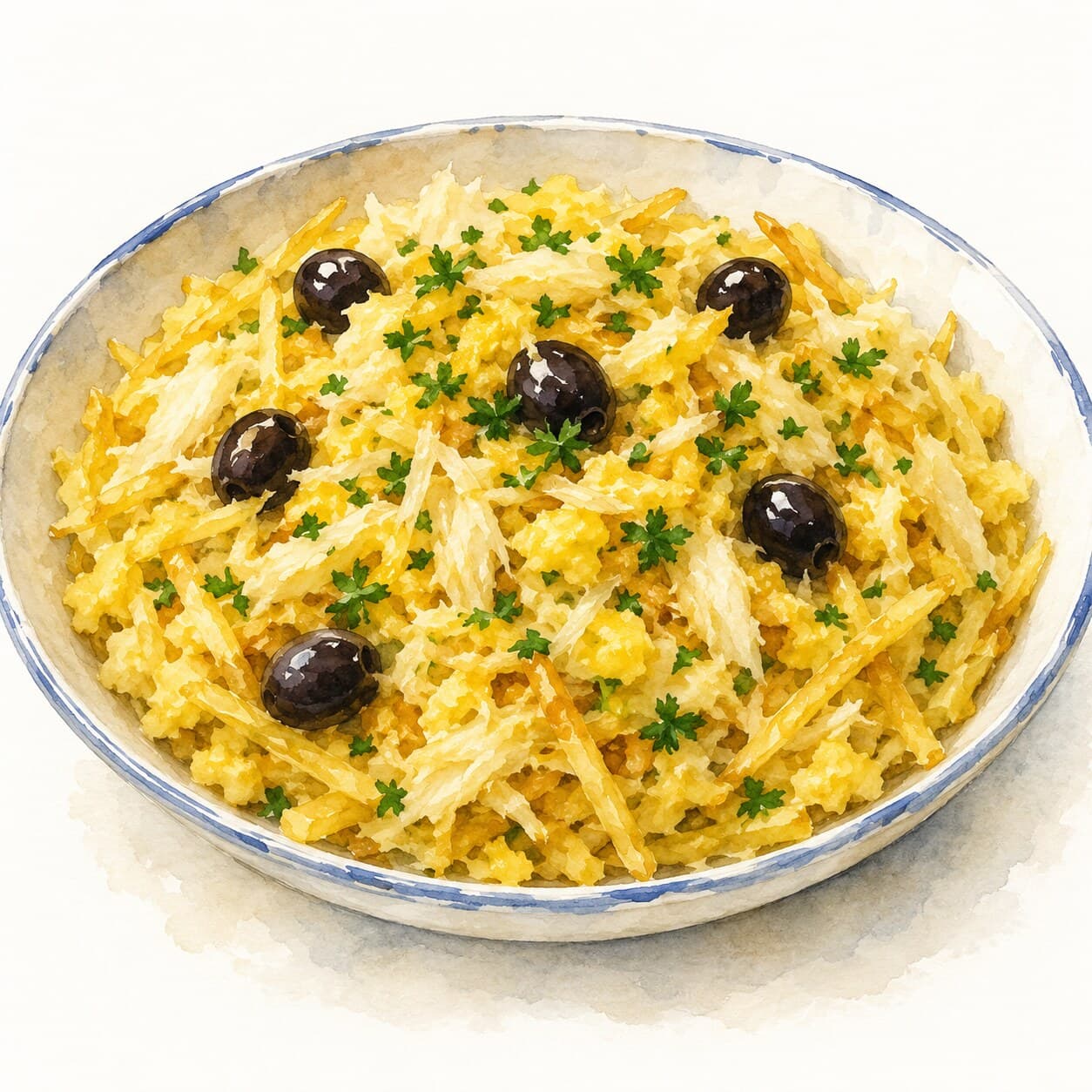
Ingredients
- 400 g salt cod, desalinated and shredded
- 200 g thin julienne potatoes (shoestring)
- 1 medium onion, finely chopped
- 4 large eggs
- 50 g black olives, pitted and sliced
- 2 tbsp fresh parsley, chopped
- Salt, to taste
- Black pepper, to taste
- Olive oil, for frying
Steps
In a large skillet, heat olive oil over medium heat. Add the chopped onion and sauté for about 5 minutes until translucent, which enhances the flavor base.
Add the shredded salt cod to the skillet and cook for another 5 minutes, stirring occasionally. This process helps to meld the flavors together.
While the cod cooks, heat oil in another frying pan over medium-high heat. Fry the julienne potatoes until golden and crispy, about 5 minutes. Drain on paper towels to remove excess oil.
In a bowl, whisk the eggs with salt and black pepper. Pour the whisked eggs over the cod mixture and cook gently, folding continuously for about 3-4 minutes until firm scrambled eggs form. Do not overcook to maintain a creamy texture.
Fold in the crispy potatoes, black olives, and parsley. Cook for an additional 1-2 minutes to warm through, ensuring the potatoes retain their crispiness.
Why this works
The technique of combining salt cod with crispy shoestring potatoes and firm scrambled eggs creates a harmonious blend of textures and flavors. The use of desalinated (soaked in water to draw out the preserving salt) salt cod ensures that the fish retains its rich flavor without being overly salty. The key to achieving perfectly firm scrambled eggs lies in cooking them gently; this prevents them from becoming rubbery. If the eggs seem too runny, increase the heat slightly and stir more frequently to help them set without overcooking. The inclusion of crispy potatoes adds a contrasting crunch that complements the softness of the eggs, while the olives and parsley introduce a burst of freshness, balancing the dish beautifully. This method ensures that each bite delivers a delightful combination of flavors and textures, making Bacalhau à Brás a comforting yet sophisticated dish.
Common mistakes
Rushing the desalting of the bacalhau (dried, salt-cured cod).
Target: Soak the dried salt cod in cold water in the refrigerator for at least 24–48 hours, changing the water several times, until a small piece tastes pleasantly savory rather than sharply salty.
Why it matters: Bacalhau is preserved with a heavy dry-salt cure so it can keep for months without refrigeration; if it isn't soaked long enough, no amount of careful cooking afterward will fix an overwhelmingly salty dish.
What to do: Plan ahead, soak it chilled with two or three water changes, and taste-test a flaked piece before you start cooking.
Cutting the potatoes too thick, or frying them in oil that isn't hot enough.
Target: Cut the potatoes into a fine, even julienne (thin matchstick strips) and fry them in oil hot enough that they sizzle the instant they go in, until golden and crisp.
Why it matters: Thick-cut potatoes stay soft in the middle and never develop a shell; oil that's too cool soaks into the potato before a crust forms, leaving it greasy and limp instead of shatteringly crisp — that crunch against the soft eggs is the whole textural point of the dish.
What to do: Cut the potatoes into even, thin strips, fry in small batches so the oil temperature doesn't drop, and drain on paper towel right away.
Scrambling the eggs over heat that's too high or too fast.
Target: Pour the whisked eggs over the warm cod mixture and cook over gentle, medium-low heat, folding continuously, until the eggs are fully set into soft curds with no raw egg left — but no longer than that.
Why it matters: High heat sets the outside of the egg curds before the inside catches up, giving a rubbery, watery texture, and it moves from just-set to overcooked in seconds; slow, constant folding cooks the eggs evenly all the way through so they're safely set and still tender.
What to do: Keep the heat moderate, stir without stopping, and take the pan off the heat the moment no liquid egg is visible — the residual heat finishes the job.
Adding the crispy potatoes too early.
Target: Fold the fried potatoes in right at the end, just long enough to warm through.
Why it matters: Potatoes that were fried crisp will wilt and go soft within a minute of sitting in a hot, moist egg mixture, undoing the contrast they're meant to provide.
What to do: Fry and drain the potatoes ahead of time, then fold them in during the last minute of cooking, off or nearly off the heat.
What to look for
- Eggs set into soft, moist curds with no pooling liquid. Fully cooked through, with no raw egg remaining, but still tender and a little glossy rather than dry or browned — that's the balance to aim for.
- Potato shoestrings that stay audibly crisp when you bite into the finished dish. If they've gone soft, they were added too soon or fried at too low a temperature.
- Cod that flakes into fine, tender shreds and tastes pleasantly savory, not sharply salty. That balance tells you the desalting soak was long enough.
- A pale golden, glistening finish overall — neither watery nor dry — is the sign the potatoes, eggs, and cod came together at the right pace.
A note on history
Bacalhau à Brás is generally traced to Bairro Alto, an old neighborhood of Lisbon, sometime in the second half of the 19th century. The most common account credits a cook or tavern keeper known as "Brás," said to have combined leftover scraps of salt cod with matchstick potatoes and eggs into a simple, inexpensive dish — the details of who he was are less certain than the dish's neighborhood of origin. From those Bairro Alto taverns, the recipe spread across Lisbon and eventually the whole country, becoming one of the best-known ways Portugal prepares bacalhau, a fish so central to the national table that it's sometimes called the "faithful friend."
The dish is often mentioned alongside the well-known saying that there are as many ways to cook bacalhau in Portugal as there are days in the year — Brás is simply one of the most familiar.
Get the essays in your inbox — free
Weekly notes on flavor, fermentation, and food history — the writing behind the Atlas of Flavor. No spam; unsubscribe anytime.