
Zhajiangmian
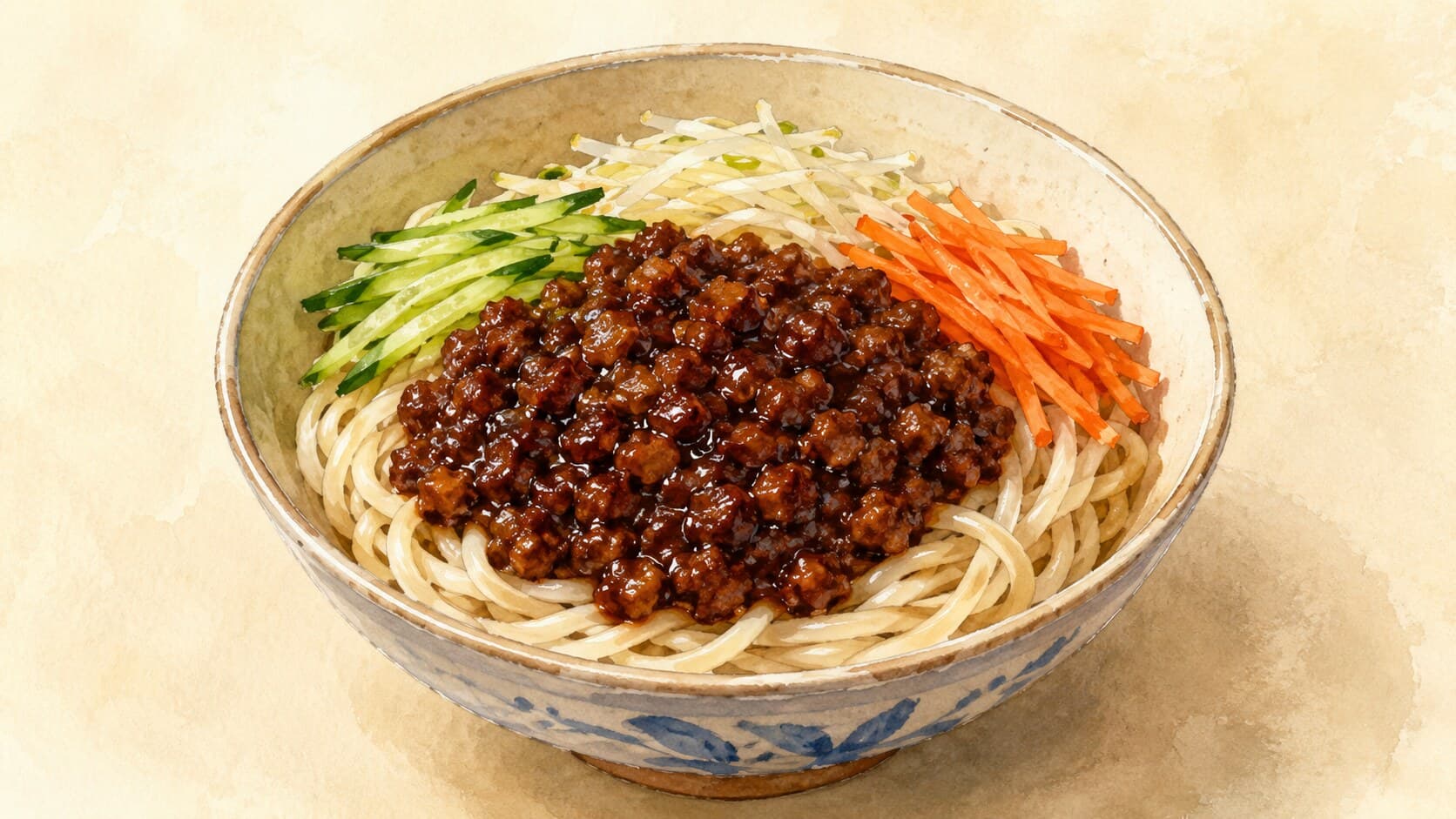
Zhajiangmian features hand-pulled noodles tossed with a glossy pork-and-tianmianjiang sauce and topped with fresh cucumber.
Contents (5 sections)▾
Ingredients
- 200 g pork belly, diced
- 3 tbsp tianmianjiang (sweet bean sauce)
- 1 tbsp soy sauce
- 1 tbsp vegetable oil
- 2 cloves garlic, minced
- 2 servings hand-pulled noodles
- 1 cucumber, shredded
- 2 spring onions, chopped
- 1 tbsp sesame oil
- salt to taste
Steps
Heat 1 tablespoon of vegetable oil in a pan over medium heat. Add diced pork belly and cook until browned (about 5 minutes). This will render the fat and enhance flavor.
Add minced garlic and stir for 1 minute until fragrant. Garlic adds depth to the sauce.
Stir in tianmianjiang and soy sauce, cooking for another 5 minutes, allowing the sauce to become glossy and thick.
Meanwhile, cook the hand-pulled noodles according to package instructions (approximately 3-5 minutes), then drain and toss with sesame oil to prevent sticking.
Combine the cooked noodles with the pork-and-sauce mixture in a large bowl, tossing thoroughly to coat the noodles evenly.
Serve topped with shredded cucumber and chopped spring onions. The freshness of the cucumber balances the richness of the sauce.
Why this works
The technique of simmering the pork with tianmianjiang is crucial because it melds the flavors, creating a rich and glossy sauce that clings well to the noodles. The pork belly, with its fat content, provides depth and richness, while tianmianjiang's sweetness is balanced by the savory soy sauce. If the sauce seems too thick, add a splash of water or broth to adjust the consistency. If the noodles feel too sticky after cooking, tossing them with sesame oil prevents clumping and enhances their flavor. The final assembly ensures that each bite has a balance of flavors and textures, with the crunch of cucumber adding freshness to the dish.
Common mistakes
-
Under-cooking the pork during the fry.
- Target: Diced pork (or ground pork) fully browned with no pink, fat rendered and starting to crisp at the edges.
- Why it matters: The sauce step does not finish-cook the pork — the bean paste is added after the pork is rendered, and the simmer is short. Pink pork carries food-safety risk and gives the sauce a wet, gamy edge.
- What to do: Spread the pork in a hot wok or pan, let it sear before stirring, and keep it on the heat until every piece reads brown and the fat has run clear.
-
Burning the bean paste.
- Target: Sauce should darken slightly and turn glossy in 3-5 minutes over medium heat, not blacken.
- Why it matters: Tianmianjiang (and yellow bean paste) carry sugar that scorches fast; once burnt, the sauce reads bitter and grainy and cannot be rescued.
- What to do: Drop the heat from high to medium the moment the paste hits the oil. Stir constantly and add a splash of water or stock the second it threatens to stick.
-
Watery sauce that slides off the noodles.
- Target: A thick, glossy sauce that coats a wooden spoon and leaves a clean trail when you draw a line across the pan.
- Why it matters: Zhajiangmian is meant to cling — each strand should pick up a thick ribbon of sauce. Thin sauce pools at the bottom of the bowl and the noodles read plain.
- What to do: If the sauce is loose after the simmer, raise the heat for the last minute and let it reduce. Add water only in small splashes if it tightens too far.
-
Skipping the cold-water rinse for the noodles.
- Target: Cooked noodles drained and briefly rinsed cold to wash off surface starch, then drained well.
- Why it matters: The signature Beijing presentation is "guo shui mian" — cooled, springy noodles topped with hot sauce. Hot, sticky noodles clump under the sauce and dull the textural contrast with the cucumber.
- What to do: Drain into a colander, run cold tap water through until the strands feel cool, then drain hard and portion into bowls.
What to look for
- A sauce so dark and shiny it reflects the kitchen light when you tilt the pan.
- Pork pieces that are evenly brown end-to-end, with no pink showing where they break apart.
- Noodles that hold their separation when lifted with chopsticks — no doughy clumps.
- A clear visual layering when served: cucumber bright green on top, sauce dark and glossy in the middle, pale noodles peeking through.
A note on history
Zhajiangmian (Beijing fried-sauce noodles, 炸醬面) — literally "fried sauce noodles" — is recognized as one of China's Ten Famous Noodles (中国十大面条). Its roots are commonly traced to Shandong province, but the dish became a Beijing icon and the Beijing-style version (老北京炸酱面), built on yellow soybean paste (黄豆酱, a salty fermented soybean paste) often combined with sweet bean sauce (甜面酱) and diced pork, is the form most cooks reach for today. The dish embedded itself in Beijing daily life by the early twentieth century through teahouses and street vendors, and remains a benchmark of Beijing home cooking.
Get the essays in your inbox — free
Weekly notes on flavor, fermentation, and food history — the writing behind the Atlas of Flavor. No spam; unsubscribe anytime.