
Yakiudon
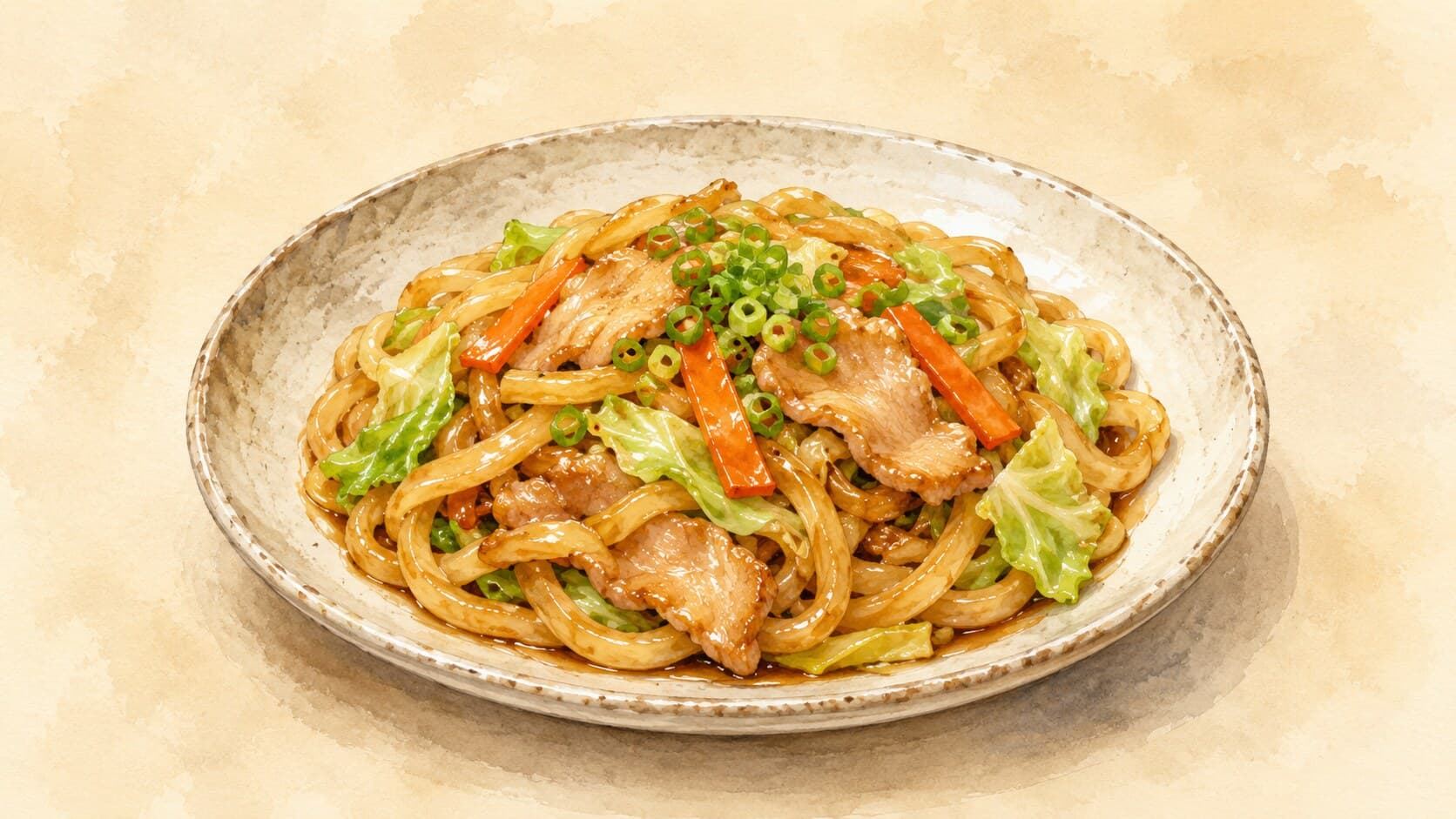
Yakiudon is a flavorful stir-fried dish featuring thick udon noodles, savory pork, and fresh vegetables, perfect for weeknight meals.
Contents (5 sections)▾
Ingredients
- 200 g thick udon noodles (pre-cooked)
- 150 g sliced pork (or seafood of choice)
- 100 g cabbage, shredded
- 1 medium carrot, julienned
- 2 green onions, chopped
- 2 tbsp soy sauce
- 1 tbsp mirin
- 1 tbsp Worcestershire sauce
- bonito flakes, to taste
- benishoga (pickled ginger), to taste
- 2 tbsp vegetable oil
Steps
Heat 2 tablespoons of vegetable oil in a large skillet or wok over medium-high heat.
Add the sliced pork (or seafood) and stir-fry for about 3-4 minutes until cooked through.
Incorporate the shredded cabbage and julienned carrot, stirring for another 2-3 minutes until they are tender.
Introduce the pre-cooked udon noodles, breaking them apart gently, and add the soy sauce, mirin, and Worcestershire sauce.
Continue to stir-fry everything together for 3-4 minutes, allowing the noodles to absorb the sauces evenly.
Finally, mix in the chopped green onions and cook for an additional minute.
Serve hot, garnished with bonito flakes and benishoga on top.
Why this works
Yakiudon’s appeal lies in the charm of its thick udon noodles, which provide a chewy texture that contrasts beautifully with the tender pork and crisp vegetables. The choice of sauces—soy sauce, mirin, and Worcestershire—creates a complex umami flavor that brings harmony to the dish. Stir-frying at medium-high heat ensures that the ingredients are cooked quickly, preserving their freshness and texture. If the sauce seems too salty, you can add a splash of water to balance the flavors. If the noodles stick together, use a bit of oil or warm water to separate them before adding to the stir-fry, preventing clumps and ensuring even flavor distribution.
Common mistakes
- Adding the noodles before the pork is cooked through.
- Target: Pork fully opaque, no pink in the centre, before noodles enter the pan.
- Why it matters: Once udon and sauce are in, the pork won't brown further, and any underdone slices stay underdone.
- What to do: Stir-fry the pork until it is uniformly opaque and lightly coloured, then layer in the vegetables, then the noodles. If you use seafood, cook it through fully — opaque shrimp, firm squid — before adding the udon.
- Skipping the noodle loosen-up step.
- Target: Vacuum-pack udon warmed and separated into individual strands before they hit the pan.
- Why it matters: Stuck-together udon clumps absorb sauce unevenly and turn doughy in the middle while drying out on the surface.
- What to do: Rinse the pack briefly under warm water (or microwave for 30 seconds) and break the noodles apart with your hands before adding them.
- Drowning the noodles in sauce.
- Target: Just enough soy/mirin/Worcestershire to coat — about 2 tablespoons total for 200 g noodles.
- Why it matters: Pooled sauce turns the stir-fry into a wet braise; the noodles soak up too much salt and lose their bite.
- What to do: Add the sauce in two pours, tossing between, and stop once the noodles glisten without standing liquid in the pan.
- Crowding the pan on too low a heat.
- Target: Wide pan or wok over medium-high, ingredients moving constantly.
- Why it matters: A weak flame plus piled ingredients steams everything; cabbage goes limp, noodles go gummy, and the dish loses its toasty edge.
- What to do: Use the widest pan you have, cook in two batches if needed, and keep the food in motion so the surfaces sear instead of stewing.
What to look for
- Udon strands glossy and separate, lightly tinted by the sauce.
- Edges of cabbage and pork lightly seared, not pale or watery.
- A toasty, almost charred-soy smell rising as the noodles meet the pan.
- Bonito flakes curling and waving from residual heat once plated.
A note on history
Yakiudon (Japanese fried udon) is widely traced to Kokura (now part of Kitakyushu) in 1945, when a small restaurant called Darumadō found itself unable to source the soba noodles it normally used for yakisoba (Japanese fried noodles) in the postwar shortage. The cook substituted boiled dried udon (thick wheat noodles), and the improvisation was popular enough to become a local specialty; Kokura still treats yakiudon as its hometown dish, and in 2002 the Kokura Yakiudon Research Institute even fixed October 14th as Yakiudon Day. From this regional origin, the dish has spread into the broader Japanese stir-fry repertoire — close cousin to yakisoba, but built around the chewier udon noodle.
Get the essays in your inbox — free
Weekly notes on flavor, fermentation, and food history — the writing behind the Atlas of Flavor. No spam; unsubscribe anytime.