
Yaki Onigiri
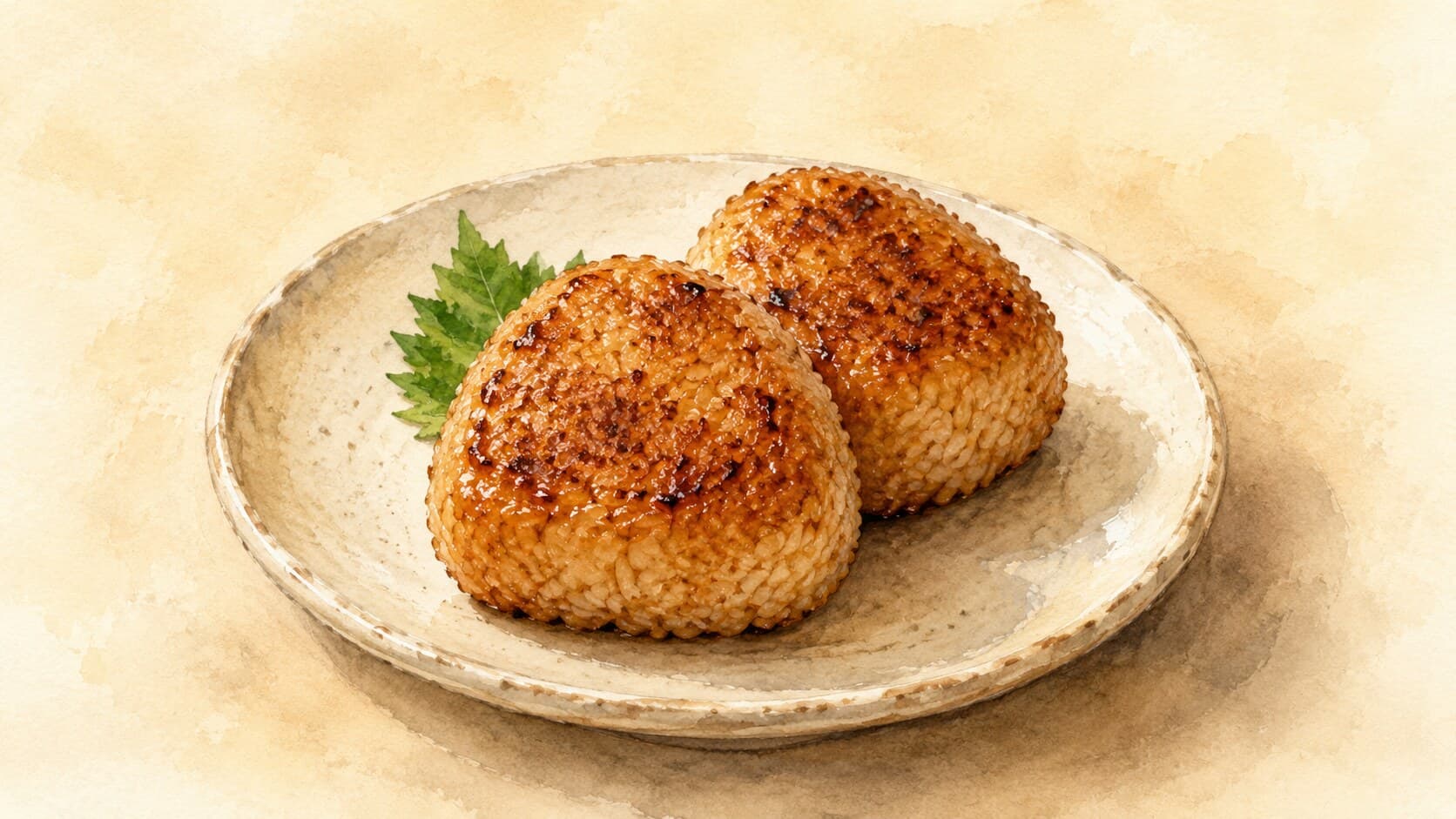
Yaki Onigiri are delicious grilled rice balls brushed with a soy-sake glaze, perfect as a snack or side dish.
Contents (5 sections)▾
Ingredients
- 300 g short-grain rice
- 450 ml water
- 1 tsp salt
- 2 tbsp soy sauce
- 1 tbsp sake
- 1 tsp mirin
- to taste nori (seaweed) strips
- to taste shiso leaves for garnish
Steps
Rinse the rice under cold water until the water runs clear, then soak it for 30 minutes. This helps in achieving a sticky texture.
In a pot, combine the soaked rice and 450 ml of water. Bring to a boil over high heat, then reduce to low heat, cover, and simmer for 15 minutes.
Once cooked, let the rice sit covered for 10 minutes to firm up. Fluff the rice gently with a spatula.
In a small bowl, mix the soy sauce, sake, and mirin to create a glaze.
Wet your hands and sprinkle with salt. Take a portion of rice (about 100 g) and shape it into a triangular onigiri, pressing firmly to ensure it holds together.
Brush the formed rice balls with the soy-sake glaze.
Preheat a non-stick pan over medium heat (approximately 180°C). Place the rice balls in the pan and grill them for about 3-4 minutes on each side, cooking until they reach a golden brown and crispy texture.
Serve hot, garnished with nori strips and shiso leaves.
Why this works
The foundation of Yaki Onigiri lies in the proper preparation of short-grain rice, which provides the necessary stickiness for shaping. By rinsing the rice, you remove excess starch, preventing the rice balls from becoming gummy. When cooking, letting the rice rest for 10 minutes after steaming is crucial; it redistributes moisture, ensuring that the balls hold their shape during grilling. The soy-sake glaze enhances flavor and caramelizes when grilled, adding a delightful crunchy texture. If the rice balls break while shaping, it may be that they are too dry; in this case, slightly dampen your hands and re-shape them, or add a bit more water to the cooked rice before forming. The grilling process develops a deep golden crust that contrasts beautifully with the soft interior. Properly grilled onigiri should have a crisp surface while remaining moist inside, achieving that perfect balance of textures. The combination of precise cooking times and temperatures ensures consistent results, allowing the flavors to meld beautifully and the texture to be just right.
Common mistakes
- Shaping with rice that is too hot or too cold.
- Target: Just-cooked rice rested 10 minutes, still warm but no longer steaming hard.
- Why it matters: Boiling-hot rice scalds the palms and refuses to compact; fully cold rice has lost its tackiness and crumbles on the pan when shaping yaki onigiri (Japanese grilled rice balls brushed with soy glaze).
- What to do: Let the pot rest covered, then shape while the rice is comfortably warm in damp, salted hands.
- Squeezing the onigiri until it is dense.
- Target: Firm enough to hold its triangle but with visible grain structure inside.
- Why it matters: Over-pressed rice turns into a heavy paste that grills greasy on the outside and gummy in the middle.
- What to do: Press in three short, confident squeezes per face, rotating, then stop.
- Glazing the onigiri before the crust forms.
- Target: Crust set first, then brush soy-sake glaze (the savory soy-and-rice-wine sauce that caramelizes on the grilled surface) on each side in the last 1-2 minutes.
- Why it matters: Soy and mirin contain sugars that burn fast; brushed on at the start they char to bitter before the rice toasts.
- What to do: Dry-grill the bare onigiri until the surface is golden and stiff, then brush the glaze and finish over slightly lower heat.
- Moving the onigiri too soon.
- Target: Wait until each face releases freely from the pan, about 3-4 minutes per side.
- Why it matters: Tugging on a half-formed crust tears off rice grains and ruins the lacquered surface.
- What to do: Let the pan do the work — when the onigiri slides without resistance, it is ready to turn.
What to look for
- A glossy, deeply browned crust crackling under the brush as the glaze hits it.
- Toasty soy aroma — like roasted rice tea — rising from the pan.
- Faint sizzle and a thin halo of caramelised sauce setting around each face.
- Soft, steamy interior revealed when broken open, holding its triangle.
A note on history
Onigiri (hand-shaped rice balls, often wrapped in nori) itself is an ancient food in Japan — carbonised rice balls have been recovered from Yayoi-period sites in Ishikawa Prefecture roughly 2,000 years old, and the word appears in the Hitachi-no-Kuni Fudoki (early 8th century). Grilling onigiri over fire is a much later development; the grilled, soy-glazed form is generally associated with the Edo period (1603-1868), when rice balls became a portable food for travellers and a street snack in cities like Osaka and Kyoto. Nori-wrapped versions only became common after nori cultivation spread during the Genroku era (1688-1704). Today yaki onigiri is firmly at home on izakaya menus and in convenience stores across Japan.
Get the essays in your inbox — free
Weekly notes on flavor, fermentation, and food history — the writing behind the Atlas of Flavor. No spam; unsubscribe anytime.