
Vitello Tonnato
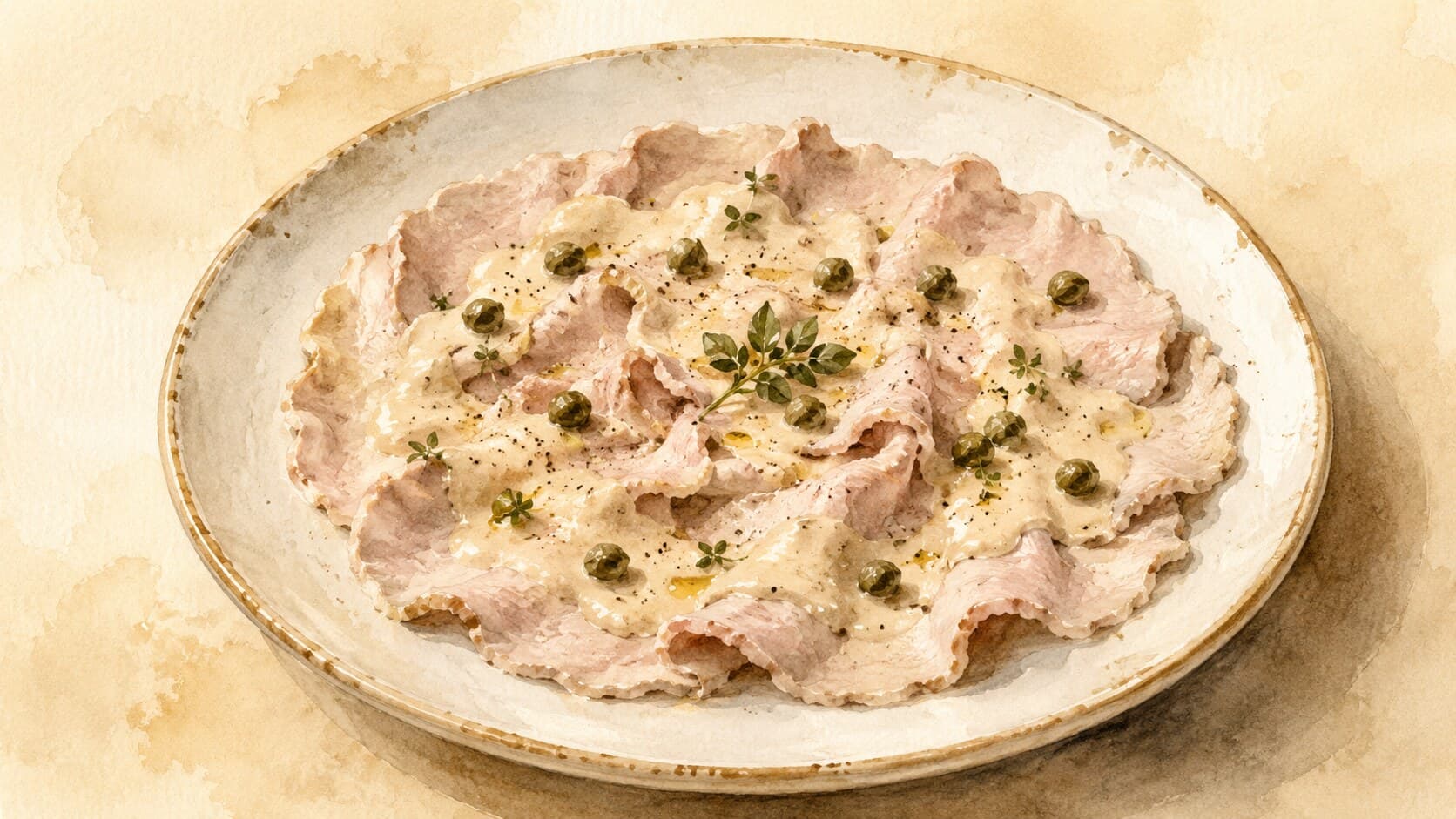
Vitello Tonnato is a classic Italian cold starter featuring tender veal paired with a creamy tuna sauce.
Contents (5 sections)▾
Ingredients
- 500 g veal loin
- 1 liter water
- 200 ml dry white wine
- 1 carrot, chopped
- 1 onion, quartered
- 1 celery stalk, chopped
- 3 cloves garlic, crushed
- 1 tsp salt
- 200 g canned tuna in oil, drained
- 100 g mayonnaise
- 2 tbsp capers, rinsed
- 2 tbsp lemon juice
- Salt and pepper to taste
- Fresh parsley, for garnish
Steps
In a large pot, combine water, white wine, carrot, onion, celery, garlic, and salt. Bring to a boil over medium heat, then reduce to low.
Add the veal loin to the pot and poach for 15 minutes, ensuring it reaches a temperature of 70°C (160°F) to ensure it is cooked through.
Once cooked, remove the veal and let it cool completely before slicing it thinly.
In a blender, combine the tuna, mayonnaise, capers, lemon juice, and a pinch of salt and pepper. Blend until smooth to create an emulsion.
Arrange the sliced veal on a serving platter and drizzle with the tuna sauce. Garnish with capers and parsley.
Tools you'll want
Why this works
Vitello Tonnato relies on the technique of poaching, which gently cooks the veal while keeping it moist and tender. Poaching in a flavorful broth infuses the meat with subtle aromas from the vegetables and wine, enhancing its taste. The tuna sauce, an emulsion, brings a creamy richness that contrasts beautifully with the delicate veal. If the sauce seems too thick, thin it with a splash of reserved poaching liquid or additional lemon juice for brightness. Proper cooling of the veal is crucial; if it is sliced while still warm, the texture may become dry and lose its appeal. By ensuring it is fully chilled, you get the tender texture that is characteristic of this dish, making it perfect for summer entertaining as a refreshing cold starter.
Common mistakes
- Boiling instead of poaching. A rolling boil tightens the muscle fibers and forces moisture out, leaving the veal grey and chalky on the plate.
- Target: liquid at 80-85°C, barely shivering — internal temperature of the veal climbing slowly to 65-70°C.
- Why it matters: poaching preserves the soft, almost glassy texture that lets a thin slice carry the sauce instead of fighting it.
- What to do: bring the broth to a boil to release the aromatics, then drop to bare simmer before the veal goes in; use a thermometer if uncertain.
- Slicing the veal while still warm. Warm meat slumps under the knife and shreds at the edges instead of giving clean ribbons.
- Target: veal fully chilled to refrigerator temperature, ideally rested several hours or overnight.
- Why it matters: cold meat slices to the millimetre, and the dish lives or dies by paper-thin, even slices.
- What to do: cool the veal in its own poaching liquid (off heat), then refrigerate wrapped tightly before slicing.
- A broken or grainy tuna sauce. A split sauce slides off the meat and reads as oily on the palate.
- Target: a glossy, pourable emulsion the consistency of thick cream, completely smooth.
- Why it matters: the sauce is meant to cling to the veal in a thin, even coat — emulsion is what makes that possible.
- What to do: blend tuna, capers, and lemon juice with mayonnaise gradually; if it splits, restart with a fresh spoonful of mayonnaise and drizzle the broken mixture back in.
- Drowning the slices. Pouring sauce thickly over the veal smothers its flavor and turns the dish into a paste.
- Target: a thin, even drizzle that leaves part of the veal visible.
- Why it matters: the contrast between cool veal and creamy sauce is what makes the dish elegant — too much sauce flattens both.
- What to do: drizzle with a spoon or pour from a small pitcher; finish with capers and parsley so the slices stay visible.
What to look for
- Veal slices so thin they're translucent at the edges, with a pale rose-grey color throughout (cooked through, never raw-pink).
- Tuna sauce that ribbons off the spoon and holds a soft line when drizzled — neither runny nor stiff.
- A clean, briny lift from capers (small green flower buds preserved in salt or brine, with a sharp, lemony tang) cutting through the rich sauce on the finish.
- Plated cold — the platter should feel cool to the palm before serving.
A note on history
Vitello tonnato (Italian for "veal in tuna sauce" — vitello means veal, tonnato refers to the tuna-based sauce) is a Piedmontese classic that traces back to the 18th century as a way to use boiled leftover veal, with early versions sauced not with tuna but with anchovies. Pellegrino Artusi codified a version closer to the modern dish in his 1891 manual La scienza in cucina e l'arte di mangiar bene, where he used an emulsion of oil, lemon, hard-boiled eggs, and tuna rather than the mayonnaise base common today. The dish then spread across northern Italy and became a fixture of summer entertaining.
A note on the raw egg. Traditional homemade tonnato sauce is built on raw egg yolk, which carries no Salmonella kill step — freshness is not a safety control. To make it safely, use a pasteurised egg (pasteurised in the shell, or a pasteurised yolk product) or a good-quality store-bought mayonnaise. Pregnant people, the elderly, young children, and the immune-compromised should be especially certain to use a pasteurised or store-bought option, never raw yolk.
Get the essays in your inbox — free
Weekly notes on flavor, fermentation, and food history — the writing behind the Atlas of Flavor. No spam; unsubscribe anytime.