
Ukrainian Borscht
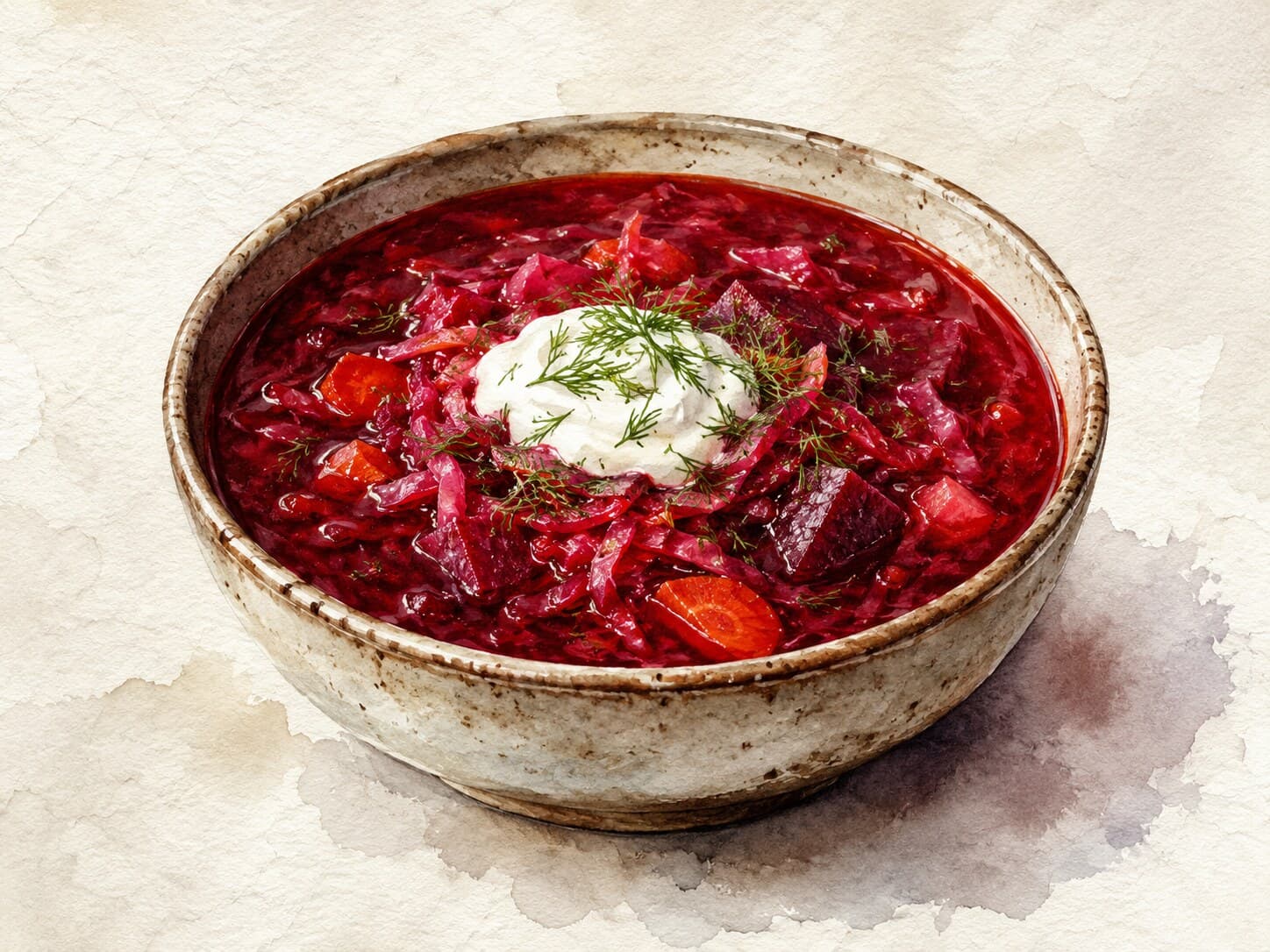
Experience the authentic taste of Ukrainian Borscht with a vibrant beetroot base and balanced flavors.
Contents (5 sections)▾
Ingredients
- 500 g beef shank, cut into chunks
- 2 liters water
- 1 medium onion, chopped
- 1 medium carrot, grated
- 2 medium beets, peeled and grated
- 1 medium potato, diced
- 1 small head of cabbage, shredded
- 3 tbsp vegetable oil
- 2 tbsp tomato paste
- 2 tbsp vinegar
- 1 bay leaf
- Salt to taste
- Black pepper to taste
- Fresh dill, for garnish
- Sour cream, for serving
Steps
In a large pot, combine beef shank and water. Bring to a boil over high heat, then reduce to a simmer. Skim off any foam that rises to the surface for a clear broth.
After 30 minutes, add chopped onion, grated carrot, bay leaf, salt, and black pepper. Continue simmering for an additional 15 minutes to infuse the flavors.
In a separate pan, heat vegetable oil over medium heat. Add grated beets and sauté for about 5 minutes. Stir in tomato paste and vinegar, cooking for another 5 minutes to preserve the color of the beets.
Add the sautéed beets, diced potato, and shredded cabbage to the beef broth. Simmer for another 15-20 minutes until all vegetables are tender.
Taste and adjust seasoning if necessary. Serve hot, garnished with fresh dill and a generous dollop of sour cream.
Why this works
Creating a deep, flavorful broth is key to authentic Ukrainian Borscht. By simmering beef with aromatic vegetables, you extract rich flavors that serve as a robust base. The technique of sautéing beets separately with vinegar helps retain their vibrant color, ensuring the soup remains a striking ruby red rather than fading to brown. Vinegar balances the sweetness of the beets and adds the necessary sour note that characterizes this dish. If you find your borscht lacks brightness, a splash of vinegar can brighten the flavor and color. Remember, the balance of flavors is essential, so taste as you go to ensure your final dish is a harmonious blend of sweet, sour, and savory. This attention to detail will result in a visually stunning and delicious bowl of borscht that honors its Ukrainian roots.
Common mistakes
-
Boiling the beets (the deep-red root vegetable that gives borscht its colour) directly in the broth. Beets dropped raw into the soup will lose their colour and turn the pot brown.
- Target: Sauté grated beets separately in oil with tomato paste and vinegar for 5-7 minutes, then add them to the pot in the final 15 minutes.
- Why it matters: Betacyanin, the pigment that makes borscht ruby red, is sensitive to long heat and breaks down without acid. Vinegar in the beet sauté stabilises the colour.
- What to do: Keep beets in their own pan until the broth is nearly done. Stir them in at the end and stop simmering as soon as everything is hot through.
-
Underskimming the meat broth. Grey foam left in the pot makes the soup cloudy and slightly bitter.
- Target: A clear, deep-amber broth before the vegetables go in — patient skimming for the first 15-20 minutes of simmer.
- Why it matters: That foam is coagulated protein and impurities. Left in, it dulls the colour borscht is famous for and clings to the cabbage shreds.
- What to do: Bring the meat up gently — not a hard boil — and lift foam with a small ladle as it forms. Stop skimming once the surface stays clear.
-
Forgetting the acid balance. Without enough sourness, borscht tastes flat and the colour can shift dull.
- Target: Sharp enough that one quiet spoonful makes you want a second — sweet-sour balanced, not pickly.
- Why it matters: Acid (vinegar or lemon) brightens the beets visually and lifts the sweetness of carrots, cabbage and beetroot off the tongue.
- What to do: Add half the vinegar with the beet sauté and the rest at the end, after tasting. If still flat, add another teaspoon — borscht should taste alive, not muted.
-
Serving sour cream into a boiling pot. Dairy added to a roaring soup will curdle into specks.
- Target: Off the heat at the table — a dollop on each bowl, swirled in by the eater.
- Why it matters: Heat + acid + dairy is the curdling triangle, and a beet-acid soup will split cream instantly if stirred into the hot pot.
- What to do: Serve borscht into bowls first, finish each with a spoon of cold sour cream and fresh dill, and let the guest melt it in.
What to look for
- Beef broth that has gone deep amber and stays clear when you tilt the ladle — the patient skim has done its job.
- Grated beets that hold a bright magenta colour in the sauté pan, not turning brown — the acid is working.
- A spoonful that tastes sweet, sour and savoury in one tongue-stroke — none of those notes louder than the others.
- A finished bowl that still reads ruby-red after the dill goes on, not brick or brown — the colour technique held.
A note on history
Borscht (a sweet-sour beet-and-vegetable soup of the Eastern Slavic world) has been a household staple across the Eastern Slavic world, and the Ukrainian version — built around beets, beef or pork, cabbage and a separately-cooked beet stage to protect the colour — is widely treated as the canonical form. In July 2022, UNESCO's Intergovernmental Committee for the Safeguarding of the Intangible Cultural Heritage inscribed "the culture of Ukrainian borscht cooking" on the List of Intangible Cultural Heritage in Need of Urgent Safeguarding, an emergency listing brought forward because the ongoing war had threatened the people, ingredients and gatherings that sustain the dish. The inscription names not just the recipe but the practice — growing, harvesting, cooking and sharing — as the heritage being protected.
Get the essays in your inbox — free
Weekly notes on flavor, fermentation, and food history — the writing behind the Atlas of Flavor. No spam; unsubscribe anytime.