
Doubles (Trinidadian Chickpea Flatbread)
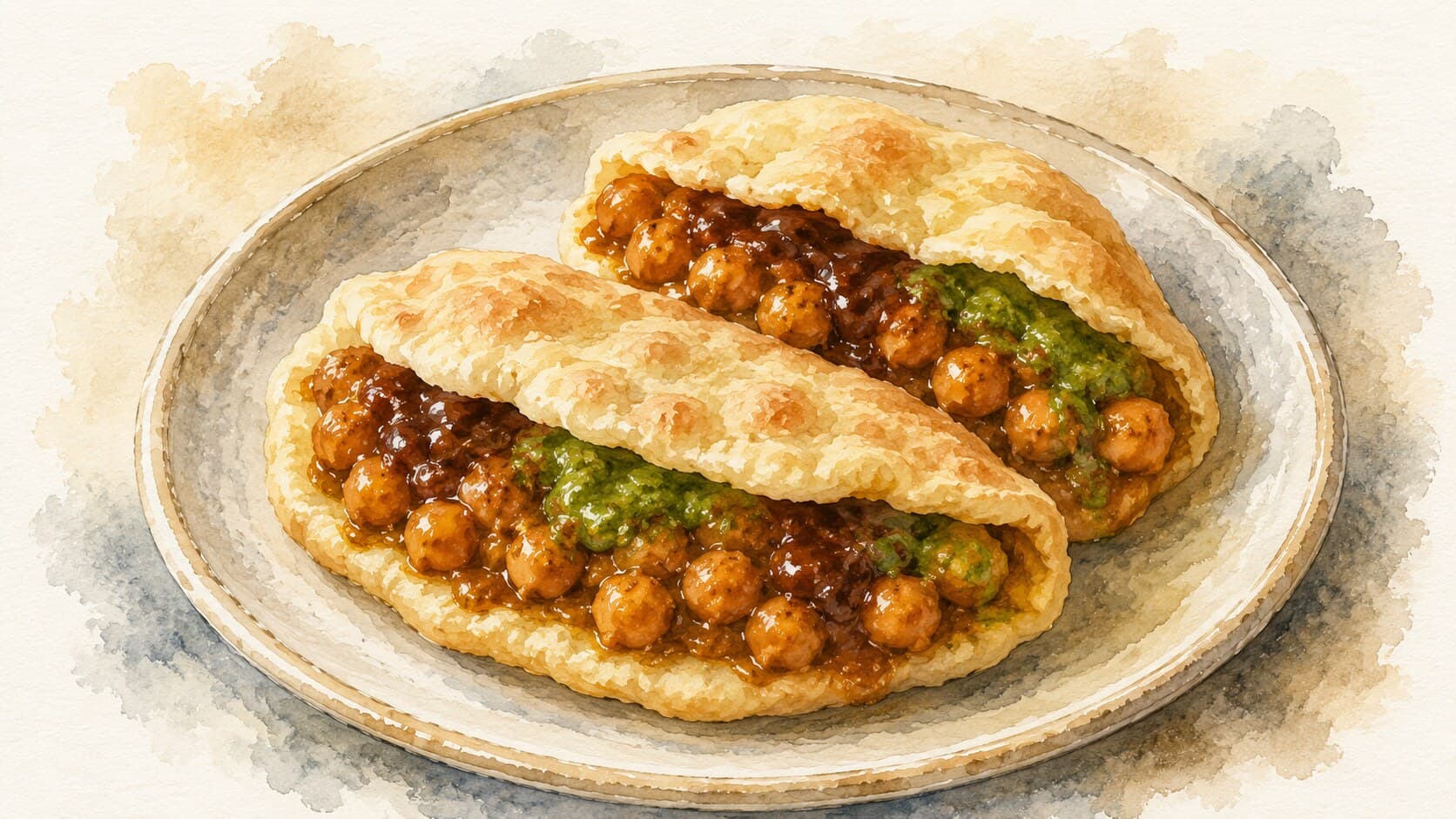
Doubles are a beloved Trinidadian street snack featuring spiced chickpeas between soft turmeric flatbreads.
Contents (5 sections)▾
Ingredients
- 250 g chickpeas, soaked and cooked
- 1 tbsp vegetable oil
- 1 onion, diced
- 2 cloves garlic, minced
- 1 tsp cumin powder
- 1 tsp coriander powder
- 1 tsp turmeric powder
- 1/2 tsp chili powder
- Salt to taste
- 500 g all-purpose flour
- 1 tsp turmeric powder (for dough)
- 1 tsp salt (for dough)
- 1/2 tsp baking powder
- 300 ml water (for dough)
- Vegetable oil (for frying)
- Tamarind sauce, to taste
- Pepper sauce, to taste
Steps
In a pan, heat 1 tbsp of vegetable oil over medium heat. Add the diced onion and sauté for 5 minutes until translucent.
Stir in minced garlic, cumin, coriander, turmeric, chili powder, and salt. Cook for an additional 2 minutes to release the spices' aromas.
Add the cooked chickpeas to the pan and mix well. Cook for about 10 minutes, allowing the flavors to meld. Set aside.
In a large bowl, combine all-purpose flour, turmeric, salt, and baking powder. Gradually add water until a soft dough forms. Let it rest for 10 minutes.
Divide the dough into equal portions and roll each into a ball. Flatten each ball into a circle about 1/4 inch thick.
In a deep pan, heat vegetable oil over medium heat. Fry each flatbread for about 2-3 minutes per side until golden and puffed. Drain on paper towels.
To assemble, spoon the chickpea mixture between two pieces of fried flatbread. Drizzle with tamarind and pepper sauces before serving.
Tools you'll want
Why this works
The key to perfect Doubles lies in the combination of flavors and textures. The chickpeas are infused with spices, creating a rich and savory filling that pairs wonderfully with the soft, slightly chewy flatbreads. The use of turmeric in both the chickpeas and the flatbread adds a warm flavor and a golden hue to the dish. Frying the flatbreads provides a crispy exterior while maintaining a soft interior, essential for holding the filling. If the dough seems too dry, add a bit more water until it reaches the right consistency. Additionally, allowing the chickpeas to simmer allows the spices to develop fully; if they're not adequately cooked, the flavors may be muted. This versatile street snack can be modified with various toppings, making it a favorite for breakfast or any time of the day.
Common mistakes
- Not resting the bara (the Trinidadian turmeric-tinted fried flatbread) dough.
- Target: At least 10-15 minutes covered rest after mixing — longer if the kitchen is cold.
- Why it matters: A freshly-mixed dough fights back when you try to flatten it and ends up dense; rested gluten relaxes and gives soft, puffy bara.
- What to do: Cover the bowl with a damp towel and walk away; come back when the dough feels relaxed and easier to stretch.
- Frying bara in oil that isn't hot enough.
- Target: Around 180°C — a small scrap of dough should rise and bubble immediately when dropped in.
- Why it matters: Cool oil produces flat, oily, leathery bara instead of soft, puffed ones; the dough soaks up fat instead of cooking through.
- What to do: Heat the oil before shaping the first bara, and check temperature with a small dough test before the main batch goes in.
- Under-cooking the channa (the curried chickpea filling) so the spices stay raw-tasting.
- Target: A clearly thickened, slightly glossy curry where the oil has separated to the edges.
- Why it matters: A short cook leaves the cumin and coriander tasting dusty rather than warm and rounded; the chickpeas also don't absorb the masala.
- What to do: Let the chickpeas simmer in the spiced base until the sauce darkens and clings, not just until everything is hot.
- Assembling too far ahead.
- Target: Build doubles as close to eating as possible — ideally just minutes before serving.
- Why it matters: The chickpea moisture soaks into the bara quickly and turns the soft flatbread limp and gummy.
- What to do: Keep the channa warm and the fried bara separate; spoon and stack at the very end.
What to look for
- bara dough that springs back gently but stretches easily after resting
- bara that puff into a soft, golden pillow seconds after hitting the oil
- a channa curry where the oil has separated at the edges and the sauce clings to the chickpeas
- a clean stack at assembly where the bara still has bounce, not yet soaked through
A note on history
Doubles (a Trinidadian street snack of curried chickpeas sandwiched between two soft fried flatbreads) trace back to Princes Town, in southern Trinidad, where they're widely credited to Emamool ("Mamoo") Deen and his wife Raheman Rasulan Deen, who began selling curried chickpeas on fried bara to estate workers in the 1930s — most accounts settle on 1936. The name reportedly came from customers asking for an extra piece of bara to sandwich the channa: "give me a double." The Deen family was part of the Indo-Trinidadian community descended from indentured workers, and doubles became a defining piece of that culinary heritage.
Get the essays in your inbox — free
Weekly notes on flavor, fermentation, and food history — the writing behind the Atlas of Flavor. No spam; unsubscribe anytime.