
Tomato Passata Base
Tomato passata base made by cooking tomatoes, controlling acidity, and emulsifying for a smooth consistency. Use in various dishes.
Contents (5 sections)▾
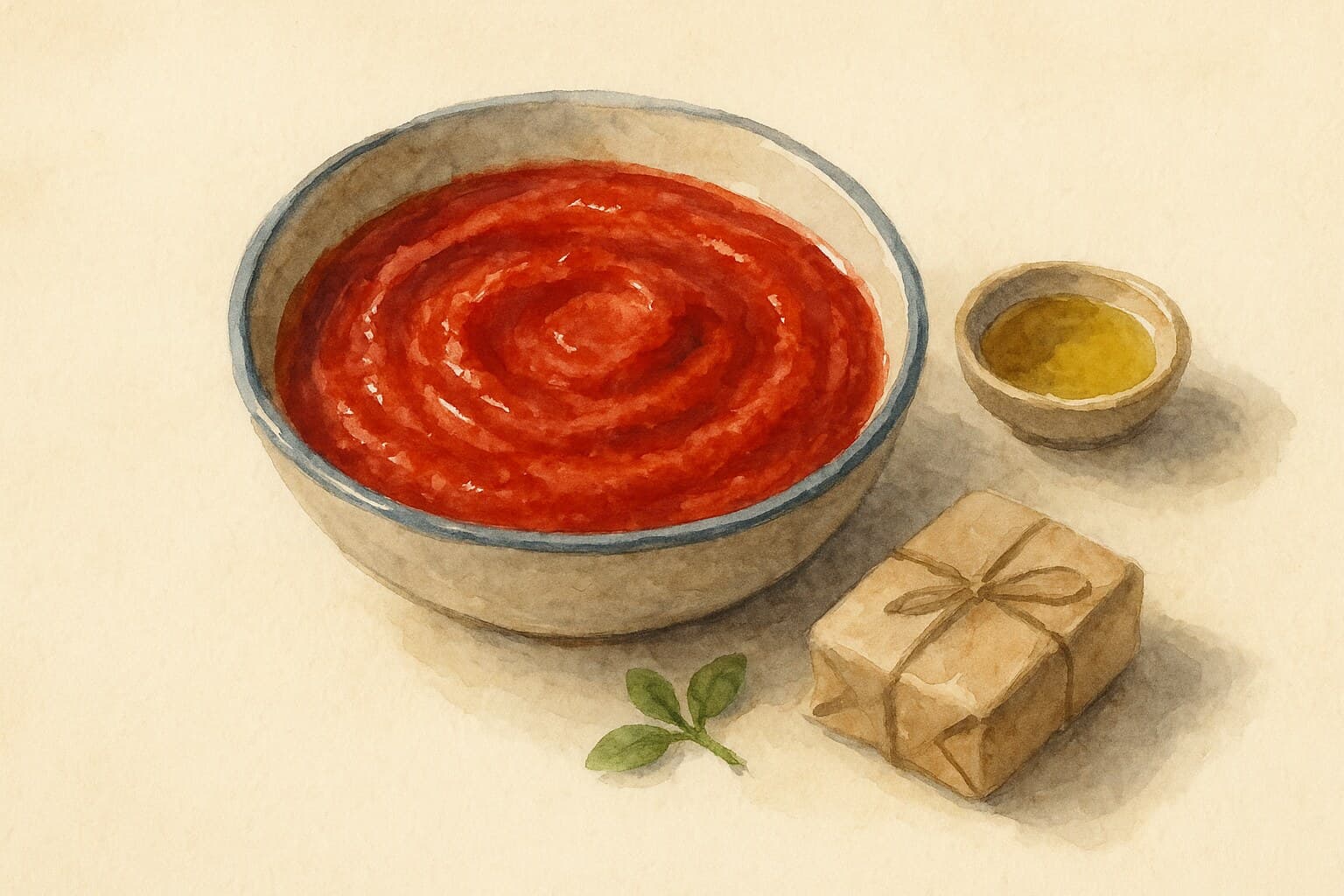
Ingredients
- 800 g ripe tomatoes, chopped
- 2 tbsp olive oil
- 1 medium onion, finely chopped
- 2 cloves garlic, minced
- 1 tsp salt
- 1 tsp sugar
- 1 tsp dried oregano
- 1/2 tsp black pepper
- Fresh basil leaves, to taste
Steps
Heat the olive oil in a large saucepan over medium heat for about 2 minutes until shimmering.
Add the chopped onions and sauté for 5 minutes until they become translucent and slightly golden.
Stir in the minced garlic and cook for an additional 1 minute, just until fragrant.
Add the chopped tomatoes, salt, sugar, oregano, and black pepper. Bring to a simmer, then reduce the heat to low.
Simmer uncovered for about 10 minutes, stirring occasionally, until the tomatoes break down and the sauce thickens.
Remove from heat and blend the mixture until smooth, adding fresh basil leaves for flavor. If the sauce seems too thick, add a splash of water to reach desired consistency.
Why this works
This tomato passata base recipe relies on the classic technique of sautéing to build flavor. Heating the olive oil first allows the onions to soften and release their natural sugars, which enhances the overall sweetness of the sauce. The addition of garlic near the end of the onion cooking time ensures that it doesn't burn, maintaining its aromatic qualities. Simmering the mixture allows the tomatoes to break down; this is crucial for developing a rich, deep flavor. If the sauce seems too thick, adding a splash of water helps achieve the desired consistency without sacrificing flavor. Additionally, incorporating fresh basil at the end preserves its fresh aroma, adding to the sauce's overall taste. If the sauce ends up too acidic due to overripe tomatoes, a pinch of sugar can balance this out effectively.
Common mistakes
- Throwing the garlic in with the onions at the start. (Passata here means tomatoes cooked down and pushed through a sieve into a smooth, seedless purée.)
- Target: Garlic enters the pan once the onions are translucent — about 1 minute before the tomatoes go in.
- Why it matters: Garlic burns fast in hot oil and turns acrid; once it's bitter, no amount of simmering will hide it.
- What to do: Cook the onions first until softened, then stir in the garlic for just a minute before the tomatoes.
- Simmering covered, so the sauce stays watery.
- Target: Lid off, a steady gentle simmer with visible reduction (water evaporating away so flavor concentrates and the sauce thickens) at the edges.
- Why it matters: A covered pot traps steam and the passata never thickens; the flavor stays diluted and thin.
- What to do: Leave the lid off, stir occasionally, and let the volume drop until a spoon dragged through leaves a brief track.
- Reaching for sugar before tasting.
- Target: Adjust sugar only if the finished sauce still tastes sharply acidic.
- Why it matters: Adding sugar pre-emptively can mask the tomatoes' natural sweetness — sweetness from slow-cooked onions and ripe fruit often does the job.
- What to do: Taste at the end; add sugar a pinch at a time, only if needed.
- Blending while the sauce is screaming hot.
- Target: Let the pan cool for a few minutes before blending, or hold the lid down with a folded towel.
- Why it matters: Hot sauce expands violently in a blender and can pop the lid off; even an immersion blender can spit boiling liquid.
- What to do: Take the pan off the heat first; if using a countertop blender, fill it no more than half full and vent the lid.
What to look for
- olive oil that visibly separates and pools red-orange at the edges of the pan
- tomatoes that have collapsed into a uniform pulp with no chunks left whole
- a slight darkening of color as the sauce reduces, from bright red to deeper brick
- fresh basil added off-heat, still bright green and floppy rather than wilted dark
A note on history
Tomato passata sits at the heart of Italian home cooking, with passare meaning "to pass through" — the word refers to pushing cooked tomatoes through a mill (a hand-cranked sieve that separates pulp from skins and seeds) to remove skins and seeds. The practice took hold in southern Italy as tomatoes spread after their introduction from the Americas, and the late-summer ritual of bottling passata (il tempo della passata) became a family event in many households. Specific dates and regional variations differ between sources.
Get the essays in your inbox — free
Weekly notes on flavor, fermentation, and food history — the writing behind the Atlas of Flavor. No spam; unsubscribe anytime.