
Tofu Steak
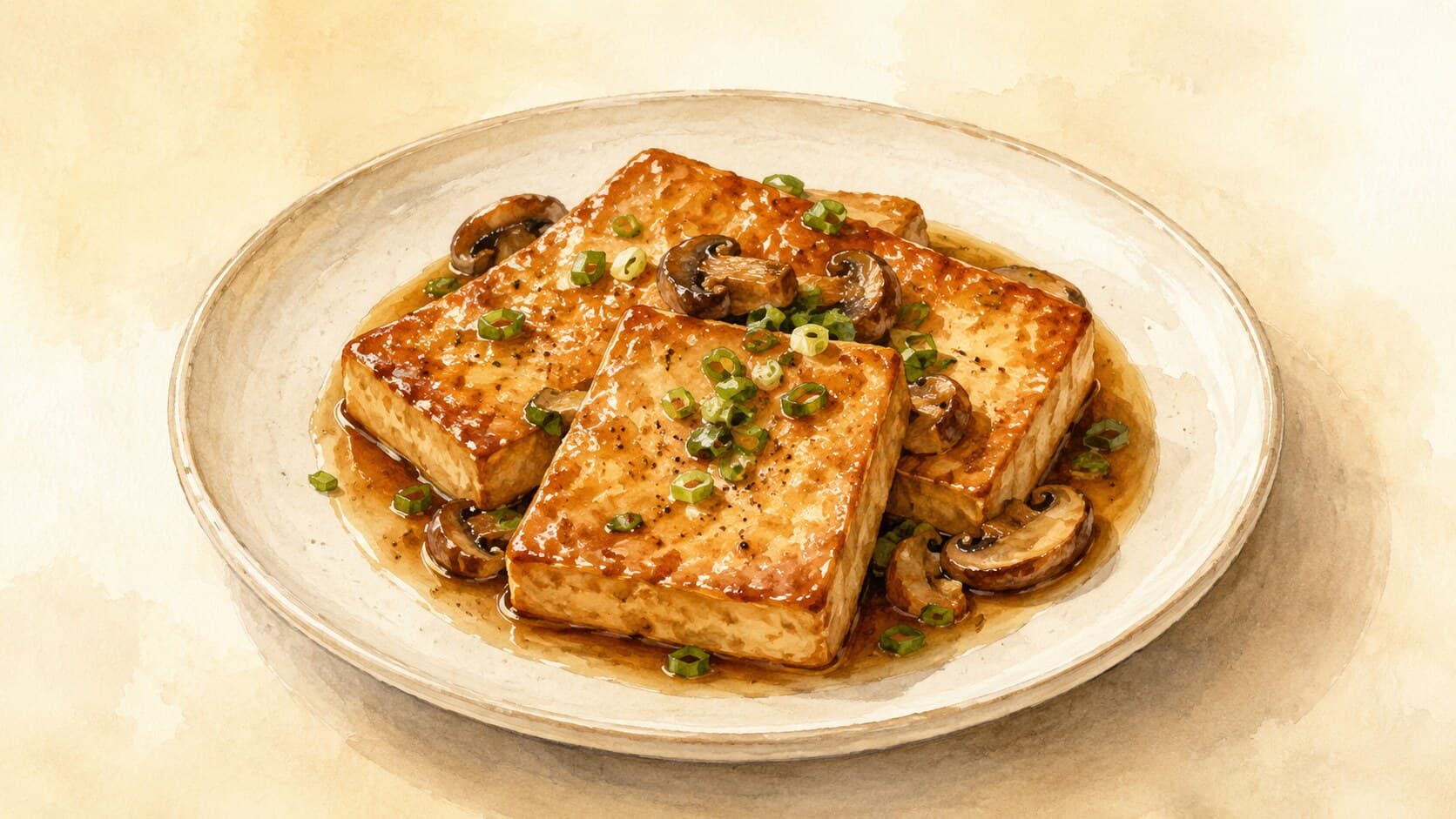
Crispy pan-fried tofu steak served with a rich soy-mirin-ginger-garlic sauce.
Contents (4 sections)▾
Ingredients
- 400 g firm tofu
- 50 g potato starch
- 3 tbsp vegetable oil
- 2 tbsp soy sauce
- 1 tbsp mirin
- 1 tsp grated ginger
- 1 clove garlic, minced
- 2 green onions, finely sliced
- salt to taste
Steps
Press the firm tofu for 15-20 minutes to expel excess water, which helps achieve a crispier texture when frying.
Once pressed, cut the tofu into thick slabs (about 2 cm) and season lightly with salt.
Dredge each tofu slab in potato starch, ensuring an even coating for a crisp surface during frying.
Heat the vegetable oil in a non-stick pan over medium-high heat (about 180°C). Add the tofu slabs and pan-fry for 4-5 minutes on each side until deep golden and crisp.
In the same pan, add soy sauce, mirin, grated ginger, and minced garlic. Cook for 2-3 minutes, stirring until the sauce thickens slightly.
Serve the tofu steak drizzled with the sauce and garnish with finely sliced green onions.
Why this works
The key to achieving a perfectly crispy tofu steak lies in the dual techniques of pressing and dredging. Pressing the tofu removes excess water, allowing it to crisp up during frying instead of steaming. If your tofu breaks while pressing, try using a heavier weight or a thicker towel to absorb moisture effectively. Dredging in potato starch creates a protective layer that crisps up beautifully in hot oil, contrasting the soft interior of the tofu. If the starch seems too thick, you can lightly shake off excess before frying to ensure an even, thin coating. This method also allows the soy-mirin-ginger-garlic sauce to glaze the tofu without making it soggy, preserving that desirable crunch while enhancing the dish's flavor.
Common mistakes
- Skipping the pressing step or rushing it. (Pressing here means weighting wrapped tofu to squeeze out excess water.)
- Target: At least 15-20 minutes under a steady weight, until the towel is visibly damp.
- Why it matters: Excess water turns to steam in the pan and prevents the starch coating from forming a crust — you get pale, soggy tofu.
- What to do: Stack a plate and a heavy can on top of the wrapped tofu, or use a tofu press; pour off the released water before slicing.
- Cutting the tofu too thin so it falls apart.
- Target: Slabs about 2 cm thick, cut in firm, deliberate strokes.
- Why it matters: Thin slabs lose their interior softness and tear when you turn them; a thicker piece holds a clear crust-to-curd contrast.
- What to do: Use a sharp knife and one decisive cut per slab; handle with a wide spatula, not tongs.
- Loading the pan when the oil isn't hot enough. (Dredging means coating the food in a thin layer of flour or starch before frying.)
- Target: Oil shimmering, around 180°C — a corner of tofu dipped in should sizzle immediately.
- Why it matters: Cold oil lets the starch absorb fat instead of crisping, and the surface goes gummy.
- What to do: Heat the pan dry first, then add oil and wait until it shimmers before placing the tofu; don't move it for the first few minutes.
- Adding the sauce while the pan is still ripping hot.
- Target: Drop the heat one notch before pouring in soy, mirin, ginger, and garlic.
- Why it matters: Sauce hitting a too-hot pan scorches the soy and the garlic turns bitter before it reduces.
- What to do: Lower the heat, add the sauce ingredients, and let them bubble down to a glossy glaze in 2-3 minutes.
What to look for
- a starch coat that turns deep golden and looks dry-crisp, not pasty
- a clean release from the pan when you slide the spatula underneath
- the sauce reducing (simmering down so liquid evaporates and flavor concentrates) to a glossy, syrupy coat that drapes over the slab
- edges of the tofu staying intact when you lift it onto the plate
Get the essays in your inbox — free
Weekly notes on flavor, fermentation, and food history — the writing behind the Atlas of Flavor. No spam; unsubscribe anytime.