
Thieboudienne (Senegalese Fish and Rice)
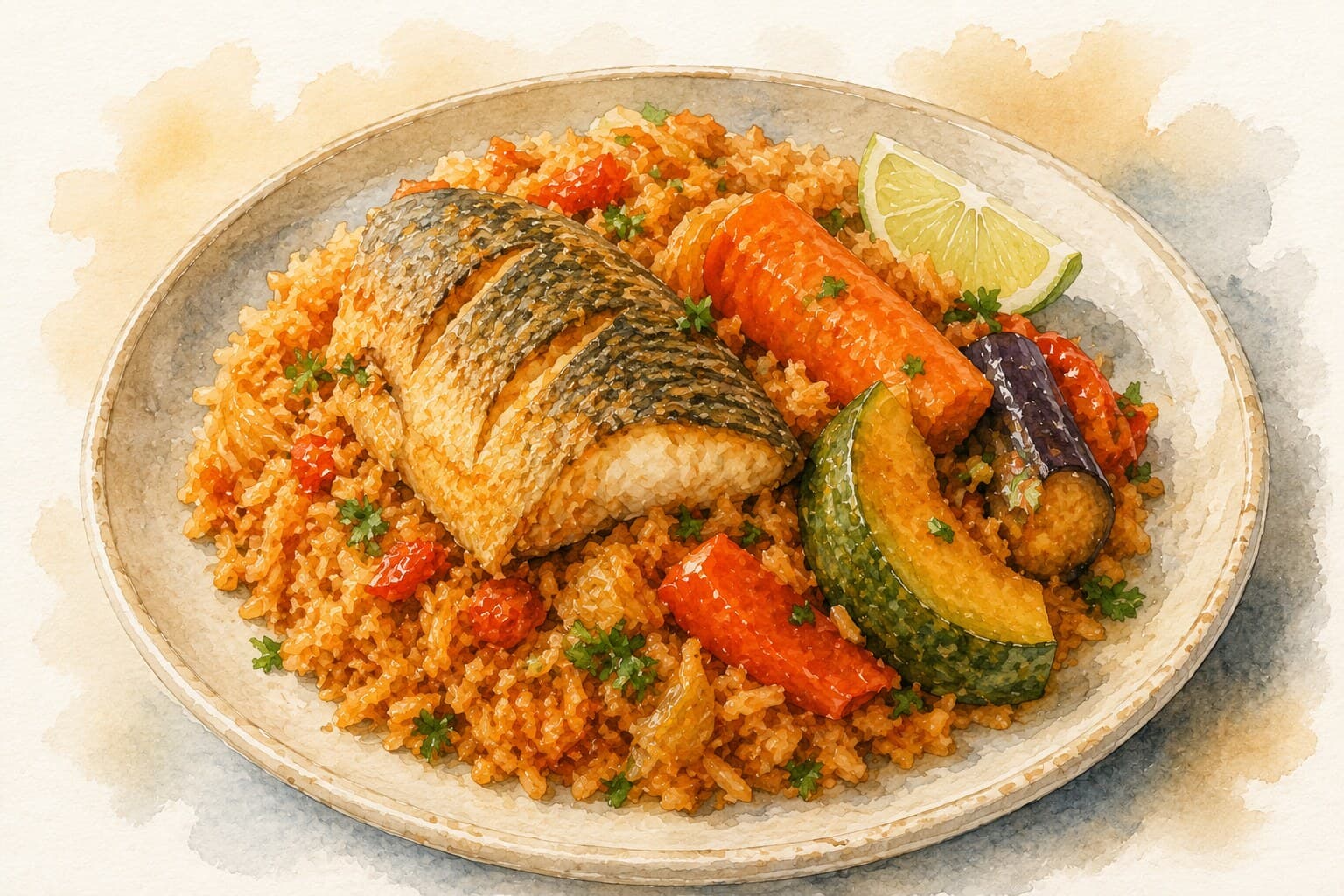
Thieboudienne is Senegal's national dish, a flavorful one-pot meal featuring stuffed fish and broken rice.
Contents (5 sections)▾
Ingredients
- 1 kg whole fish (such as snapper), cleaned and scaled
- 200 g broken rice
- 200 g tomatoes, chopped
- 100 g onion, finely chopped
- 1 bell pepper, chopped
- 2 cloves garlic, minced
- 1 tsp ground black pepper
- 1 tsp cayenne pepper
- 100 g fresh parsley, chopped
- 100 g fresh cilantro, chopped
- 50 ml vegetable oil
- 500 ml water or fish stock
- Salt to taste
Steps
Prepare the herb paste by blending parsley, cilantro, garlic, black pepper, salt, and cayenne pepper until smooth. Stuff this mixture into the cleaned fish.
In a large pot, heat vegetable oil over medium heat. Sauté onion and bell pepper until soft, about 5 minutes.
Add chopped tomatoes and cook until they break down, creating a sauce, about 10 minutes. This forms the flavorful base for braising the fish.
Carefully place the stuffed fish in the pot, add water or fish stock, and bring to a simmer. Cover and cook for 20 minutes, allowing the fish to absorb the flavors.
Remove the fish and set aside. Stir in the broken rice, ensuring it is fully submerged in the broth. Return the fish on top and cover again, simmering for an additional 20 minutes.
To achieve the toasted bottom (xoon), uncover the pot and allow the rice to cook without stirring on low heat for 5-10 minutes, monitoring closely to prevent burning.
Serve the fish over the rice, ensuring to include the toasted crust from the bottom.
Why this works
The technique of stuffing the fish with a herb paste infuses it with vibrant flavors and keeps the flesh moist during cooking. Braising in a rich tomato base allows the fish to soak up the sauce, enhancing its taste. Cooking the rice in the same broth creates a harmonious blend of flavors, with the toasted bottom (xoon) adding a delightful crunch. If the rice seems too wet at any point, allow it to simmer uncovered or increase the heat slightly to evaporate excess moisture. Conversely, if the rice is too dry, adding a splash of water or stock can help achieve the desired texture.
Common mistakes
- Stuffing the fish with a rough, chunky paste instead of a smooth one.
- Target: A paste (a smooth herb-and-aromatics mixture you smear inside the fish before it cooks) fine enough to spread inside the cavity without large herb stems poking through.
- Why it matters: A rough paste releases unevenly during braising (gentle cooking of the protein in a small amount of seasoned liquid) — the cavity flavor stays trapped in pockets instead of perfuming the flesh.
- What to do: Blend the herbs, garlic, and spices until you see no fibrous strands; add a spoonful of oil if the blender stalls.
- Adding rice to a thin, watery tomato base.
- Target: The tomato base should be visibly thickened — a spoon dragged through it leaves a brief trail before closing.
- Why it matters: Rice cooked in thin liquid turns soggy and never builds the toasted bottom (xoon) that defines the dish.
- What to do: Cook the tomatoes uncovered until they collapse and the oil starts to separate at the edges before the rice goes in.
- Stirring the rice once it's in the pot.
- Target: A still, undisturbed surface from the moment the rice hits the broth until the xoon forms.
- Why it matters: Stirring breaks the bottom crust before it can develop and turns the grains gummy.
- What to do: Cover, lower the heat, and let it work; check by lifting the lid briefly, not by spoon.
- Lifting the lid too early to look for xoon.
- Target: A clear listening cue — a faint crackle from the bottom of the pot.
- Why it matters: Pulling the lid releases steam the rice still needs, and you may stop just before the crust browns.
- What to do: Wait for the crackle, then uncover and let the bottom dry out for the final 5-10 minutes on low.
What to look for
- a deep, brick-red oil slick rising at the edges of the tomato base
- rice grains that look swollen and matte, not glossy and wet
- a faint, even crackle from the bottom of the pot as the xoon sets
- the toasted crust releasing in one piece when you slide a spoon under it
A note on history
Thieboudienne (ceebu jën, "rice of fish" in Wolof — the most widely spoken language of Senegal) is the national dish of Senegal and is traditionally tied to the fishing community of Saint-Louis, on the country's northern coast. The recipe is widely attributed to a Saint-Louis cook named Penda Mbaye, though the precise dating varies between sources. In 2021, UNESCO (the United Nations cultural agency that maintains official lists of world heritage, including living traditions like food and music) inscribed ceebu jën on its Representative List of the Intangible Cultural Heritage of Humanity, recognizing it as a living culinary art passed down through generations.
Get the essays in your inbox — free
Weekly notes on flavor, fermentation, and food history — the writing behind the Atlas of Flavor. No spam; unsubscribe anytime.