
Sticky Toffee Pudding
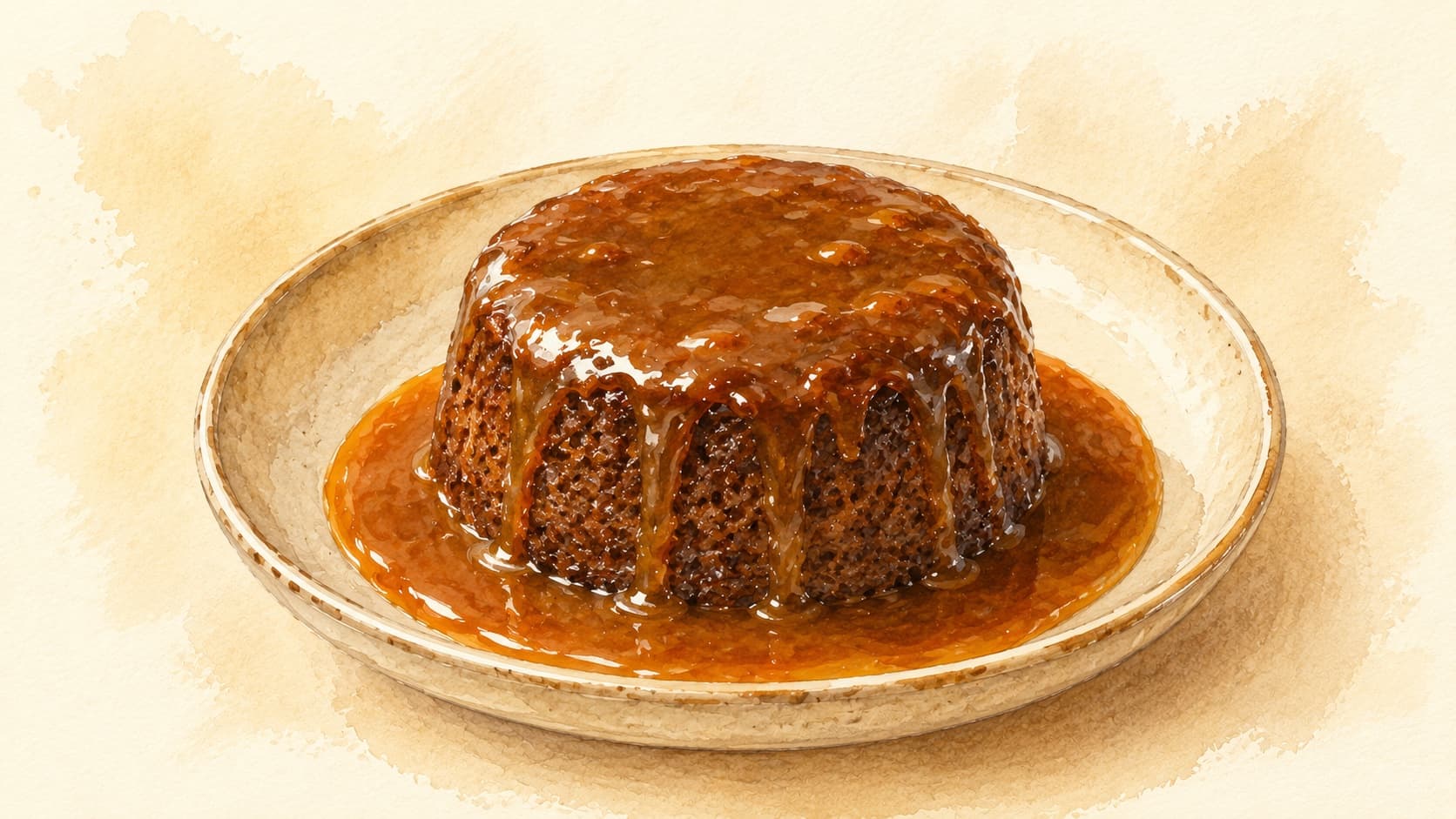
Indulge in a classic British dessert with this rich and warm Sticky Toffee Pudding, featuring a luscious caramel sauce and sweet dates.
Contents (5 sections)▾
Ingredients
- 200 g pitted dates
- 300 ml boiling water
- 1 tsp baking soda
- 100 g unsalted butter, softened
- 150 g brown sugar
- 2 large eggs
- 200 g all-purpose flour
- 1 tsp baking powder
- 1/2 tsp salt
- 150 g dark brown sugar (for sauce)
- 100 ml heavy cream
- 50 g unsalted butter (for sauce)
- 1 tsp vanilla extract
Steps
Preheat your oven to 180°C (350°F). This ensures an even baking temperature for your pudding.
In a bowl, combine the pitted dates with boiling water and baking soda. Let it sit for 10 minutes to soften the dates.
Using a blender, puree the date mixture until smooth. Set aside.
In a mixing bowl, cream the softened butter and brown sugar until light and fluffy, about 5 minutes.
Add the eggs one at a time, mixing well after each addition.
Fold in the date puree, then sift in the flour, baking powder, and salt, mixing gently until just combined.
Pour the batter into a greased baking dish and bake for 25 minutes or until a skewer inserted comes out clean.
While the pudding is baking, prepare the sauce by combining dark brown sugar, heavy cream, butter, and vanilla in a saucepan over low heat.
Stir until the sugar is dissolved and the sauce is smooth. Allow it to simmer for 5 minutes, then remove from heat.
Once the pudding is done, let it cool for a few minutes before serving. Drizzle with warm caramel sauce.
Why this works
Sticky Toffee Pudding is a delightful combination of dates and caramel, and the key to its success lies in the treatment of the dates. Soaking them in boiling water with baking soda softens their texture and enhances their natural sweetness, infusing the pudding with a deep, rich flavor. The creaming method used for the butter and sugar incorporates air into the batter, leading to a lighter, more airy texture, while the flour is folded in gently to prevent overmixing, which can lead to a dense pudding. If your pudding seems too dry after baking, it may be slightly overcooked; serve it warm with extra sauce to revive its moisture and flavor. The sauce complements the pudding perfectly, adding a luscious, gooey finish that is essential to this British classic.
Common mistakes
-
Under-soaking the dates.
- Target: soft enough to mash with the back of a spoon after sitting in the hot water for at least 10 minutes.
- Why it matters: under-soaked dates (the sweet, sticky dried fruit of the date palm, used here as the pudding's sugar and moisture source) leave fibrous flecks and bitter pockets through the sponge, and the puree is too thick to fold without overworking the batter.
- What to do: pour boiling water over the dates with the baking soda and walk away for a full 10 minutes. Puree until smooth and pourable, not paste-thick.
-
Overmixing once the flour goes in.
- Target: mix only until no dry flour is visible — about 8-10 gentle folds.
- Why it matters: the brown sugar batter is wet and acidic, so gluten develops quickly. Past that point the sponge bakes tough and gummy instead of tender.
- What to do: sift the flour, fold with a spatula in a J-motion from the bottom of the bowl, and stop the instant streaks of flour disappear.
-
Pulling it from the oven too early.
- Target: a skewer in the centre comes out with only a few moist crumbs — not wet batter, but not bone-dry either.
- Why it matters: date sponges deepen in flavour right at the end of bake. Underbaked sponge collapses in the centre once it cools and tastes raw and floury under the sauce.
- What to do: test at 25 minutes; if the skewer is wet, give it 3-5 more minutes. Top should spring back when pressed.
-
Pouring cold sauce over a cold pudding.
- Target: sauce hot and glossy, pudding still warm from the oven (or briefly re-warmed).
- Why it matters: the toffee sauce (a warm caramel-style sauce of brown sugar, butter, and cream cooked to a glossy, pourable consistency) is supposed to soak into the warm sponge, not sit on top in a puddle. Cold on cold breaks the texture contract of the dish.
- What to do: finish the sauce while the pudding is in its last 5 minutes of bake. Pour over warm, and let it sit 1-2 minutes before plating so the sponge drinks it in.
What to look for
- A glossy, mahogany-brown sauce that coats the back of a spoon and runs in a slow ribbon, not a thin stream.
- The pudding's top should spring back lightly when pressed, with a fine, even crumb — no wet streaks, no dome cracking open.
- A deep, almost smoky sweetness on the first bite — that's the baking soda having pulled the dates' caramel notes forward.
- The sauce soaks into the sponge within a minute of pouring, leaving a darker, glistening surface rather than a separate pool.
A note on history
Sticky toffee pudding (a warm British dessert of moist date sponge cake served with toffee sauce — sometimes called "sticky date pudding") is most strongly associated with Francis Coulson and the Sharrow Bay Country House Hotel in England's Lake District, where it was served from the 1970s onward as "icky sticky toffee sponge." Coulson later said his recipe came from Patricia Martin of Claughton in Lancashire, whose son in turn traced it to two Canadian air force officers who had lodged at her hotel during the Second World War. So the dish reads as a quintessentially British country-hotel dessert, but its lineage is genuinely transatlantic — Lake District by reputation, Lancashire by paperwork, and Canada somewhere upstream.
Get the essays in your inbox — free
Weekly notes on flavor, fermentation, and food history — the writing behind the Atlas of Flavor. No spam; unsubscribe anytime.