
Spanakopita Triangles
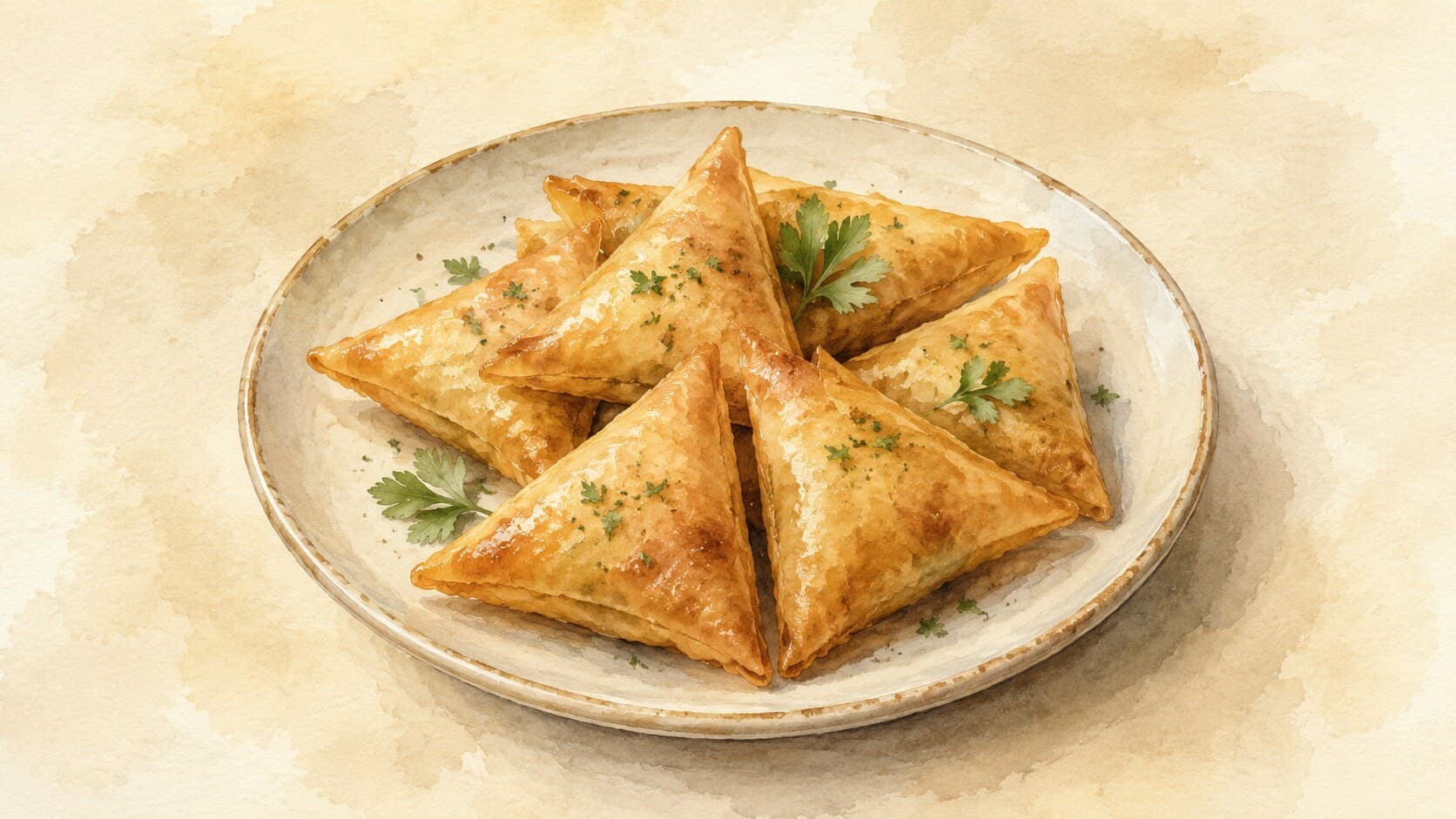
Delight in the flaky, buttery layers of these Greek spanakopita triangles filled with savory spinach and feta, perfect for any gathering.
Contents (5 sections)▾
Ingredients
- 450 g fresh spinach, chopped
- 200 g feta cheese, crumbled
- 1 medium onion, finely chopped
- 2 tbsp olive oil
- 1 clove garlic, minced
- 1 tbsp fresh dill, chopped
- 1 tbsp fresh parsley, chopped
- Salt to taste
- Pepper to taste
- 250 g phyllo pastry sheets
- 150 g unsalted butter, melted
- Sesame seeds for topping
Steps
Preheat your oven to 190°C (375°F). This ensures even baking and browning of the phyllo.
In a skillet, heat the olive oil over medium heat. Add the onion and garlic, cooking until the onion is translucent, about 5 minutes.
Add the chopped spinach and cook until wilted, about 3-4 minutes. Stir in the feta, dill, parsley, salt, and pepper. Remove from heat and let cool.
Lay out one sheet of phyllo pastry, brush with melted butter, and place another sheet on top. Cut the layered sheets into strips, about 10 cm wide.
Place a tablespoon of the spinach-feta filling at one end of each strip. Fold the corner over to form a triangle, then continue folding the triangle along the strip until you reach the end.
Place the triangles on a baking sheet lined with parchment paper. Brush the tops with additional melted butter and sprinkle with sesame seeds.
Bake in the preheated oven for 15 minutes or until golden brown and crisp. Serve warm.
Why this works
The technique of folding phyllo pastry into triangles allows for a delightful balance of textures—crispy on the outside and a creamy filling on the inside. The use of fresh spinach provides moisture, while feta lends a tangy richness. It's essential to keep the phyllo covered with a damp cloth while working to prevent it from drying out, as dried phyllo can break easily. If the phyllo breaks during folding, don’t panic—simply layer another piece on top to reinforce it. The melted butter adds flavor and helps achieve that quintessential golden brown color by promoting browning through the Maillard reaction. This recipe also introduces you to the art of phyllo folding, making it a fun and engaging appetizer for parties.
Form note. These are the individual triangle form (called spanakopitakia in Greek, the diminutive of spanakopita — a Greek savoury pie of spinach and feta wrapped in thin pastry). For the family-pan slab version, see Spanakopita — same filling, different format. The triangles serve as appetizers or finger food; the slab version is the meal-format presentation.
Common mistakes
-
Wet filling that turns the phyllo soggy.
- Target: the filling should feel just-moist — when you squeeze a handful, no water should run out.
- Why it matters: spinach holds an astonishing amount of water; any of it left in the filling steams the phyllo from the inside out and you end up with a chewy, beige, pliable triangle instead of a shattering crisp one.
- What to do: wilt the spinach first, then squeeze it hard in a clean towel or in fistfuls. Let the cooked filling cool fully before assembly so residual steam doesn't hit cold phyllo.
-
Working with phyllo that's drying out.
- Target: the sheets should stay supple and just barely tacky to the touch.
- Why it matters: phyllo (also called filo — paper-thin Mediterranean pastry sheets, sold rolled and frozen) dries in 60-90 seconds. Once it cracks, you can't fold a clean triangle — the seams split open during baking and the filling escapes.
- What to do: keep the stack covered with a barely-damp tea towel as you work; pull only the sheets you're using right now.
-
Skimping on butter between layers.
- Target: brush every layer end-to-end before laying the next one down. Don't drown it, but don't leave dry patches.
- Why it matters: the butter is what fries each layer crisp from contact heat in the oven; dry patches stay papery and flaccid, and the whole layered effect collapses.
- What to do: use a soft pastry brush, hold the bowl of melted butter close, and brush in fast even strokes — corners first, then the centre.
-
Folding too tightly or too loosely.
- Target: firm enough that the seam holds, loose enough that the layers can puff and separate.
- Why it matters: tight folds compress the layers into a single dense slab; loose folds let the corner unravel and the filling spill mid-bake.
- What to do: treat the fold like folding a flag — straight, square, with light tension. Brush the final seam edge with butter to seal.
What to look for
- the filling holding a clear shape when you press a tablespoon of it into a mound, no liquid weeping out — that's the moisture level you want.
- the phyllo sheets lifting away from the stack in a single intact piece, with a quiet papery crackle — they're still hydrated enough to fold.
- deep gold-brown across the whole surface, with visibly separated layers along the seams — the puff-and-crisp cue.
- a quiet sandy crunch when you press a finger on a finished triangle, not a dull thud — the laminated shatter that defines the form.
A note on history
Spanakopita belongs to a long Greek tradition of pita (in this context, savoury pies — not the round flatbread of English usage) built around leafy greens, herbs, and cheese. The phyllo dough technique, however, came later — most food historians trace it through Byzantine and Ottoman pastry traditions, with thin-layered dough becoming established in the eastern Mediterranean over several centuries. The triangle form, called spanakopitakia (little spanakopita), is the appetiser and street-food expression of the same idea: same filling, individual portions, more crisp surface area per bite.
Get the essays in your inbox — free
Weekly notes on flavor, fermentation, and food history — the writing behind the Atlas of Flavor. No spam; unsubscribe anytime.