
Soto Betawi
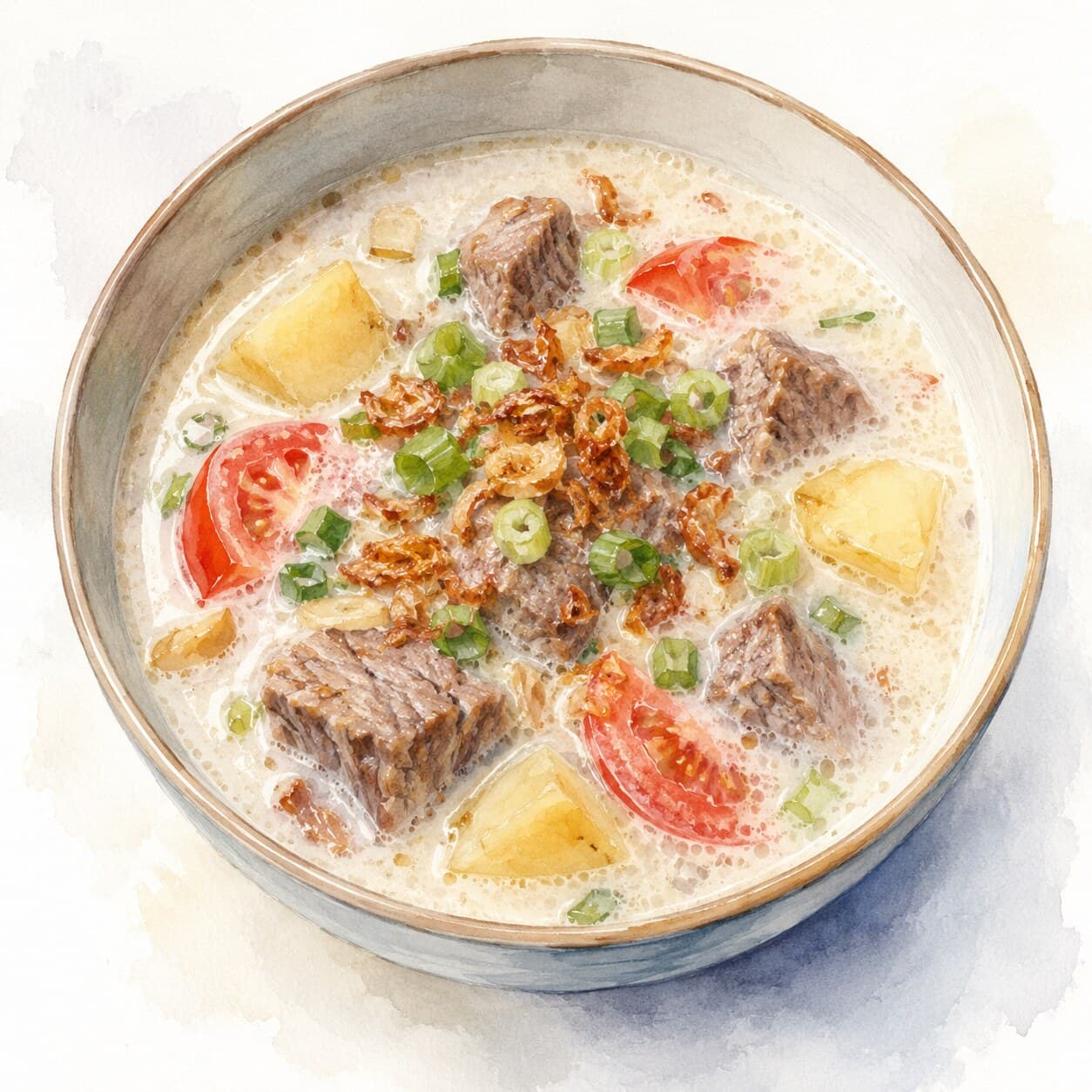
Savor the creamy and rich flavors of Soto Betawi, a traditional Jakarta beef soup with a unique blend of coconut and fresh milk.
Contents (5 sections)▾
Ingredients
- 500 g beef, cut into cubes
- 200 g beef tripe, cleaned and cut into pieces (optional)
- 100 g beef lung, cleaned and cut into pieces (optional)
- 400 ml coconut milk
- 200 ml fresh cow's milk
- 2 stalks lemongrass, bruised
- 3 cm galangal, sliced
- 4 lime leaves
- 2 red chilies, sliced
- 4 shallots, fried until golden
- Salt to taste
- Water as needed
Steps
In a large pot, bring 1.5 liters of water to a boil over high heat. This helps in cooking the beef and offal evenly.
Add the beef, tripe, and lung (if using) to the boiling water. Cook for about 10 minutes, skimming off any impurities that rise to the surface.
Reduce the heat to medium and add lemongrass, galangal, lime leaves, and salt. Simmer for 20 minutes until the meat is tender.
Pour in the coconut milk and fresh cow's milk. Stir gently and let it simmer for another 5 minutes to combine the flavors.
Serve hot, garnishing with fried shallots and sliced chilies for an added crunch and flavor.
Why this works
Soto Betawi stands out among Indonesian soups due to its creamy white-and-pale broth, created by the harmonious blend of coconut milk and fresh cow's milk. This combination enriches the flavor and provides a velvety texture that is both comforting and satisfying. The use of lemongrass, galangal, and lime leaves infuses the soup with aromatic notes, while the optional offal adds depth to the dish. If the broth seems too thick, you can adjust the consistency by adding more water or milk until you reach your desired creaminess. This balance is crucial; if it breaks or curdles due to high heat, simply lower the temperature and whisk gently to smoothen the broth again. Soto Betawi's unique profile makes it an exceptional representation of Jakarta's culinary heritage, presenting a delightful experience in every bowl, perfect for warming up on a cool day.
Common mistakes
Skipping the skim during the first boil.
Target: Lift off the grey foam that rises to the surface in the first 10 minutes of boiling the beef and offal, before you add the aromatics.
Why it matters: That foam is coagulated protein and other impurities released from the meat. Left in the pot, it breaks up into fine particles that cloud the broth and leave it tasting muddy instead of clean.
What to do: Use a spoon or a fine skimmer to lift the foam off as it collects, especially during the first vigorous few minutes of boiling.
Adding the coconut milk and fresh milk too early, or boiling hard afterward.
Target: Stir in the coconut milk and fresh cow's milk only near the end, once the meat is already tender, and keep the pot at a gentle simmer from that point on.
Why it matters: Both coconut milk and fresh milk are emulsions (fat suspended through water); sustained hard boiling, especially alongside the acidity from the lime leaves and chilies, can break that emulsion so the fat separates out and the broth turns grainy or curdled instead of creamy.
What to do: Lower the heat before pouring the milks in, stir gently, and keep the broth just barely bubbling for the last few minutes.
Serving the beef and offal before they are actually tender.
Target: Simmer the beef and any tripe or lung (organ meats) until fully cooked through and easy to pierce with a fork, with no raw or pink color left anywhere — treat the recipe's timing as a starting point, not a guarantee.
Why it matters: Tougher cuts and offal need sustained heat to soften their connective tissue. Meat that is still firm or shows raw color has not reached a safe, fully cooked state, whatever the clock says.
What to do: Cut into a piece to check that it is cooked through before moving on, and give it more simmering time if it still resists or shows any raw color.
Adding the lemongrass and galangal without bruising or slicing them first.
Target: Crush the lemongrass stalks with the back of a knife and slice the galangal (a firm, ginger-like rhizome, or underground stem) thinly before they go into the pot.
Why it matters: Both aromatics release their fragrant oils best once their fibers are broken open. Left whole, they steep weakly, and the broth loses the layered fragrance that sets soto betawi apart from a plain beef soup.
What to do: Give the lemongrass a firm bruise along its length with the back of a knife or a pestle before adding it.
What to look for
- Beef and any offal with no raw or pink color inside, yielding easily to a fork. That is the sign the meat is fully cooked through and tender, not merely simmered on the surface.
- A broth that looks creamy and cohesive rather than oily or grainy on top. A split, curdled-looking surface means the milks broke from too much heat; the flavor is usually still fine, but keep it at a lower simmer if you continue cooking it.
- A clear-smelling broth base before the milks go in, with no lingering grey foam. Skimming well at the start is what keeps the finished soup tasting clean rather than muddy.
- A fragrant, layered aroma from the lemongrass and galangal, rather than a flat smell of plain beef. If the broth smells mostly of meat and little else, the aromatics needed more bruising or a longer simmer.
A note on history
Soto is a broad family of Indonesian soups — soto ayam with chicken, soto madura, soto betawi, and many more regional versions, each city and island with its own take. "Betawi" refers to the Indigenous people and culture of Jakarta, and soto betawi is the capital's distinct entry in that wider family, set apart by a rich, pale broth built from coconut milk and fresh milk rather than the clearer, turmeric-yellow broths common in many other regions.
Compared with some other regional sotos, soto betawi is thought to be a relatively recent dish, generally traced to Jakarta street vendors rather than to an older royal or colonial-era kitchen. Some accounts credit a particular vendor family with popularizing the now-signature combination of coconut milk and fresh cow's milk in the broth, though as with many street-food dishes, the exact details of who first combined the two — and when — have been told and retold in slightly different versions over the years.
Get the essays in your inbox — free
Weekly notes on flavor, fermentation, and food history — the writing behind the Atlas of Flavor. No spam; unsubscribe anytime.