
Smorrebrod (Danish Open Sandwich)
Discover the art of Smorrebrod, a composed Danish open sandwich elegantly layered atop dense rye bread.
Contents (5 sections)▾
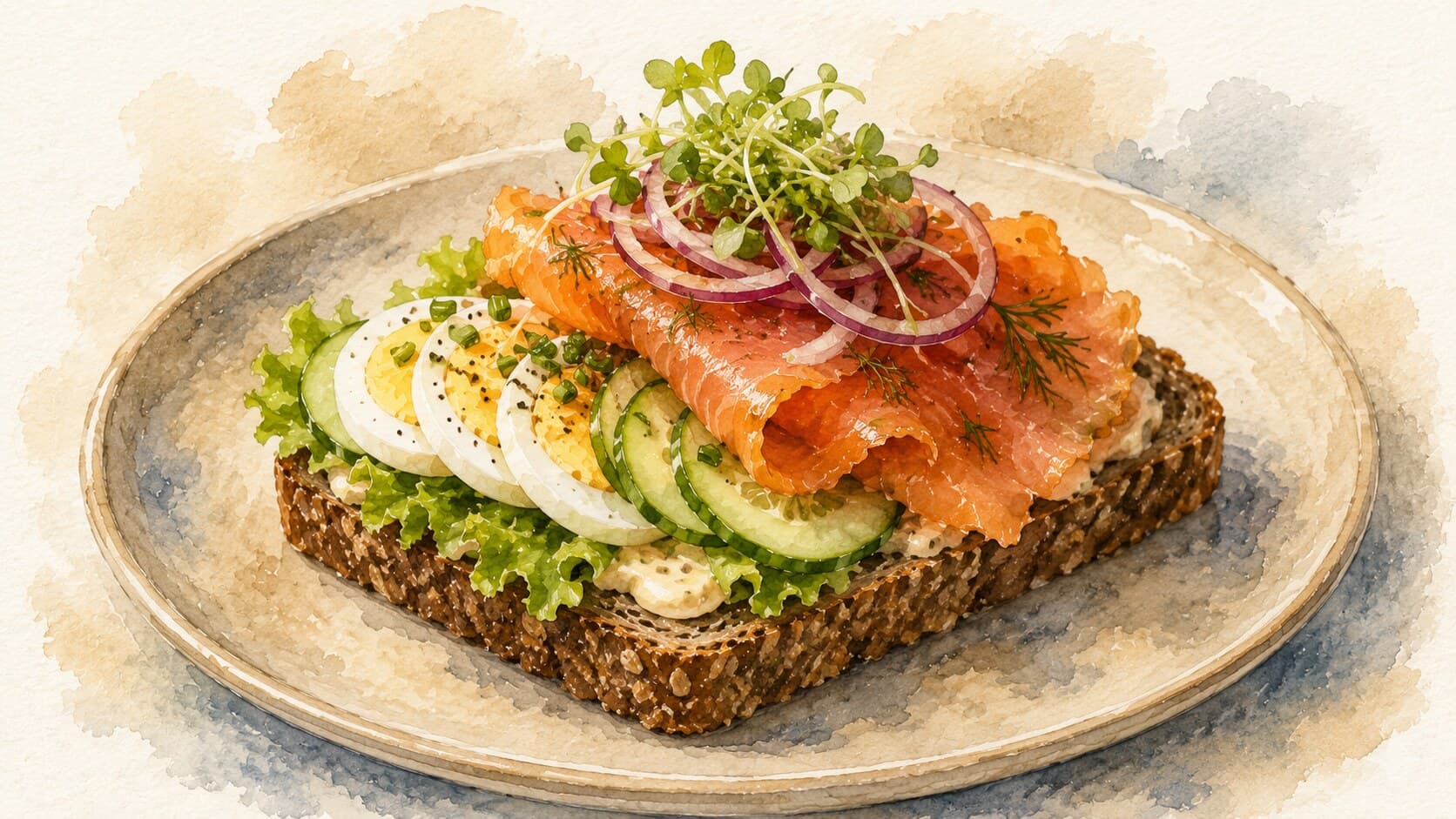
Ingredients
- 200 g dense rye bread
- 60 g unsalted butter, softened
- 100 g pickled herring, drained
- 50 g cream cheese
- 1 small red onion, thinly sliced
- 2 tbsp capers
- 2 boiled eggs, sliced
- fresh dill, for garnish
- salt, to taste
- black pepper, to taste
Steps
Begin by slicing the dense rye bread into 2 equal pieces, each about 1.5 cm thick.
Spread a generous layer of softened unsalted butter (30 g per slice) evenly over the rye bread. This not only adds flavor but also creates a barrier to prevent the bread from becoming soggy.
Layer the pickled herring on one slice, followed by a dollop of cream cheese. Ensure the herring is well-drained to maintain the structural integrity of the sandwich.
On the second slice, arrange the boiled egg slices artfully, then add the thinly sliced red onion and sprinkle with capers.
Season both slices with salt and black pepper to elevate the flavors. Use fresh dill to garnish each layer.
Serve immediately on a plate, ensuring each layer is visible for an appealing presentation.
Why this works
This recipe for Smorrebrod emphasizes the technique of layering dense buttered rye bread with carefully selected toppings. The butter serves not just as a flavor component, but also as a moisture barrier, preventing the bread from becoming soggy, which is crucial for maintaining the structure of the dish. Each topping is chosen for its contrasting texture and flavor, ensuring a balanced bite. If the slices of rye bread seem too thick, consider trimming them down slightly to enhance the overall experience. Assemble in a deliberate order, starting with the heartier toppings like pickled herring or boiled eggs, followed by more delicate additions like onion and dill, allowing each component to shine while contributing to a harmonious flavor. This attention to layering and balance is what distinguishes Smorrebrod from an ordinary sandwich, meant to be enjoyed with a knife and fork.
Safety note — pickled herring. Use commercially pickled herring (acid-cured and sold ready to eat), keep it refrigerated, and eat within its use-by date; it is not raw fish, but like all cured fish it should be kept cold.
Common mistakes
Thin butter coat that lets the bread go soggy under the topping
- Target: an even, opaque layer of softened butter — about 30 g per slice, edge to edge.
- Why it matters: butter is the moisture barrier between damp toppings and dense rye. Skimp on it and the bread turns from a sturdy base into a wet sponge within minutes.
- What to do: soften butter to spreadable at room temperature first; never spread cold butter that tears the crumb.
Untrimmed herring brine that floods the slice
- Target: herring (pickled herring — a shelf-stable cured fish in vinegar brine, eaten cold without further cooking) drained on paper towel before it touches the bread, no visible liquid.
- Why it matters: the brine carries far more water than the butter can hold back, and once it pools, the rye starts to break down under the structure.
- What to do: lift each piece with a fork, blot once on absorbent paper, and only then place it on the buttered slice.
Toppings stacked in the wrong order and the dish collapses
- Target: heaviest layers first (herring, egg), then lighter accents (onion, capers, dill) on top.
- Why it matters: smørrebrød (the Danish open-face sandwich, literally "buttered bread") is a knife-and-fork plate, not a sandwich; if the heavy things sit on the dill, the silhouette caves in the moment a fork lands.
- What to do: treat each slice as architecture — base, structural topping, then delicate finishes added only at the end.
Sliced too far ahead and the rye dries at the edges
- Target: assembly within 5-10 minutes of serving, slices kept covered until that moment.
- Why it matters: dense rye dries quickly once cut; a stale-feeling edge undercuts an otherwise pristine plate.
- What to do: prep toppings completely first, then butter and assemble at the last minute. If you must hold, cover loosely with a damp cloth — not plastic that traps condensation.
What to look for
- the butter layer reads matte and even across the rye, with no thin spots where dark crumb shows through
- each topping holds its silhouette — the egg slice sits flat, the herring is one piece, the onion forms a curl, not a heap
- the lifted slice does not bend or sag at the centre when you raise it from the plate
- the dill and capers stay vivid against the dark rye, not wilted into the surface
A note on history
The Danish tradition of smørrebrød — butter spread thick on dense rye (a hearty dark sourdough bread made from rye flour, the structural base of the dish), then topped with fish, meat, eggs, and pickles — moved from farm and tavern fare into a recognisable urban form in late nineteenth-century Copenhagen, when restaurants began serving the open-face sandwich as a composed plate. The Davidsen family has been associated with smørrebrød since 1888, when guests of Oskar Davidsen's wine bar took to ordering his wife Petra's bread slices for lunch; their descendants have run a smørrebrød restaurant in Copenhagen across four generations. Ida Davidsen, the fourth generation, is credited with bringing the tradition to international audiences from the 1970s onward and inventing several of the dish's now-classic combinations.
Get the essays in your inbox — free
Weekly notes on flavor, fermentation, and food history — the writing behind the Atlas of Flavor. No spam; unsubscribe anytime.