
Shepherd's Pie
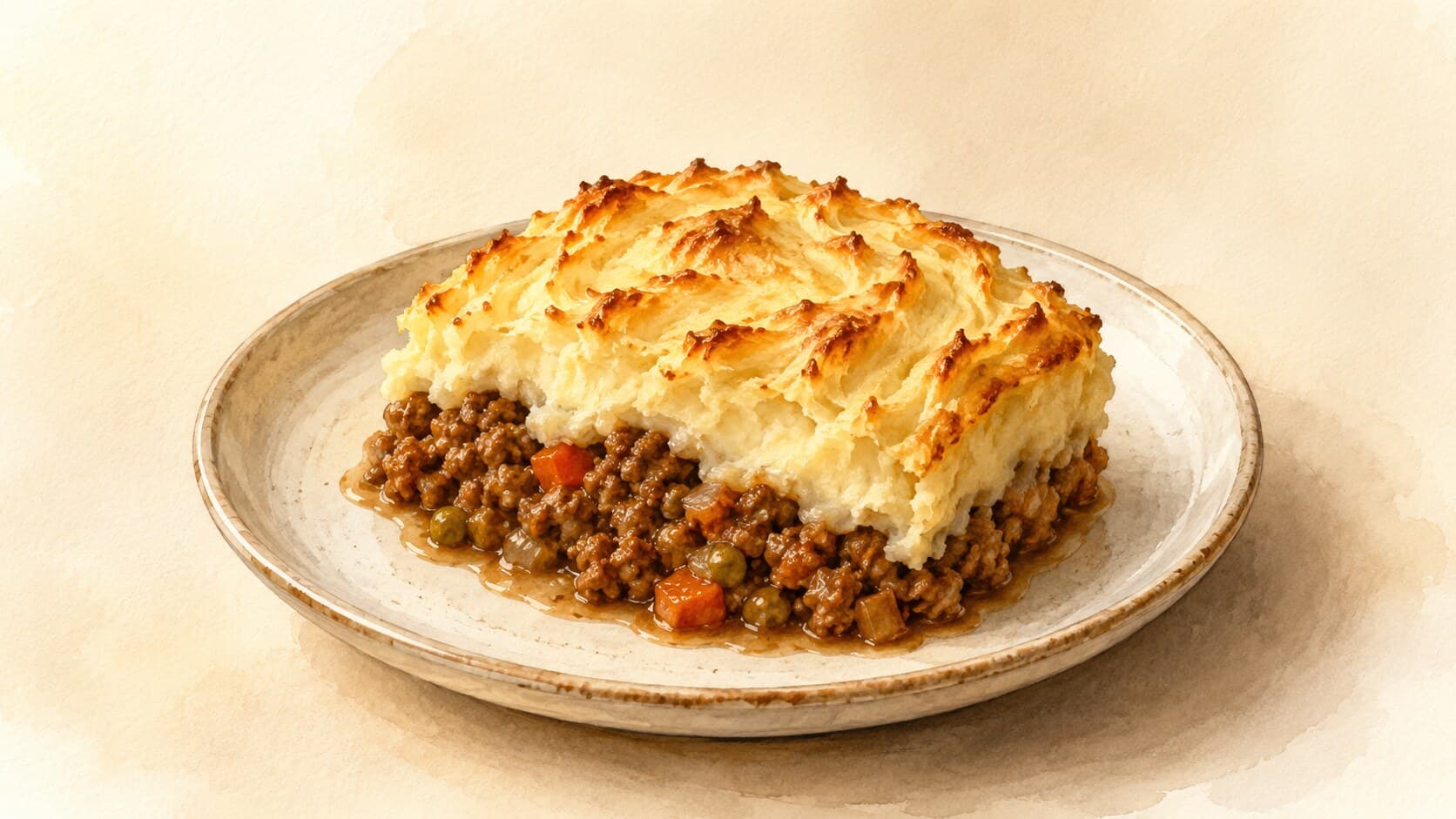
A classic British Shepherd's Pie featuring layers of savory minced lamb topped with creamy mashed potatoes.
Contents (5 sections)▾
Ingredients
- 500 g minced lamb
- 1 large onion, diced
- 2 carrots, diced
- 100 g frozen peas
- 2 cloves garlic, minced
- 2 tbsp tomato paste
- 1 tsp Worcestershire sauce
- 300 ml beef stock
- 1 tsp dried thyme
- Salt and pepper to taste
- 800 g potatoes, peeled and chopped
- 100 ml milk
- 50 g butter
Steps
Preheat your oven to 200°C (392°F). This temperature will create a nice golden crust on the mashed potatoes.
In a large skillet, heat 1 tablespoon of butter over medium heat. Add the diced onion and cook for about 5 minutes until softened.
Add the garlic, carrots, and minced lamb. Cook for another 5-7 minutes until the lamb is browned. Ensure the meat is fully cooked to avoid any raw spots.
Stir in the tomato paste, Worcestershire sauce, thyme, and season with salt and pepper. Pour in the beef stock and simmer for about 10 minutes until slightly thickened.
Meanwhile, boil the potatoes in salted water for about 15 minutes until tender. Drain well and return to the pot.
Mash the potatoes with milk and butter until smooth. Season with salt to taste.
Spread the lamb mixture in a baking dish and carefully layer the mashed potatoes on top, smoothing it out with a spatula.
Place in the preheated oven and bake for 20 minutes until the top is golden brown and crispy.
Why this works
Shepherd's Pie is a British classic that showcases the comforting combination of savory meat and creamy potatoes. The key technique here is the layering—by cooking the minced lamb with aromatic vegetables and seasoning, we build a deep, rich flavor that pairs beautifully with the creamy mashed potatoes. The browning of the top during baking adds texture and enhances the dish's overall flavor through the Maillard reaction. If the mashed potatoes seem too thick, you can thin them out with a bit more milk or butter to achieve your desired consistency. This pie can be made ahead and reheated, making it a perfect option for busy weeknights or gatherings. Additionally, using frozen peas helps to maintain their bright color and sweetness while saving prep time, making the dish both efficient and delicious.
Common mistakes
Topping the filling before the lamb is fully cooked through
- Target: ground lamb (minced lamb, the British term used here) at 70-74°C / 158-165°F internal before the potato layer goes on.
- Why it matters: the oven step is short and mostly about browning the top. The meat must already be safe — a thick potato blanket insulates rather than cooks.
- What to do: break the lamb into small clumps in the skillet, brown until no pink remains, then check with an instant-read thermometer (a probe-style thermometer that gives a temperature reading in a few seconds) before assembly.
Watery filling that floods the potato crust
- Target: the stock reduces until a spoon dragged through the pan leaves a brief trail.
- Why it matters: loose liquid bubbles up through the mash and turns the crust pale and soggy instead of crisp.
- What to do: simmer the seasoned lamb mixture longer than feels necessary — the sauce should cling to the meat, not pool around it.
Mashed potatoes too wet to hold a fork pattern
- Target: drained potatoes returned to the hot pan for a minute to drive off surface steam, then mashed.
- Why it matters: wet mash slumps flat and never browns; dry mash takes a peak from the back of a fork and crisps in the oven.
- What to do: drain well, dry briefly over low heat, then mash with warm milk and butter — not cold dairy that seizes the starch.
Smooth-topped mash that bakes pale
- Target: a textured surface — fork tines, spoon swirls, or rough peaks.
- Why it matters: browning happens on the high points; a flat surface offers no edges to crisp.
- What to do: drag a fork across the top before baking and dot with a little extra butter to encourage colour.
What to look for
- the lamb sauce coats the back of a spoon and no thin liquid pools when you tilt the pan
- the potato peaks lean dry and stiff, not glossy and slumping
- the top goes from yellow-pale to deep golden in the last few minutes, with darker tips on the highest ridges
- a small cut through the centre shows a clear seam between meat and mash, not a muddy zone where they mix
A note on history
"Cottage pie" is the older name, first recorded in 1791 when potato was becoming an affordable staple in British and Irish home kitchens. The label "shepherd's pie" appears later in the nineteenth century, and over time the convention settled on lamb or mutton (mutton is meat from an older sheep, with a stronger flavor than lamb) for the shepherd version, beef for the cottage. Mrs Beeton's Book of Household Management (1861) helped fix the dish in the British home-cooking canon, though earlier eighteenth-century writers like Hannah Glasse had already recorded mashed-potato-topped meat pies in The Art of Cookery Made Plain and Easy (1747).
Get the essays in your inbox — free
Weekly notes on flavor, fermentation, and food history — the writing behind the Atlas of Flavor. No spam; unsubscribe anytime.