
Shashlik
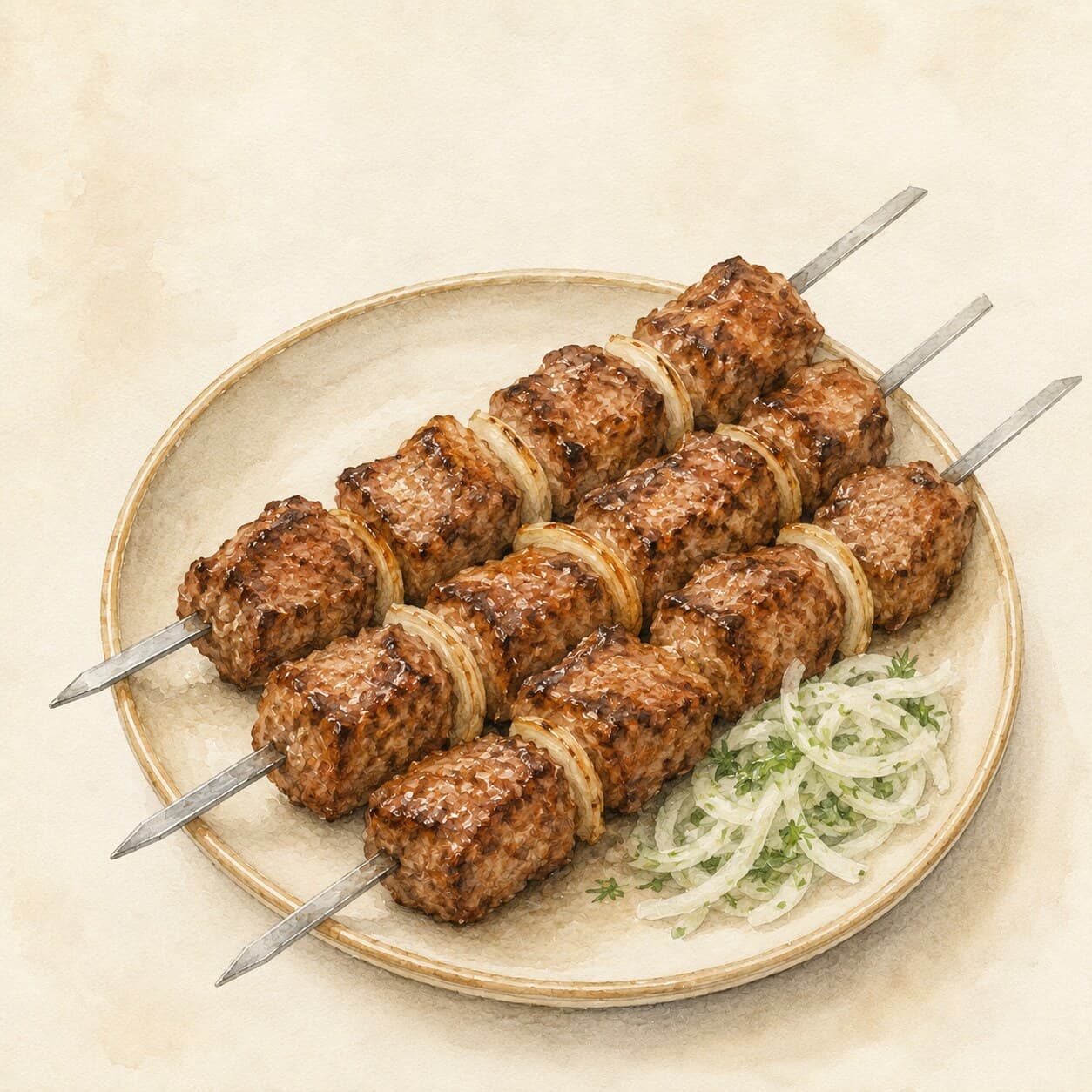
Shashlik is a flavorful skewer dish from Central Asia, featuring grilled lamb or beef seasoned simply for a delicious outdoor experience.
Contents (5 sections)▾
Ingredients
- 500 g ground lamb or beef
- 1 large onion, finely chopped
- 1 tsp salt
- 1 tsp paprika
- metal skewers, soaked in water for 30 minutes
Steps
In a mixing bowl, combine the ground lamb or beef, chopped onion, salt, and paprika. Mix thoroughly for about 5 minutes to ensure even seasoning.
Preheat your grill or prepare an open fire to medium-high heat, around 200°C (400°F). This temperature is ideal for searing the meat quickly, developing a browned crust.
Shape the meat mixture into small patties for kofta style or mold them around the skewers for chunk style. Ensure they are compact to prevent them from falling apart during grilling.
Place the skewers on the grill and cook for about 10-15 minutes, turning occasionally until they are well browned and cooked through. The internal temperature should reach 71 °C / 160 °F at the thickest point on an instant-read thermometer; colour, char and time are cues, not the safety test.
Remove from the grill and let them rest for a few minutes before serving, so they come off their peak heat before you bite in.
Why this works
The key to perfect shashlik lies in the balance of meat, seasoning, and cooking technique. Ground meats like lamb or beef hold moisture well, especially when combined with onions, creating a juicy final product. Seasoning with salt and paprika enhances flavor and helps in forming a crust when grilled, adding a delightful texture. When shaping the skewers, it's crucial to compact the meat to prevent it from breaking apart during cooking. If the meat seems too loose and falls off the skewer, wet your hands before reshaping, which allows for better adhesion. Furthermore, grilling at the correct temperature ensures a sear that browns the surface while the meat cooks evenly throughout. For optimal results, the skewers should be turned regularly to avoid burning and ensure even cooking. If you notice that the meat is browning too quickly, you can move the skewers to a cooler part of the grill to finish cooking without charring. This dish is best enjoyed fresh off the grill, often served with flatbread or a fresh salad.
Common mistakes
Under-mixing the meat.
Target: A mixture that turns tacky and sticky and clings to itself and to your hand — the recipe's "mix thoroughly for about 5 minutes" is doing real work.
Why it matters: Kneading ground meat with salt pulls out a sticky protein (myosin) that acts like a natural glue, binding the meat into a mass that grips the skewer. Skip it and the meat stays crumbly and slides off into the fire.
What to do: Mix and knead firmly for the full few minutes until the texture visibly changes from loose crumbles to a smooth, cohesive paste that holds together when you press it.
A watery onion mixture.
Target: Finely chopped onion whose excess juice has been squeezed out before it goes in.
Why it matters: Onion is full of water. Too much of it makes the mixture loose and slippery, so it won't bind or hold its shape on the skewer, and the extra moisture steams the meat instead of letting it brown.
What to do: Chop the onion very fine, then squeeze it in your hand or a clean cloth to wring out the juice before mixing it into the meat.
Warm meat that won't hold together.
Target: A cold mixture, chilled if your kitchen is warm.
Why it matters: Warm fat turns soft and greasy and the mixture loses its firmness, so it slumps and falls off the skewer during grilling.
What to do: Keep the meat cold. If it feels soft and greasy after mixing, chill it in the fridge for 20–30 minutes (and wet your hands with cold water) before shaping it onto the skewers.
Molding it on too loosely.
Target: Meat packed firmly and evenly around the skewer with no air pockets, as the recipe stresses — compact so it won't fall apart.
Why it matters: Loose, uneven meat has gaps that cook at different rates and weak spots that break and drop into the coals when you turn the skewers.
What to do: With wet hands, press the meat firmly around the skewer into an even sausage shape, squeezing out any air gaps so it grips tightly.
Turning too soon — and guessing at doneness.
Target: Let a browned crust form before the first turn; cook to 71 °C in the center.
Why it matters: Ground meat moved before its surface has seared is still fragile and tears off the skewer. And because the meat is ground, it must reach a safe internal temperature all the way through — color alone won't tell you it's done.
What to do: Leave the skewers undisturbed until the down side is well browned and releases cleanly, then turn. The safety test is an instant-read thermometer in the center of the thickest part reading 71 °C / 160 °F — get one before grilling ground meat. A clean cut showing no glossy raw pink, and clear juices, are supporting signs, not a substitute for the reading.
What to look for
- Meat mixed enough: the surface looks smooth and slightly sticky, not crumbly, and a pinch holds together and tugs back a little when you pull it — that's the binding protein at work.
- Grill ready: at the target medium-high heat, coals glow under a thin grey ash (or a gas grate is fully preheated), and you feel a strong, steady warmth above the grate.
- Searing well: a steady sizzle when the meat hits the heat, and the down side turning deep, even brown — not a pale, silent, steaming gray.
- Ready to turn: the meat has firmed up and releases from the grate cleanly instead of sticking and tearing; if it still clings, give it another minute.
- Safely done: 71 °C / 160 °F in the center on a thermometer — the safety test; a cut then shows evenly cooked meat with no glassy raw pink, and clear juices, as supporting signs.
- Rested and ready: after a few minutes' rest the skewers look juicy and glistening rather than weeping liquid — time to serve.
A note on history
Shashlik is skewered, grilled meat that was long known to herders and nomads across the Caucasus and Central Asia before becoming hugely popular across the Russian Empire in the 19th century. The word came into Russian as shashlyk from a Turkic root: in Turkic languages shish means "skewer," so shishlik is essentially "something for the skewer." Closely related dishes carry their own regional names — mtsvadi in Georgian, khorovats in Armenian. (Source: Shashlik — Wikipedia)
Get the essays in your inbox — free
Weekly notes on flavor, fermentation, and food history — the writing behind the Atlas of Flavor. No spam; unsubscribe anytime.