
Shahi Paneer
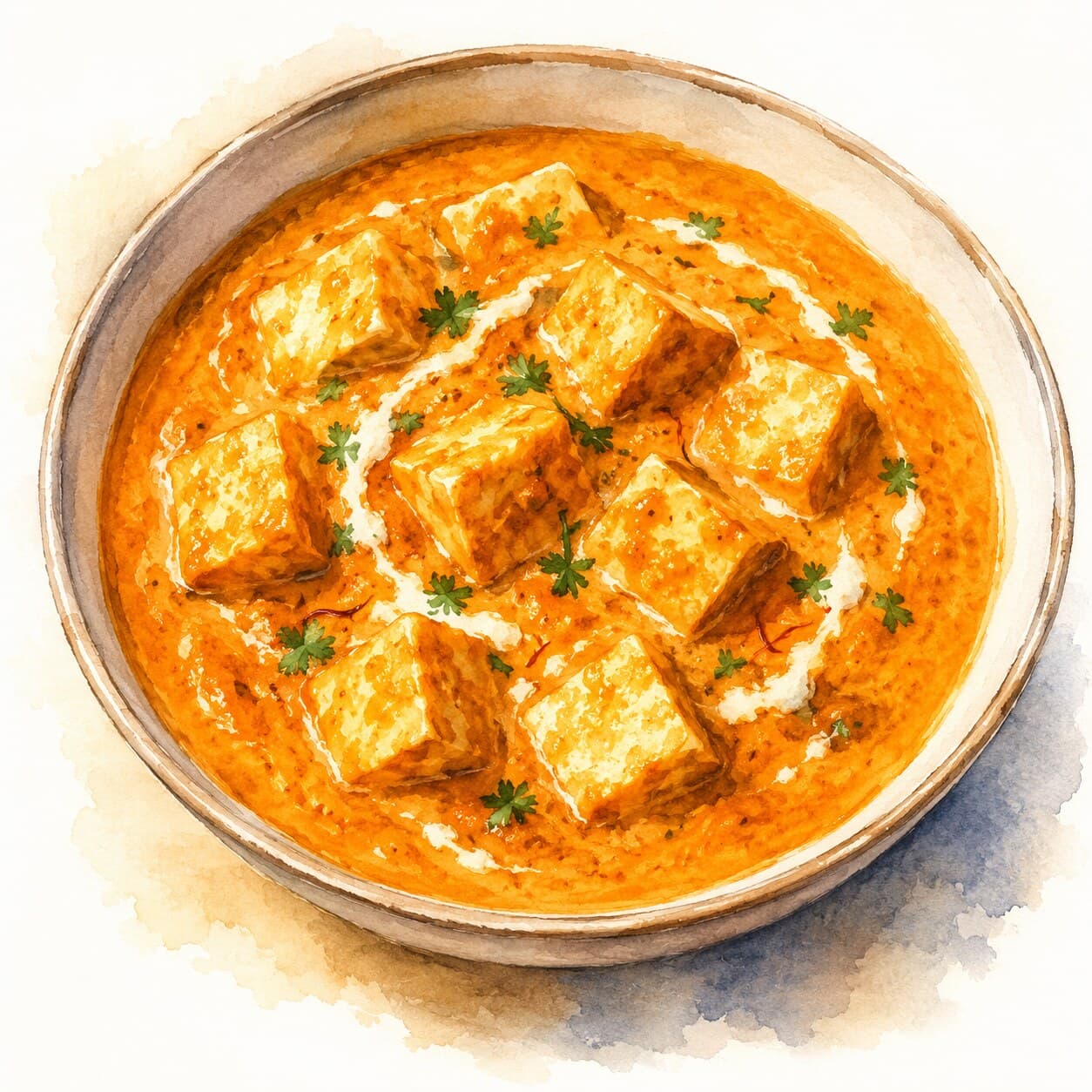
Shahi Paneer is a luxurious Mughlai dish featuring paneer in a creamy cashew and tomato gravy, aromatic with spices.
Contents (5 sections)▾
Ingredients
- 250 g paneer, cubed
- 40 g cashews, soaked in water for 30 minutes
- 100 ml cream
- 200 g tomatoes, pureed
- 1 medium onion, finely chopped
- 2 tbsp vegetable oil
- 1 tsp cumin seeds
- 4 green cardamom pods
- 1 inch cinnamon stick
- 1/4 tsp saffron strands, soaked in 1 tbsp warm water
- 1 tsp dried fenugreek leaves (kasuri methi), crushed
- Salt to taste
- Fresh coriander leaves for garnish
Steps
Heat the vegetable oil in a pan over medium heat. Add cumin seeds, cardamom pods, and cinnamon stick, cooking until fragrant (about 1 minute).
Add the finely chopped onion and sauté until golden brown (about 5-7 minutes), which will add depth of flavor to the gravy.
Blend the soaked cashews with the pureed tomatoes to create a smooth paste. Pour this into the pan and cook for 5 minutes, stirring occasionally.
Stir in the cream, saffron mixture, and crushed kasuri methi. Simmer for another 3-4 minutes, allowing the flavors to meld. Adjust salt as needed.
Gently add the paneer cubes to the gravy, simmer for 2-3 minutes to heat through without breaking them.
Remove from heat and garnish with fresh coriander leaves before serving with naan or rice.
Why this works
The key to Shahi Paneer lies in its rich, creamy gravy, which is achieved through the combination of soaked cashews and cream. This creates a luxurious texture that is more delicate than the typical tikka masala. The aromatic spices, including cardamom and cinnamon, infuse the dish with warmth and complexity. The use of tomatoes, while lighter than traditional gravies, provides acidity that balances the richness. If the gravy seems too thick, you can adjust it by adding a little water or additional cream until it reaches your desired consistency. This dish is traditionally served hot, ensuring that the paneer remains soft and juicy, enhancing the overall experience.
Common mistakes
Simmering the paneer too hard or too long once it goes into the gravy.
Target: Add the paneer cubes only at the end, and keep the gravy at a gentle simmer for just 2–3 minutes, long enough to heat through.
Why it matters: Paneer (a fresh, unaged cheese made by curdling hot milk and draining the curds) has no melting fat to keep it tender under prolonged heat. The longer or harder it cooks, the more its protein network tightens and squeezes out moisture, turning soft cubes rubbery and squeaky instead of soft.
What to do: Slide the paneer in once the gravy is otherwise finished, keep the heat low, and take the pan off as soon as the cubes are warmed through.
Rushing the onion so it never really browns.
Target: Sauté the chopped onion over medium heat for the full 5–7 minutes, until it turns a deep golden color, not just soft and translucent.
Why it matters: Onion's sharp, raw sulfur compounds only mellow and its natural sugars only caramelize with sustained heat. An onion pulled off the heat too early leaves the finished gravy tasting thin and sharp instead of rounded and sweet.
What to do: Stir occasionally and be patient; the onion should look distinctly golden-brown, not merely pale and soft, before you move on.
Leaving the cashew-tomato paste gritty instead of smooth.
Target: Soak the cashews fully in warm water for the full time, then blend them with the tomato purée until the mixture is glassy-smooth with no visible flecks.
Why it matters: Under-soaked or under-blended cashews leave behind gritty specks that no amount of simmering will dissolve, so the finished gravy reads as sandy rather than silky.
What to do: Blend longer than feels necessary, scraping down the sides of the blender, and add a splash of the soaking water if the mixture won't move smoothly.
Letting the gravy boil hard once the cream goes in.
Target: After stirring in the cream, keep the heat at a bare simmer, with just a few lazy bubbles at the edges.
Why it matters: Cream is an emulsion (a stable mix of fat and water); sustained high heat, especially combined with the acidity of the tomatoes, can break that emulsion so the fat separates out and the sauce looks curdled or greasy instead of silky.
What to do: Lower the heat before the cream goes in, stir gently, and don't let it come back up to a rolling boil.
What to look for
- Onion that has turned a deep golden-brown, not just soft and pale. That color shift is where the raw sharpness cooks off into a rounded sweetness that anchors the whole gravy.
- A cashew-tomato purée that looks glassy and streak-free rather than speckled. Any grittiness at this stage carries straight through to the final dish.
- A gravy that clings to the back of a spoon in a thin, even layer. That cling is the sign the cashews and cream have come together into one cohesive sauce rather than sitting as a thin, separated liquid.
- Paneer that is warmed through but still gives slightly under gentle pressure. If the cubes feel firm or squeaky rather than soft, they have spent too long in the heat.
A note on history
"Shahi" means roughly "royal" or "imperial" in Persian and Urdu, and shahi paneer is generally understood as a home and restaurant take on the rich, dairy- and nut-thickened gravies associated with Mughal-era royal kitchens (the Mughal Empire ruled much of the Indian subcontinent from the 16th into the 19th century), where cooks built sauces from cream, ground nuts, and whole spices rather than a plainer vegetable base.
Paneer itself has a more contested history. Some food historians point to descriptions of heat-and-acid-set milk curds in ancient Indian texts written well before the common era; others argue that Persian and Afghan travelers and settlers introduced the specific technique of deliberately curdling milk to North India; a third account credits Portuguese traders, who brought their own fresh-cheese-making methods to Bengal in eastern India around the 17th century, with popularizing the acid-set cheeses that paneer and its Bengali relative chhena descend from. No single version is universally agreed upon, and the truth likely blends more than one of these influences over a long stretch of time.
Get the essays in your inbox — free
Weekly notes on flavor, fermentation, and food history — the writing behind the Atlas of Flavor. No spam; unsubscribe anytime.