
Saumon Beurre Blanc
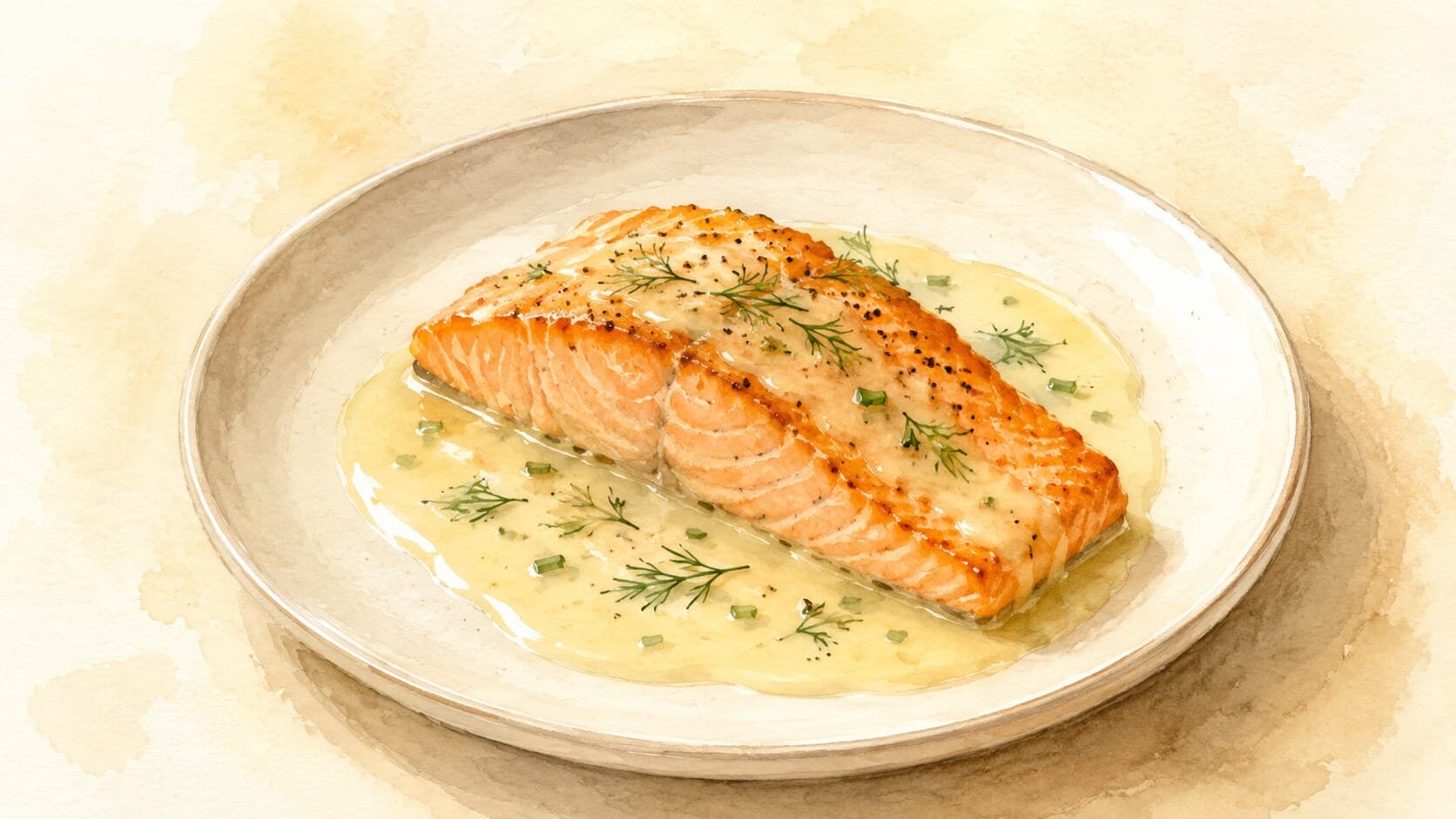
Pan-seared salmon fillet drizzled with a silky beurre-blanc sauce for a classic French dish.
Contents (5 sections)▾
Ingredients
- 2 salmon fillets (180g each)
- 1 tbsp olive oil
- Salt to taste
- Pepper to taste
- 1 shallot, finely chopped
- 100ml dry white wine
- 1 tbsp white wine vinegar
- 150g unsalted cold butter, cut into cubes
- Chives, chopped, for garnish
- Asparagus or wilted greens, for serving
Steps
Heat olive oil in a skillet over medium-high heat. Season salmon fillets with salt and pepper. Sear for 4-5 minutes on each side until golden brown and cooked to your desired doneness.
Remove salmon and keep warm. In the same pan, add shallots and sauté for 1-2 minutes until soft. Pour in white wine and vinegar, and let simmer until reduced by half.
Reduce heat to low and whisk in cold butter, one cube at a time, until the sauce is emulsified and glossy. If the sauce seems too thin, continue whisking over low heat until thickened.
Plate the salmon fillets, drizzle with beurre-blanc sauce, and garnish with chopped chives. Serve with asparagus or wilted greens.
Why this works
The technique of pan-searing creates a beautifully caramelized crust on the salmon, which enhances flavor through the Maillard reaction. The beurre-blanc sauce, a classic French emulsified butter sauce, uses the reduction of shallots and white wine to build depth. It's crucial to maintain low heat while incorporating the cold butter; this helps achieve the desired emulsion without breaking the sauce. If it breaks, meaning the butter separates, you can rescue it by whisking in a splash of warm water to bring it back together. This dish teaches essential techniques for cooking fish and the art of emulsification, which is fundamental in many French sauces. Achieving the perfect doneness in salmon ensures a tender, moist center, making it a delightful centerpiece for any meal.
Doneness note (dual path). The USDA consumer-safe endpoint for fish is 63°C / 145°F, or cooked until the flesh is opaque and flakes easily — the fully-cooked path here (pull at 63°C, opaque flake throughout). Restaurant-style medium pulls the salmon at 54°C for a just-translucent center: a culinary style below the safe endpoint, not the same thing. High-risk diners (pregnancy, immunocompromised, very young or old) should use the 63°C+ path. The beurre-blanc technique itself is covered in Beurre Blanc — read that first if the cold-butter emulsion is new.
Common mistakes
Butter added too cold or too fast
- Target: a glossy, pourable sauce the color of pale ivory, thick enough to coat the back of a spoon.
- Why it matters: the emulsion holds because cold butter cubes melt slowly into the warm acidic reduction; dumped or sub-fridge-cold butter shocks the temperature and the sauce breaks into a greasy puddle.
- What to do: keep the butter cubes cold (fridge, not freezer), add one or two at a time while whisking continuously, and don't drop in the next batch until the previous one is fully absorbed.
Sauce held over too much heat
- Target: a finished sauce held at no more than 60-70°C — warm to the touch on the side of the pan, not hot.
- Why it matters: beurre blanc is a fragile emulsion (a stable suspension of butterfat droplets in the acidic water-based reduction); sustained high heat melts the butterfat free of the proteins and water, and the sauce splits.
- What to do: finish on the lowest possible burner, pull the pan off the heat entirely once the sauce is glossy, and hold on a back of the stove or over a bowl of warm (not hot) water.
Reduction not concentrated enough
- Target: shallots and wine-vinegar reduced to about 2 tablespoons of syrupy liquid before any butter goes in.
- Why it matters: an under-reduced base leaves too much free water, which means the sauce never thickens properly and tastes watery and sharp.
- What to do: simmer the wine, vinegar, and shallots until the liquid is visibly syrupy and just coats the pan, then add the first butter cube only after the bubbles slow and the liquid pulls together.
Under-cooked salmon for high-risk diners
- Target: for a fully-cooked finish, an internal temperature of 63°C / 145°F, with the flesh opaque all the way through and flaking cleanly.
- Why it matters: the dish includes a dual-path doneness note, but the medium-rare path is not for everyone — pregnancy, immunocompromised, very young, or older diners should be served the fully-cooked version, and the marinade or sear does not pasteurize the inside.
- What to do: use an instant-read thermometer at the thickest part of the fillet, choose the 63°C target whenever serving high-risk diners, and don't rely on color alone to judge doneness.
What to look for
- A salmon top with a deeply golden, slightly crisp crust, lifting cleanly from the pan when ready to turn.
- A sauce that ribbons off the spoon in a slow, continuous fold — not in oily droplets.
- Tiny shallot pieces suspended evenly through the sauce, with no slick of yellow oil pooling at the edges.
- A clean smell of warm butter and wine, with no sharp burned-fat note that would signal too much heat.
A note on history
Beurre blanc — the white-butter sauce paired with the salmon here — is widely credited to Clémence Lefeuvre at the Buvette de la Marine, a riverside restaurant in La Chebuette (Saint-Julien-de-Concelles, upstream from Nantes) around the late 19th century. The traditional pairing was with Loire river fish, and "beurre nantais" (literally "Nantes-style butter," after the city in western France where the sauce is said to have originated) remains an alternate name for the sauce. Paired with salmon, the same technique scales naturally to a richer, oilier fish.
Get the essays in your inbox — free
Weekly notes on flavor, fermentation, and food history — the writing behind the Atlas of Flavor. No spam; unsubscribe anytime.