
Satsivi (Georgian Walnut Chicken)
Satsivi is a Georgian dish made of chicken coated in a thick walnut sauce, emphasizing emulsification and flavor layering techniques.
Contents (5 sections)▾
Ingredients
- 1 kg chicken, cut into pieces
- 200 g walnuts, finely ground
- 1 onion, finely chopped
- 2 cloves garlic, minced
- 2 cups chicken broth
- 1 tsp ground coriander
- 1 tsp ground fenugreek
- 1 tsp ground black pepper
- 1 tsp salt, to taste
- 2 tbsp vinegar
- 1/2 cup pomegranate seeds, for garnish
- fresh parsley, for garnish
Steps
In a large pot, bring salted water to a gentle simmer and add the chicken pieces. Poach for about 25-40 minutes depending on cut size, until the thickest piece reaches 74 °C / 165 °F on an instant-read thermometer with no pink at the bone. The walnut sauce is added uncooked, so this poach is the only step that makes the chicken safe — cook it fully here; never partially poach with a plan to "finish" it in the sauce. The poaching also infuses flavor and tenderizes the chicken.
Remove the chicken and let it cool. Reserve the broth for later use.
In a separate pan, sauté the chopped onion and minced garlic in a bit of oil over medium heat until translucent, about 5 minutes.
Add the ground walnuts, coriander, fenugreek, black pepper, and salt to the onion mixture. Stir well and cook for another 5 minutes to bloom the spices.
Gradually add the reserved chicken broth and vinegar to the walnut mixture, whisking to create a smooth sauce. Simmer for 5 minutes to thicken.
Place the fully cooked chicken pieces in the sauce, ensuring they are well-coated. Let it simmer together for another 5 minutes — this brief simmer only marries the flavors; it is not a safety step, since the chicken was already cooked through in step 1.
Transfer the chicken and sauce to a serving dish, then let it cool to room temperature before serving. Garnish with pomegranate seeds and fresh parsley.
Why this works
Satsivi showcases the unique flavor of walnuts, a staple in Georgian cuisine, enriched with spices that create a complex taste profile. The technique of blooming spices in oil enhances their aromatic qualities, allowing the flavors to meld beautifully. Boiling the chicken first ensures that it remains tender and juicy, absorbing the flavors of the sauce later on. If the walnut sauce seems too thick, simply add a little more chicken broth to adjust the consistency. The dish is traditionally served cold, which allows the flavors to deepen and makes it perfect for festive gatherings, as it can be prepared ahead of time. This make-ahead attribute is ideal for busy occasions, as it can be chilled and served at room temperature or slightly warmed. The combination of the nutty sauce with the savory chicken and tart pomegranate seeds creates a delightful balance that is quintessentially Georgian.
Common mistakes
Chicken not fully cooked through
- Target: chicken poached to an internal temperature of 75°C / 165°F at the thickest part, with no pink left at the bone.
- Why it matters: the walnut sauce is added uncooked at room temperature, so the bird itself has to carry all of the food-safety work.
- What to do: simmer the chicken in seasoned water for 25-40 minutes depending on cut size, lift it out and check the largest piece with a thermometer before letting it cool — never partially poach with a plan to "finish in the sauce."
Bitter walnuts
- Target: walnuts that smell sweet and toasty, not sharp or musty.
- Why it matters: walnuts oxidize (react with air and turn off-flavored) quickly and the skins go rancid sooner than the meat, so old or improperly stored nuts will turn the whole sauce bitter.
- What to do: taste a single walnut first, store nuts in the freezer until use, and gently toast them at low heat (or skip the toast altogether for a milder traditional finish) — never push them to dark brown.
Sauce too thick or too thin
- Target: a sauce with the body of a loose mayonnaise that coats the chicken in a thick, even layer.
- Why it matters: walnut sauces thicken further as they sit and cool, so a sauce that's perfect at the stove can set into a paste in the fridge.
- What to do: thin with a little reserved chicken broth until just slightly looser than you want at the table, then let it cool — adjust again with broth or warm water before serving if it has set too tight.
Skipping the chill
- Target: the finished dish chilled, then brought to cool room temperature before serving.
- Why it matters: the spices need time to migrate through the walnut paste, and cold serving is part of the dish's identity — straight from the stove the flavors taste loud and unresolved.
- What to do: make satsivi the day before, refrigerate covered, then pull it out 30-45 minutes before serving so it sits at cool room temperature, not fridge-cold.
What to look for
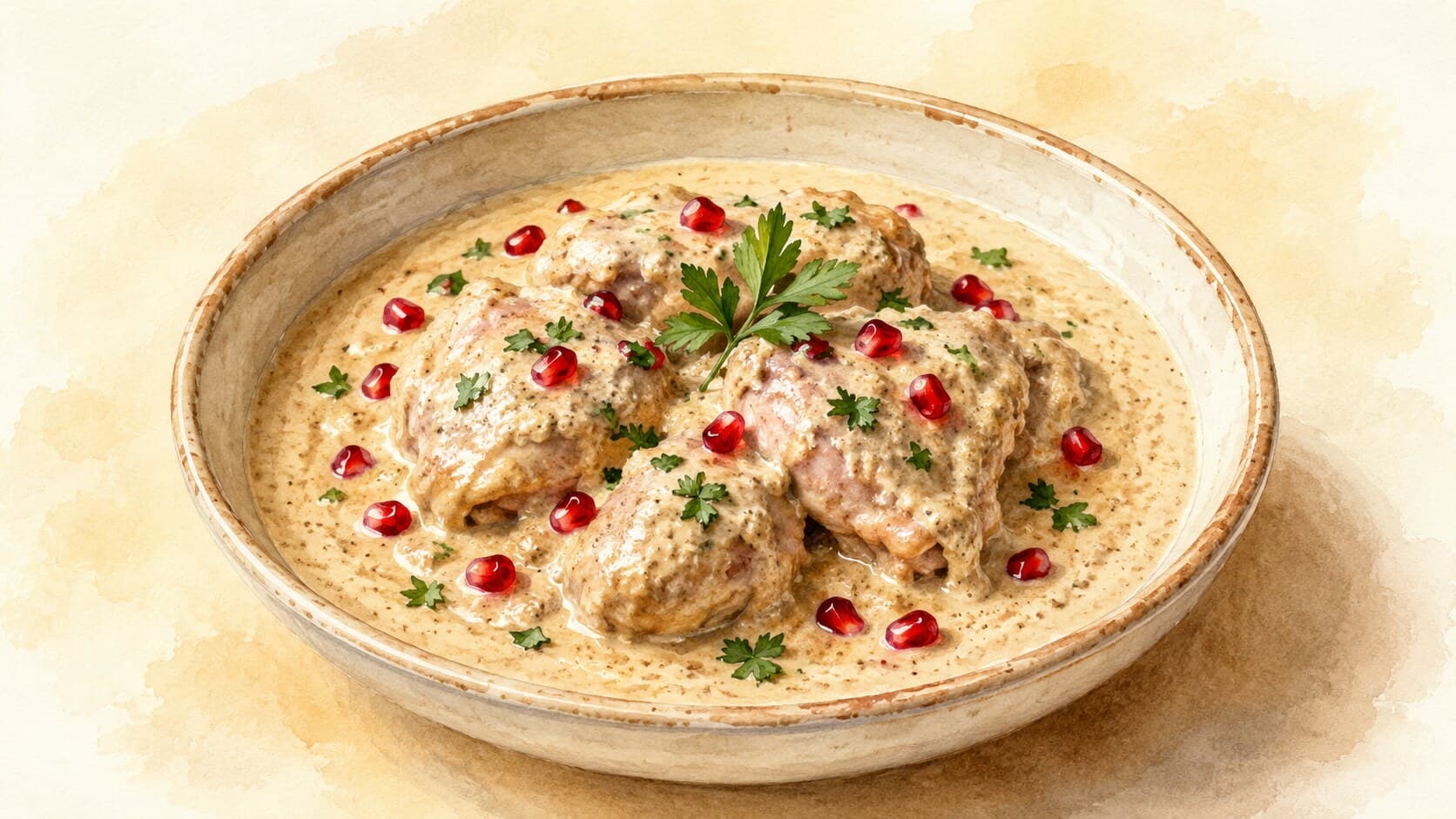
- A pale, almost ivory sauce, slightly grainy from the walnut meal but still fluid enough to flow off a spoon.
- A clean, sweet smell of walnut underneath the spice — no sharpness or oxidized "old nut" note.
- Chicken pieces fully blanketed in sauce, with the meat pulling cleanly from the bone.
- Ruby pomegranate seeds and bright green herbs setting clear visual contrast against the pale background.
A note on history
Satsivi is a defining cold dish of Georgian cuisine, built around a thick, spiced walnut sauce poured over poached poultry (chicken or turkey cooked gently in seasoned liquid) and served at the country's winter holiday tables — most strongly associated with New Year and Christmas supra (a Georgian celebratory feast led by a designated toastmaster). Walnuts are deeply embedded in Georgian cooking, especially in the western regions of Imereti and Kartli, and the dish reflects both that pantry tradition and the practical need for festive food that can be made well in advance.
Get the essays in your inbox — free
Weekly notes on flavor, fermentation, and food history — the writing behind the Atlas of Flavor. No spam; unsubscribe anytime.