
Sanma Shioyaki
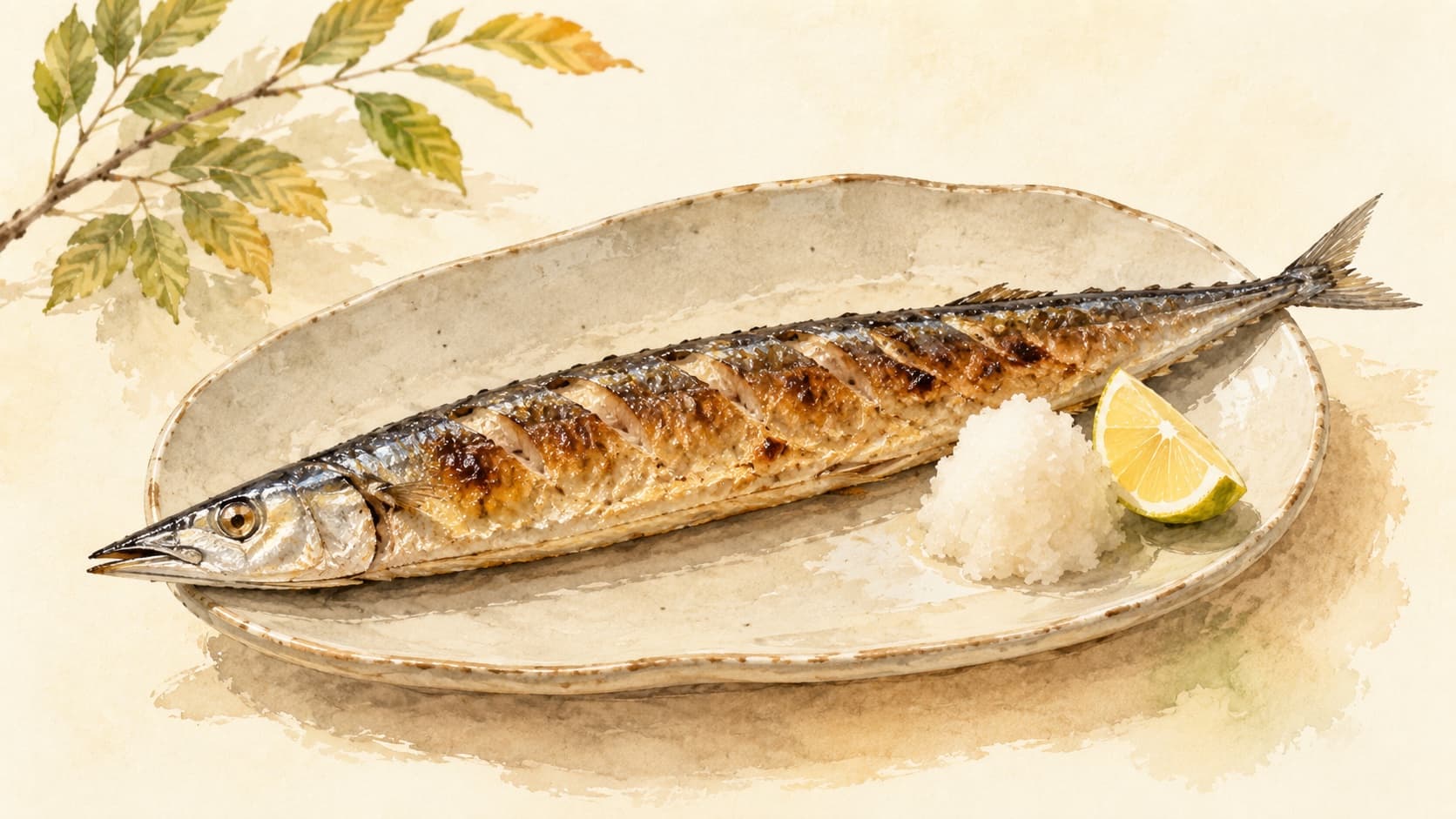
Sanma Shioyaki is a classic Japanese grilled mackerel pike, showcasing the essence of autumn with its simplicity and flavor.
Contents (5 sections)▾
Ingredients
- 2 whole sanma (mackerel pike), cleaned and scaled
- 1 tsp sea salt
- 1 tbsp grated daikon radish, for serving
- lemon wedges, for serving
Steps
Rinse the whole sanma under cold water and pat dry with paper towels to ensure a crispy skin when grilled.
Sprinkle sea salt evenly on both sides of each fish and let it sit for about 10 minutes; this salt cure enhances the flavor and helps draw out excess moisture.
Preheat your grill or broiler to medium-high heat (around 200°C or 400°F) for about 5 minutes.
Place the sanma on the grill, skin-side down, and cook for 7-8 minutes; the high heat will create a crispy exterior while keeping the flesh tender.
Flip the fish and cook for an additional 5-7 minutes until the skin is golden brown and the flesh flakes easily; this ensures even cooking.
Remove the sanma from the grill and let it rest for a couple of minutes before serving with grated daikon and lemon wedges.
Why this works
The simplicity of Sanma Shioyaki allows the natural flavors of the mackerel pike to shine through. Salting the fish prior to cooking is crucial; it seasons the fish and draws out excess moisture, which helps develop a crispy skin during grilling. If you find that the skin isn't crisping up, ensure your grill is hot enough before placing the fish on it. Cooking the fish skin-side down initially helps safeguard the delicate flesh from direct heat, reducing the risk of overcooking. The addition of grated daikon radish is traditional; it provides a refreshing contrast to the rich flavor of the grilled fish. Remember, if the sanma appears too thick, you can butterfly the fish to allow for quicker and more even cooking. This method ensures that the fish remains juicy and flavorful, capturing the essence of autumn cuisine in every bite.
Common mistakes
Wet skin going onto the grill
- Target: skin that looks matte-dry, with no visible moisture beads, before it touches the heat.
- Why it matters: surface water boils off before the skin can brown, so you get steamed gray skin instead of crisp, golden-brown skin.
- What to do: pat the fish thoroughly inside and out with paper towels, salt it, and let it sit for the 10-minute cure on a rack so air circulates and moisture evaporates.
Grill or broiler too cool at start
- Target: a fully preheated grate or broiler element — around 200°C / 400°F or hotter — before the fish goes on.
- Why it matters: a cold surface means the fish releases water, sticks, and tears when you try to flip it, and the skin never crisps.
- What to do: preheat the grill for a full 5 minutes, brush the grate lightly with oil right before placing the fish, and don't move it until the skin releases on its own.
Undercooked center
- Target: flesh that flakes cleanly all the way to the spine and is opaque, not translucent, at the thickest point behind the head.
- Why it matters: sanma can carry Anisakis parasites (small thread-like worms found in raw or undercooked sea fish that cause severe stomach pain in humans), so the dish relies on cooking fully through — not on freshness alone.
- What to do: grill 7-8 minutes on the first side and 5-7 minutes on the second, then peek behind the dorsal fin: if the flesh still looks glassy, give it another minute or two before pulling it off.
Skipping the salt cure (a brief pre-salt of the surface that pulls moisture out, seasons the flesh, and helps the skin crisp)
- Target: an even, thin layer of salt applied 10 minutes before cooking so the surface is just barely tacky when it goes on the grill.
- Why it matters: salt both seasons the flesh and draws out a thin film of moisture; without it the fish tastes flat and the skin steams.
- What to do: sprinkle salt from height for an even spread, leave it for 10 minutes, then blot off the surface beads with a paper towel before grilling.
What to look for
- Skin that has tightened and curled at the cut edges, with golden-brown patches where it touched the bars of the grate.
- A thin wisp of smoke and the sharp, oily-toasted smell of the skin as it browns — different from the wet smell of the raw fish.
- Flesh that lifts away from the spine in clean, opaque flakes when you press the side of a chopstick into the thickest part.
- A small bead of clear juice surfacing from the slit you make to check doneness, not pink or watery liquid.
A note on history
Sanma — Pacific saury, written 秋刀魚, literally "autumn knife fish" for both its season and its slender, blade-like body — has been fished in Japan and became a staple of common households in the Edo period as salting and charcoal grilling made it both portable and prized. The classical rakugo tale "Meguro no Sanma," in which a shogun falls for plainly grilled sanma eaten outside the castle, helped fix sanma shioyaki in the popular imagination as a shorthand for autumn. To this day the smell of grilled sanma in a neighborhood is read as a seasonal signal.
Get the essays in your inbox — free
Weekly notes on flavor, fermentation, and food history — the writing behind the Atlas of Flavor. No spam; unsubscribe anytime.