
Saba Shioyaki
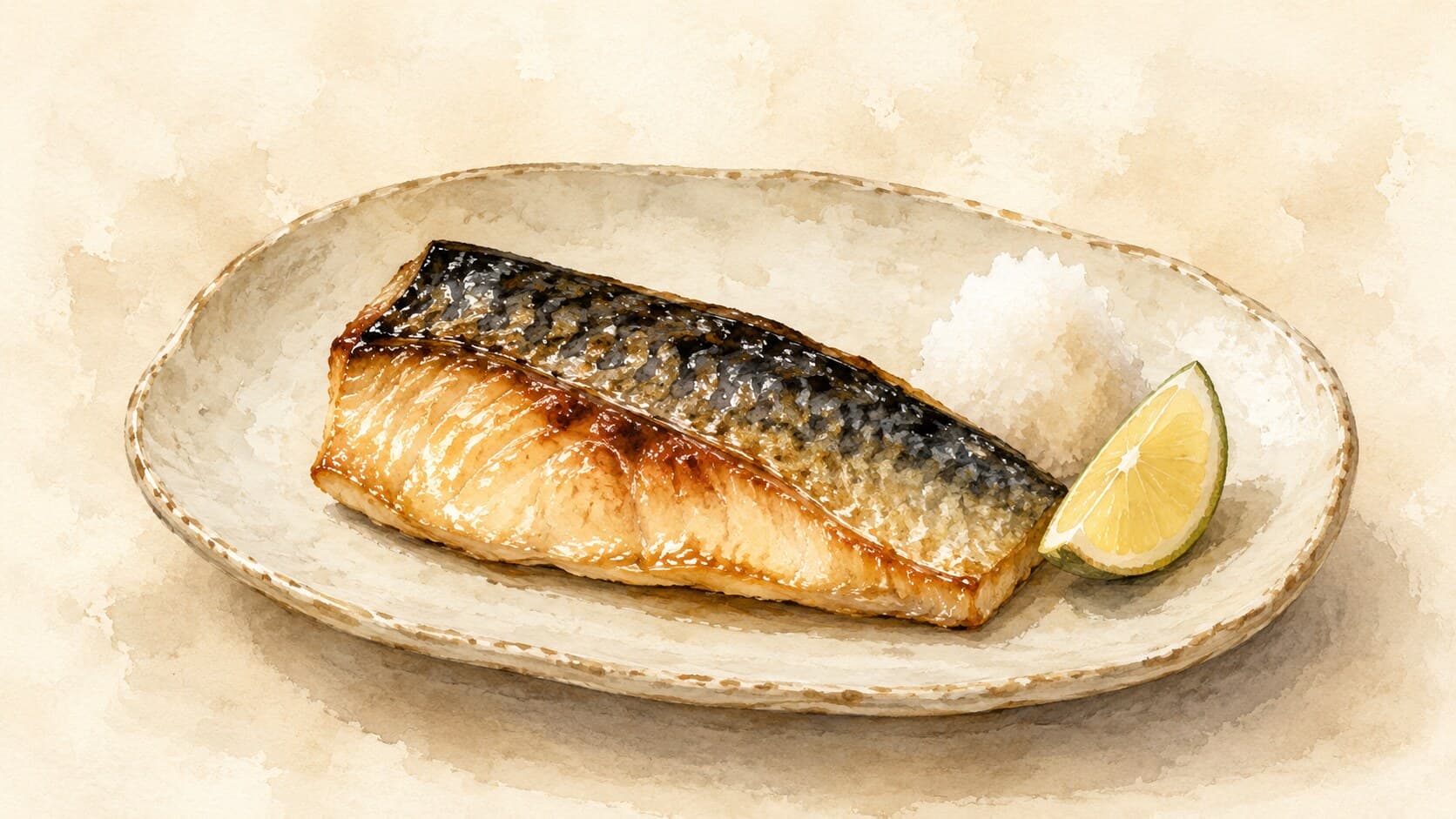
Saba Shioyaki features salt-cured mackerel that is grilled until the skin is crispy and the flesh is tender.
Contents (5 sections)▾
Ingredients
- 2 mackerel fillets (about 150 g each)
- 15 g salt
- Grated daikon, to taste
- Lemon wedges, to taste
- Shiso leaves, to taste
Steps
Sprinkle salt evenly over the mackerel fillets and let them sit for 30 minutes to draw out moisture.
Rinse the fillets under cold water to remove excess salt, then pat them dry with paper towels.
Preheat your broiler to high. Place the mackerel fillets skin-side up on a broiler-safe pan.
Broil the fillets for about 8-10 minutes, or until the skin is crispy and the flesh is cooked through.
Remove from the broiler and let them rest for a minute before serving with grated daikon, lemon wedges, and shiso leaves.
Why this works
The technique of dry-curing (rubbing salt onto the fish and resting so it draws out moisture, the foundation of shioyaki) the mackerel with salt for 30 minutes is crucial as it extracts excess moisture, allowing the fish to develop a firmer texture and enhancing its flavor. Rinsing off the salt prevents oversalting, ensuring a balanced taste. Broiling (top-down high-heat radiant cooking, similar to grilling but from above) the fillets skin-side up at a high temperature crisps the skin beautifully while cooking the flesh just right, maintaining its moisture and tenderness. If the skin seems too soft at the end of broiling, you can return it to the broiler for an additional minute or two until it crisps up. This method works well for oily fish like mackerel, as the fat content helps keep the meat moist during cooking, creating a delicious contrast with the crispy skin.
Common mistakes
Skipping the salt rest.
- Target: An even coat of salt and a 30-minute rest in the fridge until beads of moisture sit on the surface and you can wipe them away.
- Why it matters: Mackerel is an oily, watery fish. Without the salt cure, that surface moisture flashes to steam under the broiler, the skin never crisps, and the flesh tastes muddy and faintly fishy.
- What to do: Salt both sides, rest on a rack in the fridge so air can move under the fillet, blot dry, and only then go to the broiler.
Putting wet fish under the broiler.
- Target: Skin dry enough that paper towels come away clean after the final blot.
- Why it matters: Any film of water on the skin has to evaporate before browning can begin — that lag turns what should be a crisp, mahogany skin into a pale, rubbery one.
- What to do: After rinsing off the cure, pat both sides hard with paper towels, then let the fillets sit uncovered for a few minutes so the surface air-dries before they go in.
Pulling the fish before it's cooked through.
- Target: Flesh that is opaque from the skin all the way to the centre and flakes cleanly with a fork — no translucent, glossy stripe through the middle.
- Why it matters: Saba carries a real risk of Anisakis parasites; raw or undercooked mackerel is not safe at home from standard market fish. The dish's safety relies on grilling it through.
- What to do: Broil until the thickest part of the fillet is uniformly opaque and the surface oils are bubbling; if in doubt, broil another minute rather than less.
Crowding the broiler pan.
- Target: Fillets laid out with at least 2 cm of space between them on the pan.
- Why it matters: Touching fillets share heat and shield each other's skin from direct radiation, so the skin steams between them and stays soft.
- What to do: Use a pan generous enough to give each fillet its own halo of empty space; if needed, broil in two rounds rather than packing them in.
What to look for
- After the salt rest, fine droplets of moisture stand on the surface like dew.
- Under the broiler, the skin shifts from grey to deep golden brown, blistering in a few spots.
- A fork pressed into the thickest part of the fillet meets no glassy resistance — the flesh parts cleanly into opaque flakes.
- A faint, savoury, slightly toasted sea-smell rises from the pan, with no raw, metallic fish note left.
A note on history
Saba shioyaki (literally "salt-grilled mackerel," a Japanese home-cooking staple) is everyday Japanese home cooking: saba (mackerel), shio (salt), yaki (grilled). Mackerel is caught abundantly in waters around Japan and has long been an affordable everyday fish, and salt-grilling is the most basic, default way of cooking it — a preparation that lets the fish's own fat and the bite of salt do almost all of the work.
Get the essays in your inbox — free
Weekly notes on flavor, fermentation, and food history — the writing behind the Atlas of Flavor. No spam; unsubscribe anytime.