
Pinchos Morunos
Enjoy skewered pork marinated in a vibrant Moorish spice blend, perfect for a weekend tapa.
Contents (5 sections)▾
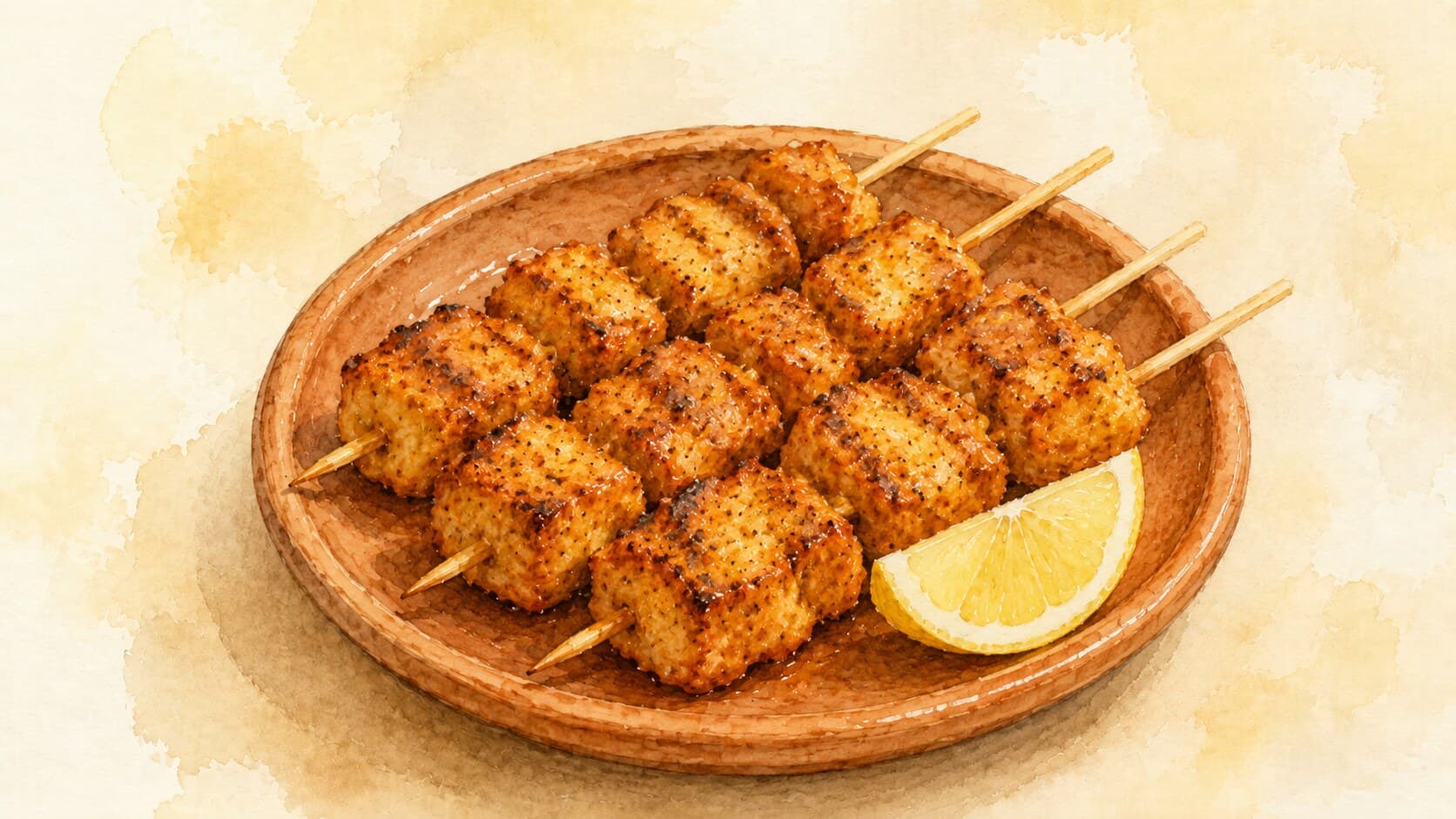
Ingredients
- 500 g pork tenderloin, cubed
- 2 tbsp sweet paprika
- 1 tbsp ground cumin
- 1 tbsp ground coriander
- 1 tsp dried oregano
- 4 cloves garlic, minced
- 60 ml olive oil
- 1 tsp salt
- 1 lemon, cut into wedges
- bamboo skewers, soaked in water for 30 minutes
Steps
In a large bowl, combine paprika, cumin, coriander, oregano, minced garlic, olive oil, and salt to create a marinade.
Add the cubed pork to the marinade, ensuring all pieces are coated. Cover and refrigerate overnight for enhanced flavor.
Preheat a grill or grill pan to high heat (about 200°C / 400°F).
Thread the marinated pork cubes onto the soaked bamboo skewers.
Grill the skewers for about 10-15 minutes, turning occasionally, until the pork is cooked through and slightly charred.
Serve hot with lemon wedges on the side for squeezing over the skewers.
Why this works
The success of Pinchos Morunos lies in the marinade, which combines the warm flavors of paprika, cumin, coriander, and garlic. These spices, rooted in Moorish influence, create a complex flavor that penetrates deep into the pork. Allowing the meat to marinate overnight enhances taste and tenderizes it, ensuring juiciness upon grilling. Grilling at high heat develops a nice char, which adds another layer of smokiness. If the pork seems too dry after cooking, consider marinating for a longer time next batch, or basting with a little extra olive oil during grilling for moisture. This technique provides a flavorful guide to using spices, making it adaptable for other meats or vegetable skewers as well.
Common mistakes
Calling "charred outside" done — pork still pink at the center. Target: pork must be cooked through, with the cube center reaching at least 63°C / 145°F (USDA guidance for whole-muscle pork) followed by a 3-minute rest, or higher for those who prefer fully white. Cut one cube open before serving: juices should run clear and there should be no pink at the center. Why it matters: pork is a BLOCK-level safety category — undercooked pork can carry parasites and bacterial pathogens that high heat outside the cube does not necessarily reach inside. The visual "char outside" can develop in 2 minutes while the inside is still raw, especially on a screaming-hot grill. What to do: verify with an instant-read thermometer in the thickest cube, not by appearance. If the outside is charring fast but the inside is still cool, move the skewers to a slightly cooler zone of the grill to finish (or lower the heat). Cut a sacrificial cube to confirm before serving the rest.
Cubes cut unevenly or too large. Target: uniform cubes about 2.5 cm (1 inch) on a side — small enough to cook through in 10–15 minutes total, large enough to retain juiciness. Why it matters: uneven cubes finish at different times — small ones go dry and tough while you wait for the big ones to cook through; large ones risk being raw inside while the outside has already over-charred. What to do: before threading, sort cubes by size and group similar ones on each skewer. Take 2 minutes to recut any outliers.
Marinade too thick or too sweet — burns on the grill, masks the meat. Target: a paste-thin marinade that coats but doesn't pool. The spice blend should be paprika-led with cumin and coriander as supporting voices, plus garlic, olive oil, and salt — no added sugar. Why it matters: thick or sugary marinades scorch on high heat, producing acrid blackened patches before the meat is cooked. The classic Andalusian pinchitos spice profile relies on aromatic spices, not sweetness, for depth. What to do: if your marinade is too thick after refrigerating overnight, thin with a teaspoon of olive oil; scrape off excess before grilling so the spices stick to the meat rather than dripping into flames.
Skewers not soaked, or grill not preheated. Target: soak bamboo skewers in water at least 30 minutes; preheat the grill until you cannot hold a hand 10 cm above the grate for more than 2 seconds. Why it matters: dry bamboo catches fire under the meat — flames char the skewer ends and impart a burnt-wood note. A cold grill means the meat sticks and doesn't develop the Maillard sear (browning chemistry) that gives skewers their signature crust. What to do: brush the hot grate lightly with oil immediately before laying the skewers down; turn skewers only when they release cleanly from the grate, not before.
What to look for
- A spice paste that clings to the meat after marinating. Lifting a cube out of the bowl, you should see a thick, mahogany-red coating; runny marinade hasn't bonded to the meat and won't crust on the grill.
- Sizzle on contact, not silence. Skewers laid on a properly hot grill should hiss firmly — silent contact means a cold grate and stuck, gray meat.
- Char in patches, not coverage. A finished cube has bronze-brown surface with darker char only at the corners; uniform black means burned, uniform brown without char means too cool.
- Clear juices at the cut. When you bite or slice through, the inside should be uniformly opaque and the juice that beads on the surface clear — no pink, no rosy pool.
A note on history
Pinchos morunos — literally "Moorish skewers" (a Moroccan-Spanish marinated pork skewer cooked over high heat) — take their name from the centuries of Moorish (Muslim) presence in southern Spain during the al-Andalus period (711–1492), when Andalusia absorbed culinary techniques and seasonings from the Islamic world, including grilled-meat dishes seasoned with cumin, coriander, and other warm spices (Wikipedia, Funci). The spice template is essentially a cousin of ras-el-hanout (the North African "top of the shop" spice blend that gathers a vendor's best warm spices), simplified down to paprika, cumin, and coriander. Today's Spanish version is traditionally made with pork — the Christian renaming after the Reconquista — particularly in Andalusian styles around Málaga and Granada, though lamb versions also survive elsewhere. The 13th-century Anonymous Andalusian Cookbook already documents skewered, spice-rubbed meats from this culinary tradition.
Get the essays in your inbox — free
Weekly notes on flavor, fermentation, and food history — the writing behind the Atlas of Flavor. No spam; unsubscribe anytime.