
Picadillo
This Cuban Picadillo recipe features a delightful balance of sweet and savory through ground beef, sofrito, olives, raisins, and capers.
Contents (5 sections)▾
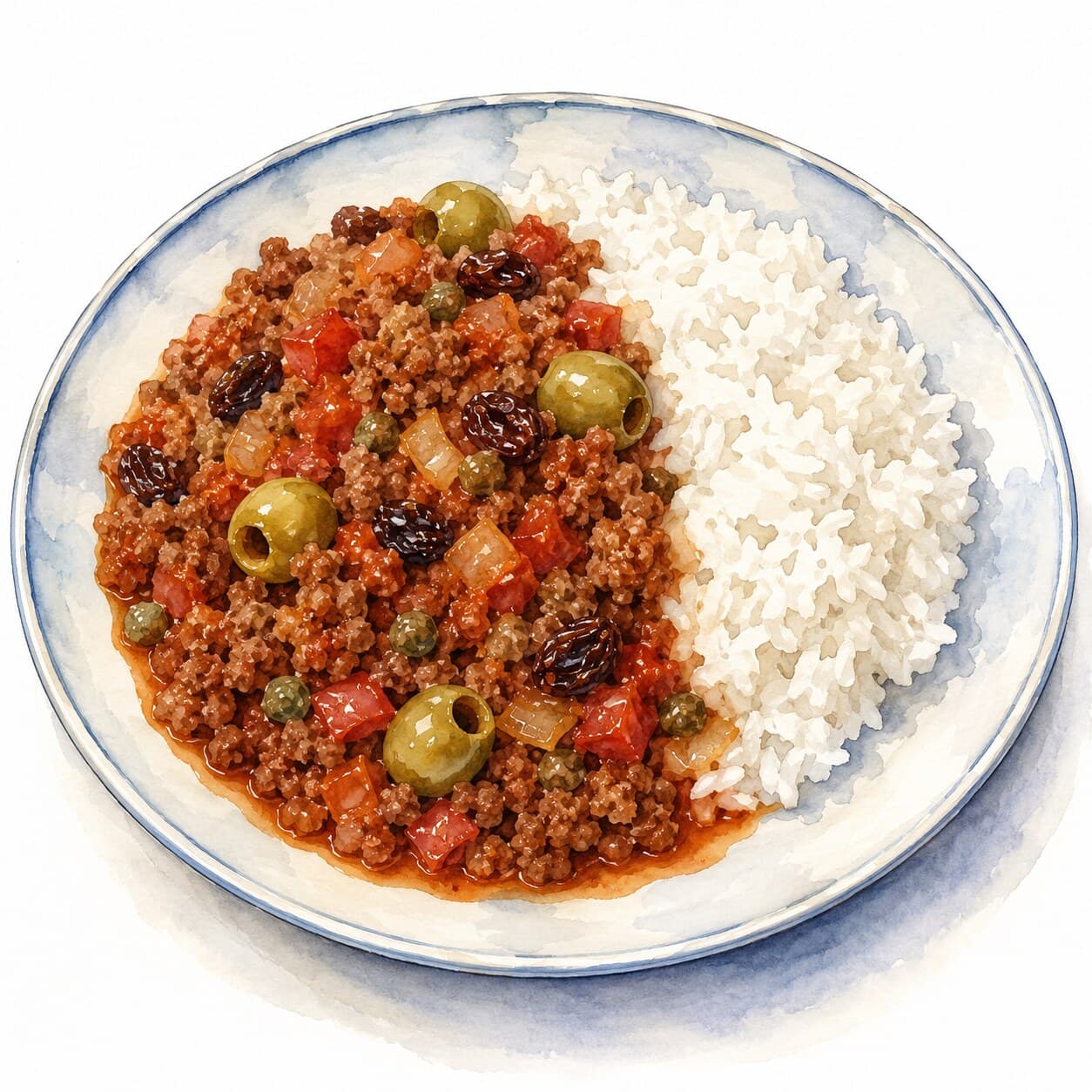
Ingredients
- 500 g ground beef
- 1 medium onion, finely chopped
- 2 cloves garlic, minced
- 1 medium bell pepper, finely chopped
- 1 cup canned diced tomatoes
- 100 g green olives, pitted and sliced
- 50 g raisins
- 1 tbsp capers, rinsed
- 1 tsp ground cumin
- 1 tsp dried oregano
- 1 tbsp olive oil
- Salt and pepper to taste
Steps
In a large skillet over medium heat, heat the olive oil. Add the chopped onion, garlic, and bell pepper, cooking for about 5 minutes until softened and fragrant.
Increase the heat to medium-high and add the ground beef, breaking it apart with a spoon. Cook until browned, around 7-8 minutes, ensuring it's fully cooked through.
Stir in the diced tomatoes, olives, raisins, capers, cumin, oregano, salt, and pepper. Reduce heat to low and let simmer for 10 minutes, allowing flavors to meld.
Taste the Picadillo and adjust seasoning as needed. Serve hot with rice or as a filling for tortillas.
Why this works
The balance of flavors in Picadillo comes from the combination of sweet raisins and briny olives, creating a delightful contrast that epitomizes Cuban cuisine. The sofrito base, consisting of sautéed onions, garlic, and bell peppers, provides depth and aromatics, forming a flavorful background for the dish. When simmering, the ingredients meld together, allowing the spices to infuse the ground beef thoroughly. If the mixture seems too dry, add a splash of water or broth to maintain moisture and enhance flavor. Conversely, if it appears too wet, simply increase the heat to evaporate excess liquid. This dish is versatile and can be adjusted to personal taste, making it a staple in many households.
Common mistakes
Leaving the ground beef in dense clumps instead of breaking it up finely.
Target: Break the beef into small, loose crumbles with a spoon or spatula as it browns, rather than a few big clumps.
Why it matters: Ground meat left in thick clumps cooks unevenly — the outside browns and can look done while the center of a dense clump stays pink and under the safe temperature. Fine, even crumbles cook through consistently and pick up more of the flavor from the sofrito (the sautéed onion, garlic, and bell pepper base) along the way.
What to do: Press and chop the meat with the edge of a spoon as it cooks, checking that no pink remains and the beef has reached a safe 71°C/160°F throughout before moving on.
Skimping on the sofrito or rushing it.
Target: Cook the onion, garlic, and bell pepper together for the full 5 minutes, until softened and fragrant, before adding the beef.
Why it matters: The sofrito is picadillo's flavor foundation; thrown in barely warmed, the vegetables stay sharp and crunchy instead of turning sweet and mellow, and the whole dish tastes thin.
What to do: Give the vegetables real time in the oil over medium heat, stirring occasionally, until they visibly soften and smell fragrant rather than raw.
Adding the olives, raisins, and capers at the wrong time.
Target: Stir them in with the tomatoes after the beef is already browned, then simmer everything together for the full 10 minutes.
Why it matters: Picadillo's identity comes from the contrast of sweet raisins against briny olives and capers; added too early they can turn mushy and lose their distinct pop, and added too late they never warm through or blend with the sauce.
What to do: Follow the order in the recipe — brown the meat first, then fold in the tomato, olive, raisin, and caper mixture, and let everything simmer together so the flavors meld without overcooking any one element.
Serving it watery, or over-reducing it into a dry crumble.
Target: Aim for a moist but not soupy consistency — the sauce should cling to the meat, not pool at the bottom of the pan.
Why it matters: Canned tomatoes release variable amounts of liquid, so the same recipe can turn out soupy one time and dry the next; picadillo is meant to be a spoonable, saucy filling, not a dry hash or a stew.
What to do: If it looks too wet after simmering, uncover and raise the heat briefly to let excess liquid evaporate; if it looks dry or starts sticking, add a splash of water or broth to loosen it back up.
What to look for
- Ground beef with no pink remaining, even at the center of the larger crumbles. Fully cooked through (71°C/160°F) is the safe target for ground meat — check a few bigger pieces, not just the surface.
- A glossy sauce that clings to a spoon rather than pooling into liquid at the edges of the pan. That consistency signals the tomatoes have cooked down enough to bind everything together.
- Distinct pockets of sweetness from the raisins and brine from the olives and capers, rather than one flat flavor. You should taste the sweet-savory contrast in individual bites, not just a uniform tomato-meat flavor.
A note on history
Picadillo's name comes from the Spanish verb picar, "to mince" or "to chop," and food historians point to Spain — many suspect Andalusia specifically — as its likely birthplace; a Spanish dictionary as far back as the early 1700s already listed a minced-meat dish under this name. Even so, the dish's precise origin is genuinely debated, since minced-meat stews of one kind or another appear across many cuisines.
What's clearer is how picadillo spread: Spanish colonization carried it to the Americas and the Philippines, and each place remade it with local ingredients. Cuban picadillo took on olives, capers, and raisins with a tomato base; Mexican versions often add potatoes or carrots; Philippine picadillo (sometimes called giniling) leans on soy sauce and local vegetables instead. The version here follows the Cuban and wider Pan-Latin Caribbean pattern (Wikipedia).
Get the essays in your inbox — free
Weekly notes on flavor, fermentation, and food history — the writing behind the Atlas of Flavor. No spam; unsubscribe anytime.