
Ninjin Shirishiri
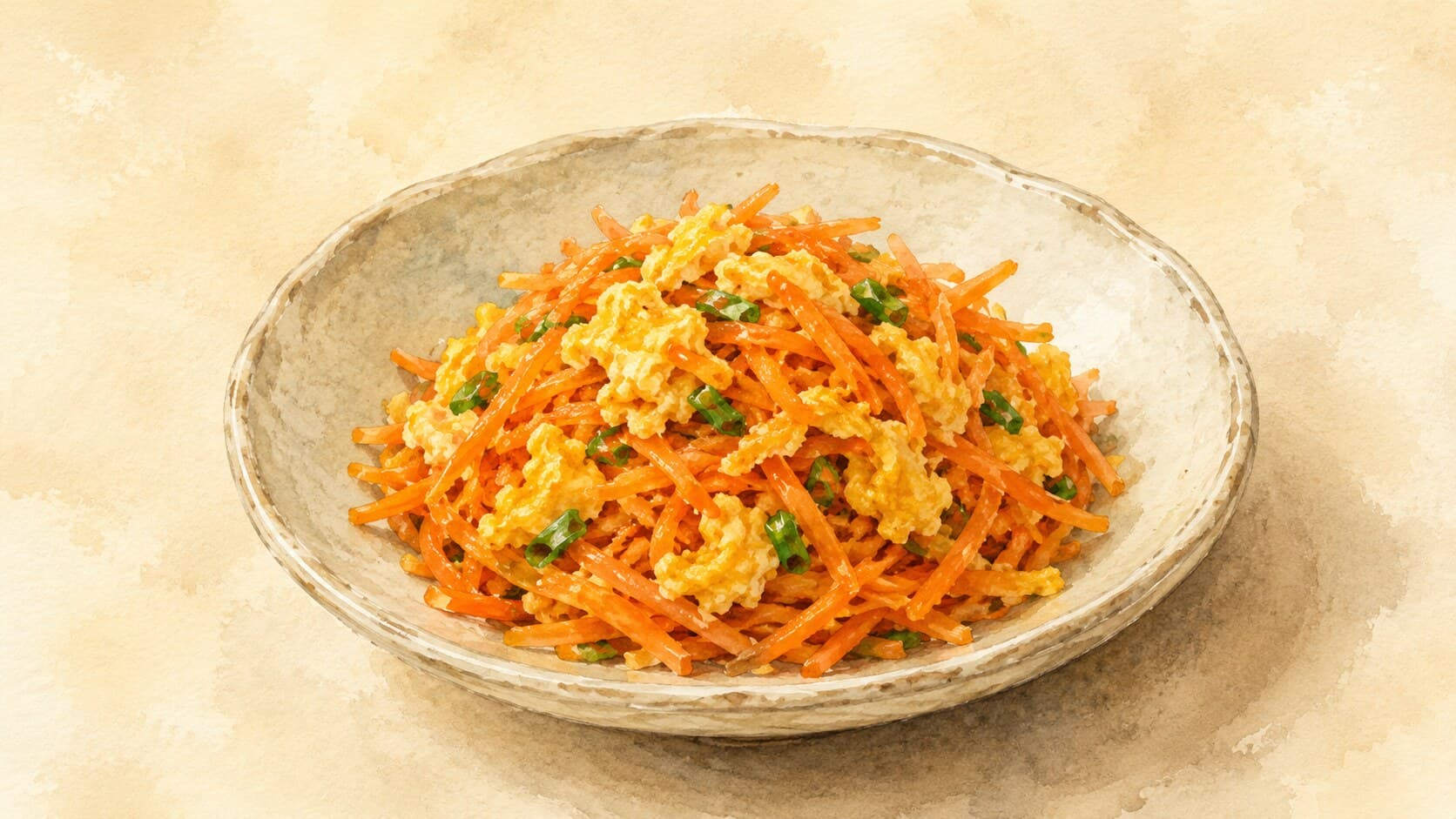
Ninjin Shirishiri is a vibrant Okinawan carrot stir-fry featuring long, thin carrot strips, tuna, and egg.
Contents (5 sections)▾
Ingredients
- 400 g carrot, shredded into long thin strips
- 150 g tuna, canned or fresh-flaked
- 3 large eggs, beaten
- 2 tbsp vegetable oil
- 2 tbsp soy sauce
- 1 tsp dashi powder
- Salt to taste
Steps
1. Heat the vegetable oil in a large skillet over medium heat (about 180°C) and add the shredded carrots. Stir-fry for 5-7 minutes, or until they soften and are slightly tender.
2. Add the tuna to the skillet and stir well, cooking for another 2-3 minutes until heated through, ensuring the tuna is warmed to at least 63°C.
3. Push the carrot and tuna mixture to one side of the skillet and pour in the beaten eggs on the other side. Allow them to sit for about 1-2 minutes until they begin to set, then gently scramble them for an additional 2 minutes until fully cooked.
4. Once the eggs are fully set, mix everything together. Add soy sauce, dashi powder, and salt to taste, cooking for an additional minute to combine the flavors thoroughly.
Why this works
The technique of shredding carrots into long thin strips using a shirishiri grater (a flat Okinawan grater board with multiple ridged blades that produces long, slightly jagged strips) allows for a quicker cooking time and enhances the dish's texture, providing a delightful crunch alongside the tender egg and tuna. The combination of flavors from the soy sauce and dashi (Japanese soup stock made from kombu and bonito flakes) complements the natural sweetness of the carrots, creating a harmonious balance. If the egg seems too runny, increase the heat slightly to around 190°C and stir until fully cooked, ensuring it integrates well with the other ingredients. This dish is perfect for weeknight meals, as it comes together quickly and showcases the unique Okinawan approach to cooking. The method emphasizes the importance of precise cooking times and temperatures to achieve the best results, ensuring that each ingredient is cooked to perfection. The careful balance of flavors and textures makes this dish satisfying; it's also a delightful representation of Japanese culinary traditions.
Common mistakes
-
Adding raw egg and pulling it off before it's fully cooked through. Target: Egg fully set — no glossy raw streaks anywhere; cooked egg has reached at least 71°C / 160°F throughout. Why it matters: Raw or lightly-cooked egg can carry Salmonella, and a stir-fry like shirishiri offers no second chance: the dish is meant to be eaten as soon as it's mixed. The Okinawan-home texture is small soft curds folded through the carrots, not a glassy half-set scramble. What to do: Pour beaten egg into the cleared side of the pan, let it sit 30-60 seconds until the bottom begins to set, then scramble gently for another 1-2 minutes until every visible streak has turned opaque. Then fold into the carrots.
-
Cutting the carrots into chunky julienne instead of long, fine strips. Target: Long, thin, slightly jagged strips — about 2-3 mm thick, as long as the carrot — the texture the shirishiri grater (a specific Okinawan tool with multiple ridged blades; literally "the slicer that goes shiri-shiri") produces. Why it matters: The dish's texture identity comes from those long, slightly rough strips. Thick julienne stays raw in the time the egg cooks; thin even matchsticks lose the chew. The slightly rough surface from a true grater also lets the dashi and soy cling. What to do: Use a julienne peeler or coarse grater if you don't have a shirishiri tool. Aim for "long, not symmetrical." Don't fall back on a microplane (too fine) or a chef's knife (too even).
-
Heating the carrots too hard and browning them. Target: Medium heat (around 160-180°C), 5-7 minutes, until the strips bend without snapping and turn a deeper saturated orange — no brown edges. Why it matters: Carrot sugars caramelize fast, and once they go brown the dish loses its bright Okinawan color and starts tasting one-note sweet. The flavor of shirishiri leans on the carrots' fresh sweetness, not roasted sweetness. What to do: Keep the heat moderate and stir steadily. If the pan starts smoking, drop the heat — caramelization here is a failure mode, not a target.
-
Holding cooked shirishiri at room temperature too long before eating. Target: Eat warm, or refrigerate within 1-2 hours; consume within 24 hours. Why it matters: The dish contains cooked egg and (often) canned tuna in a lightly-seasoned matrix — a hospitable environment for bacterial growth if left out. It's home-cooked food meant for the same meal, not extended buffet duty. What to do: Make it close to serving time. Refrigerate leftovers promptly in a sealed container.
What to look for
- Carrot strips that have softened just enough to bend in a curve without breaking, with their color deepened to glowing orange — that's the cooked-through-but-still-springy window the dish wants.
- Egg folded through in small, fully-opaque yellow curds, never a glassy translucent layer — visual proof the egg has reached safe doneness and the dashi-soy seasoning has had something to cling to.
- A clear sheen of oil on the strips, not a wet bottom of liquid in the pan — if there's pooled liquid, the heat dropped and the carrots steamed; the dish should look glossy, not wet.
- A clean nose of toasted soy and dashi over a sweet-carrot undertone — heavy tuna-can smell means the tuna was added too late and didn't warm through; a flat smell means the dashi powder wasn't given a moment to bloom.
A note on history
Ninjin shirishiri is an Okinawan home dish whose name is the technique itself: ninjin (にんじん, carrot) plus shirishiri (しりしり), an Okinawan dialect word imitating the shiri-shiri sound a particular ridged grater makes against the carrot. The tool — a flat board with multiple round blades, the "shirishiri-ki" — is reportedly found in nearly every Okinawan household, and the dish's identity is inseparable from it (Cooking with Dog, Umami Pot). Long a regional specialty alongside dishes like gōyā chanpurū, shirishiri spread to the rest of Japan as part of the broader Okinawan-cuisine wave of the late twentieth century, and is now a national weeknight staple.
Get the essays in your inbox — free
Weekly notes on flavor, fermentation, and food history — the writing behind the Atlas of Flavor. No spam; unsubscribe anytime.