
Nihari (Slow-Cooked Beef Shank Stew)
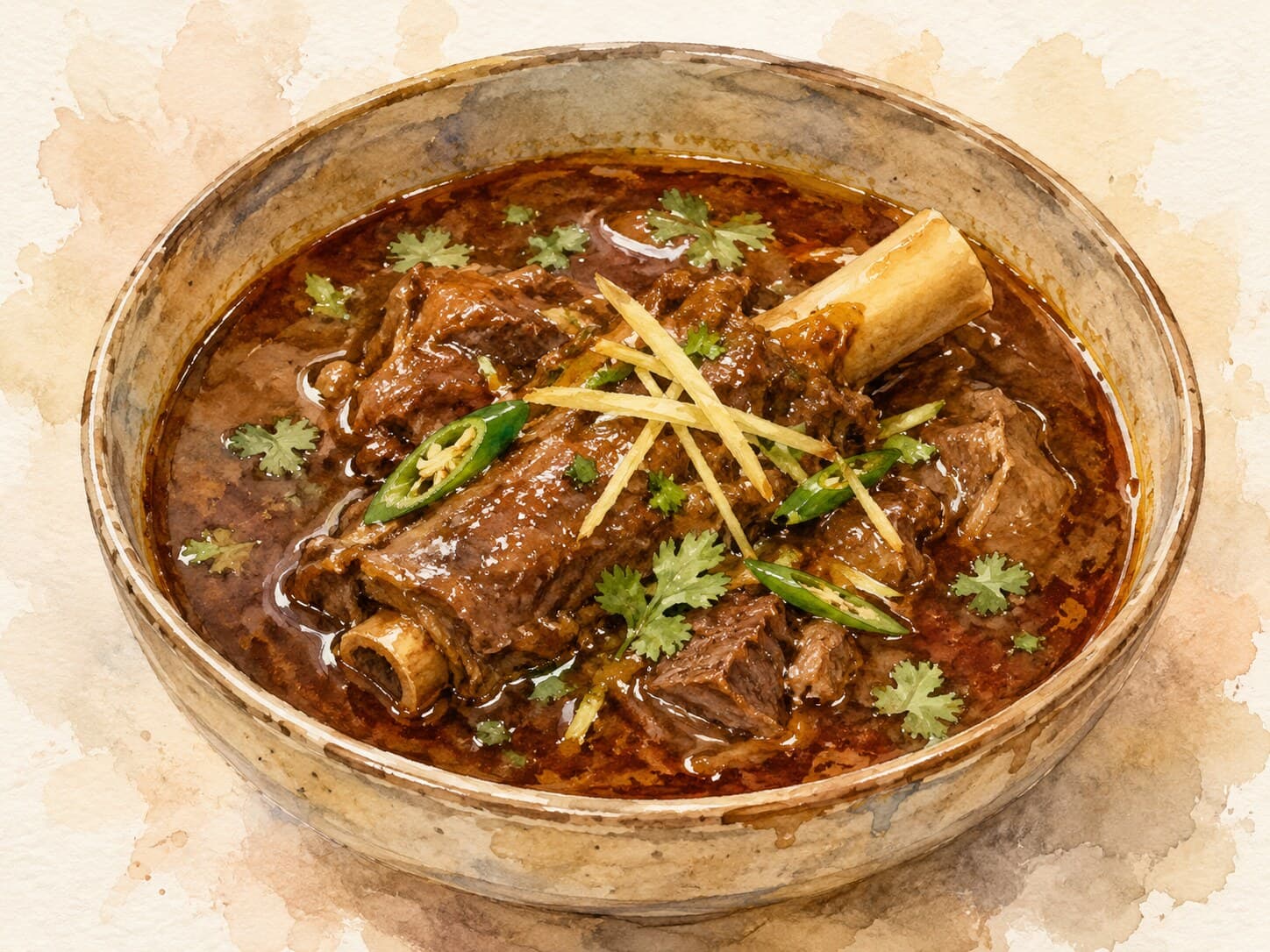
Nihari is a traditional slow-cooked stew of beef shank, infused with warm spices and perfect for a hearty breakfast.
Contents (5 sections)▾
Ingredients
- 1 kg beef shank, cut into large pieces
- 4 cups water
- 2 tbsp ghee or oil
- 2 large onions, finely sliced
- 3 tbsp ginger-garlic paste
- 2 tbsp flour
- 1 tbsp chili powder
- 1 tbsp coriander powder
- 1 tbsp cumin powder
- 1 tsp turmeric powder
- 1 tsp garam masala
- Salt to taste
- 1 inch ginger, julienned for garnish
- Chopped cilantro for garnish
- Lemon wedges for serving
Steps
In a large pot, heat the ghee over medium heat. Add the onions and sauté until golden brown, about 10 minutes. This will deepen the flavor base.
Stir in the ginger-garlic paste and cook for another 2 minutes until fragrant.
Add the beef shank pieces and brown on all sides for about 5 minutes, developing a browned, flavorful base.
Sprinkle the flour over the beef, stirring to coat evenly. This will help thicken the gravy during cooking.
Add water, chili powder, coriander, cumin, turmeric, and salt. Bring to a boil, then reduce to low heat.
Cover the pot and let it simmer overnight on low heat (around 8-10 hours) or until the meat is tender and the marrow releases its richness.
In the morning, heat a small pan over medium heat and add the garam masala. Toast for 1-2 minutes until fragrant, then stir into the stew.
Serve hot, garnished with julienned ginger and chopped cilantro, alongside lemon wedges.
Why this works
Braising (slow-cooking meat partly submerged in liquid, covered) the beef shank overnight allows the tough connective tissues to break down, resulting in tender meat that melts in your mouth. The slow cooking process also extracts rich flavors from the marrow (the soft fatty tissue inside the bone), enriching the gravy. If the stew seems too thick after cooking, simply add a bit of warm water to loosen it up. Conversely, if it appears too watery, you can simmer it uncovered for a while to reduce the liquid. The flour added early on acts as a thickening agent while also contributing to the overall texture. The final step of toasting the garam masala (a warm, fragrant blend of ground spices like cinnamon, cardamom, and cloves used widely in South Asian cooking) enhances its aroma, providing a fresh burst of spice right before serving.
Common mistakes
-
Pulling the shank off the heat before it's truly tender — leaving pink at the bone or a tough chew. Target: Meat fully cooked through, no pink, fork-tender enough that a strand pulls cleanly away from the bone. Internal temperature is not the goal here — texture is — but the long simmer should hold the meat well above 90°C / 194°F core for hours. Why it matters: Beef shank is loaded with connective tissue (collagen). It only converts to gelatin — the silky, lip-coating richness that defines nihari — when held at simmering temperatures for many hours. A short cook leaves it tough; a pink center is undercooked, not a stylistic choice. The long simmer is for collagen-to-gelatin conversion, not for rare meat. What to do: Plan for 8-10 hours on the lowest bare-simmer setting. Test by lifting a piece — if it resists or shreds in dry fibers, keep going. It's ready when a strand surrenders to the back of a spoon.
-
Frying the onions too fast and stopping at "translucent." Target: A deep, even mahogany — not pale gold and not burnt — over a real 10-15 minutes on medium heat. Why it matters: This is where the gravy's body and dark color come from. The Maillard reaction (the browning chemistry between sugars and amino acids that creates roasted, savory flavor) needs time and steady heat. Translucent onions deliver thin, pale gravy; charred onions deliver bitter gravy. What to do: Salt the onions lightly to pull water out, keep the ghee adequate, and stir often near the end. The color should match the inside of a roasted chestnut before you add the ginger-garlic.
-
Adding the flour to the watery broth instead of toasting it in the fat. Target: Sprinkle flour over the browned meat and onions, stir for 1-2 minutes until it smells nutty and disappears into the fat. Why it matters: Toasted flour cooked in fat makes a roux (a flour-and-fat thickener); raw flour stirred into liquid clumps and tastes pasty. Nihari's signature glossy, clinging gravy depends on this step. What to do: Coat the meat with the flour while the pan is still hot and dry-looking. Only add water once the flour has lost its raw smell.
-
Skipping the final garam masala bloom. Target: Toast the garam masala in a dry pan for 30-60 seconds (or in a spoon of hot ghee for 15-20 seconds) just before stirring it in. Why it matters: Volatile aromatic compounds in cinnamon, cardamom, and cloves are released by heat and lost during long cooking. A fresh hit at the end is what makes nihari taste alive instead of muddy. What to do: Toast right at service, off heat, until the kitchen smells warm and slightly sweet — then in it goes.
What to look for
- A dark mahogany gravy that coats the back of a spoon, with a thin gold sheen of ghee floating on top — the gold ring is rendered fat from the marrow and ghee, the visual signature of a finished nihari.
- Shank meat that gives way under the side of a spoon, but the pieces still hold their shape on the plate — that's the collagen fully converted to gelatin, not the meat falling apart into mush.
- A warm, slightly sweet spice fragrance rising off the bowl when you stir the toasted garam masala in — if you can't smell cinnamon and cardamom in the steam, the bloom didn't happen.
- A clean, savory finish that wakes up when you add a squeeze of lemon and ginger julienne — the gravy should taste rich without being heavy; acid and aromatic sharpness should cut, not compete.
A note on history
Nihari traces to the Mughal kitchens of Old Delhi — most accounts place its origin in Shahjahanabad (today's Old Delhi) during Shah Jahan's reign, roughly the 17th century. The name comes from the Arabic nahar, meaning "morning" or "day": the dish was cooked overnight and served to laborers at dawn as a sustaining breakfast before a hard day's work, and over time crossed from working-class food into Nawabi banquet cooking (Swiggy Diaries, Saveur). After Partition, large nihari traditions established themselves in Karachi and Lahore, where the Pakistani version this recipe descends from took its current shape.
Get the essays in your inbox — free
Weekly notes on flavor, fermentation, and food history — the writing behind the Atlas of Flavor. No spam; unsubscribe anytime.