
Nasu no Nibitashi
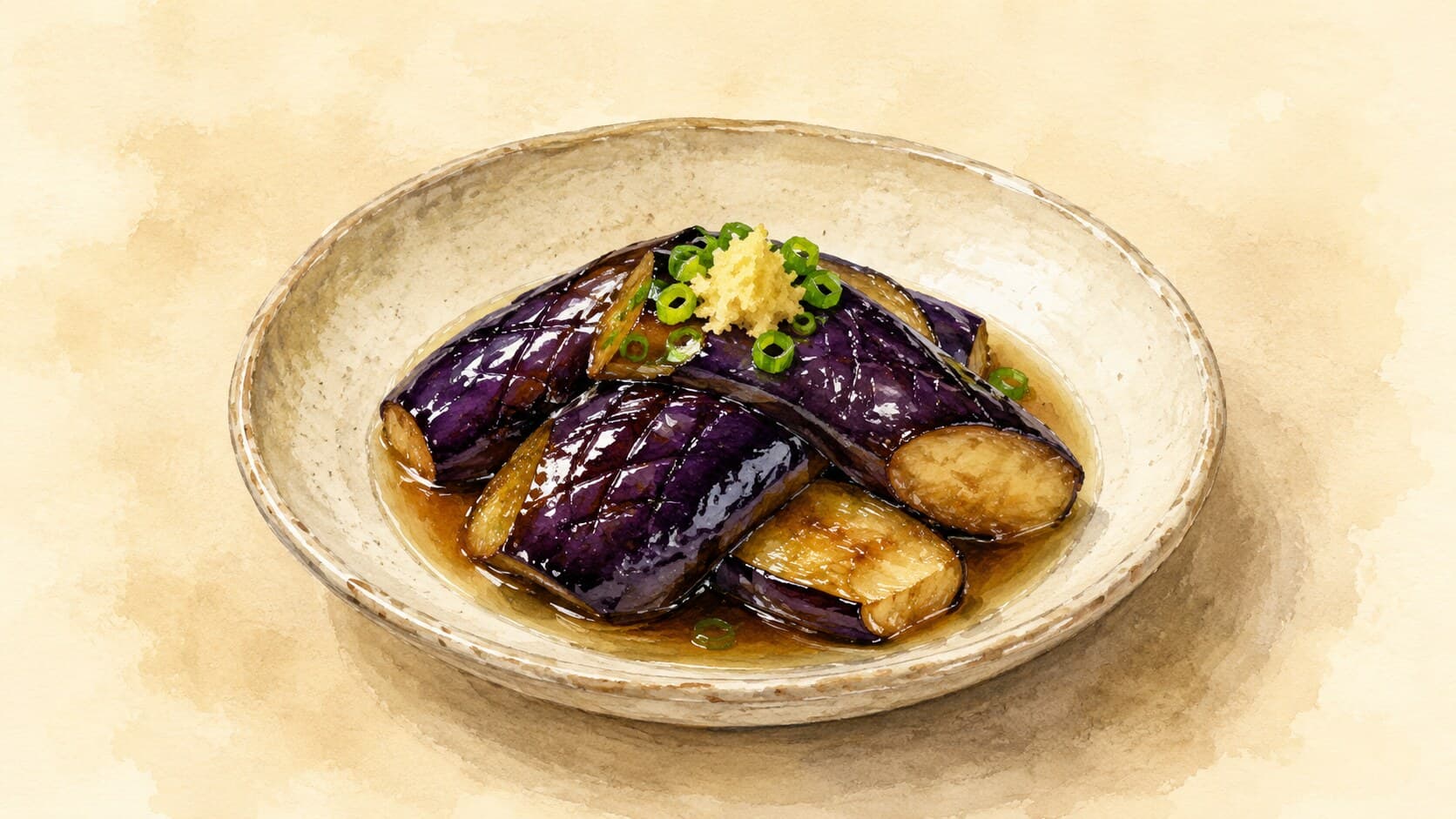
Nasu no Nibitashi features eggplant gently simmered in dashi for a refreshing side dish.
Contents (5 sections)▾
Ingredients
- 4 Japanese eggplants (茄子)
- 2 tbsp vegetable oil
- 300 ml dashi (Japanese soup stock)
- 3 tbsp soy sauce
- 2 tbsp mirin
- Grated ginger, to taste
- Finely sliced green onion, to taste
Steps
Start by cutting the Japanese eggplants in half lengthwise. This allows for more even cooking and helps the dashi flavor penetrate better.
Heat the vegetable oil in a large skillet over medium heat. Once hot, carefully place the eggplant halves cut-side down in the skillet and sear for about 2-3 minutes until the skin is lightly browned. This step helps set the skin, making it less likely to break during simmering.
In a separate pot, combine the dashi, soy sauce, and mirin. Bring this mixture to a gentle simmer over low heat.
Once the dashi mixture is simmering, add the seared eggplant halves, cooking for an additional 2-3 minutes. The goal is to infuse the eggplant with flavor without making it overly mushy. Remove from heat.
Transfer the eggplant and dashi to a shallow dish, allowing it to cool to room temperature. This cooling period allows the flavors to deepen as the eggplant absorbs the seasoned dashi.
Chill in the refrigerator for at least 1 hour before serving. This dish can be enjoyed cold or at room temperature, making it perfect for a summer side.
Before serving, garnish with grated ginger and finely sliced green onion for added flavor and freshness.
Tools you'll want
- · Microplane Premium Classic Zester (46020)
Why this works
Nasu no Nibitashi effectively showcases the technique of dashi (Japanese soup stock made from kombu kelp and bonito flakes) infusion, a fundamental aspect of Japanese cuisine. The initial searing (browning the surface briefly in hot oil) of the eggplant sets the skin, preventing it from breaking apart during the simmering process. This step also enhances the texture, giving a slight crispness. Simmering the eggplant in a mixture of dashi, soy sauce, and mirin allows it to absorb the umami-rich flavors, creating a harmonious dish. The cooling phase is crucial as it allows the eggplant to soak up more of the dashi while also providing a refreshing temperature ideal for summer. If the eggplant seems too soft after simmering, it may have been overcooked; in that case, reduce the simmering time next time to maintain a firmer texture. Properly prepared, this dish is a delightful complement to any Japanese meal, serving as both a side and a lesson in dashi utilization.
Common mistakes
-
Skipping the oil-sear and going straight to simmer. Target: 2-3 minutes per cut side in a hot pan, oil shimmering, until the purple skin turns deep glossy and the flesh just yields. Why it matters: Eggplant flesh is a sponge of air pockets. Hot oil collapses those pockets and seals the skin so cells stop drinking liquid uncontrollably during the simmer. Without this step the eggplant goes muddy and waterlogged instead of silky. What to do: Pat the cut sides dry, get the pan hot before the oil goes in, and don't crowd the pan. You want sizzle on contact, not steam.
-
Hard-boiling the dashi instead of gently simmering. Target: Bare simmer (small bubbles at the edge, around 85-90°C / 185-194°F), 2-3 minutes max with the eggplant in. Why it matters: A rolling boil breaks down the soft cooked eggplant flesh and drives off the volatile aromatic compounds in dashi (the kombu's — dried kelp's — glutamates stay, but the katsuobushi's — dried bonito flakes' — lighter notes evaporate). You lose both texture and aroma. What to do: Heat the dashi mixture on its own first, drop the heat, then add the seared eggplant. Watch the surface, not the clock.
-
Serving warm out of the pan instead of letting it cool and soak. Target: Cool to room temperature in the dashi, then refrigerate at least 1 hour (ideally 3-4) before serving. Why it matters: Flavor absorption (dashi-osmosis — the seasoned broth moving into the cells of the cooked eggplant as it contracts on cooling) happens during the cool-down, not the cook. Eaten hot, the eggplant tastes underseasoned and the dashi tastes thin. What to do: Make it at least an hour ahead, half a day is better. This is a make-ahead dish by design.
-
Holding leftovers too long. Target: Refrigerate covered at or below 5°C / 41°F; eat within 24 hours, ideally the same day. Why it matters: Cooked eggplant in a watery, lightly-salted broth is a hospitable environment for bacterial growth once it sits at room temperature, and the dish has no acidic preservative. What to do: Get it into the refrigerator within an hour of cooling, and don't leave it on the counter while you eat.
What to look for
- Deep purple-amber glaze on the cut side after the sear — that color is the visual proof the skin is sealed and the cells inside have collapsed enough to hold their shape during the simmer.
- A spoon parts the flesh with almost no resistance, but the half stays whole when lifted — that's the texture window: fully tender, not collapsed.
- The chilled dashi is clear, faintly amber, and tastes salt-umami-sweet in that order — if it tastes flat, you over-boiled it; if it tastes only salty, the eggplant hasn't drunk enough yet (give it more time).
- A clean grassy smell from the freshly grated ginger as it hits the cold broth — that aromatic top note is what lifts the chilled dish; if you can't smell it, grate fresh just before serving.
A note on history
"Nibitashi" comes from niru (煮る, to simmer) plus hitasu (浸す, to soak) — the name itself is the technique: a brief simmer followed by a long soak in seasoned dashi. The soak-in-dashi idea is older than the dish itself; hitashimono shows up in Japanese records in 1517, and through the Edo period the broth was sometimes built on sake or vinegar rather than soy (Japanese Wiki Corpus). The modern dashi-and-soy version of nasu no nibitashi is the Meiji-era inheritance of that long tradition, now standard summer home cooking.
Get the essays in your inbox — free
Weekly notes on flavor, fermentation, and food history — the writing behind the Atlas of Flavor. No spam; unsubscribe anytime.