
Nasu Dengaku
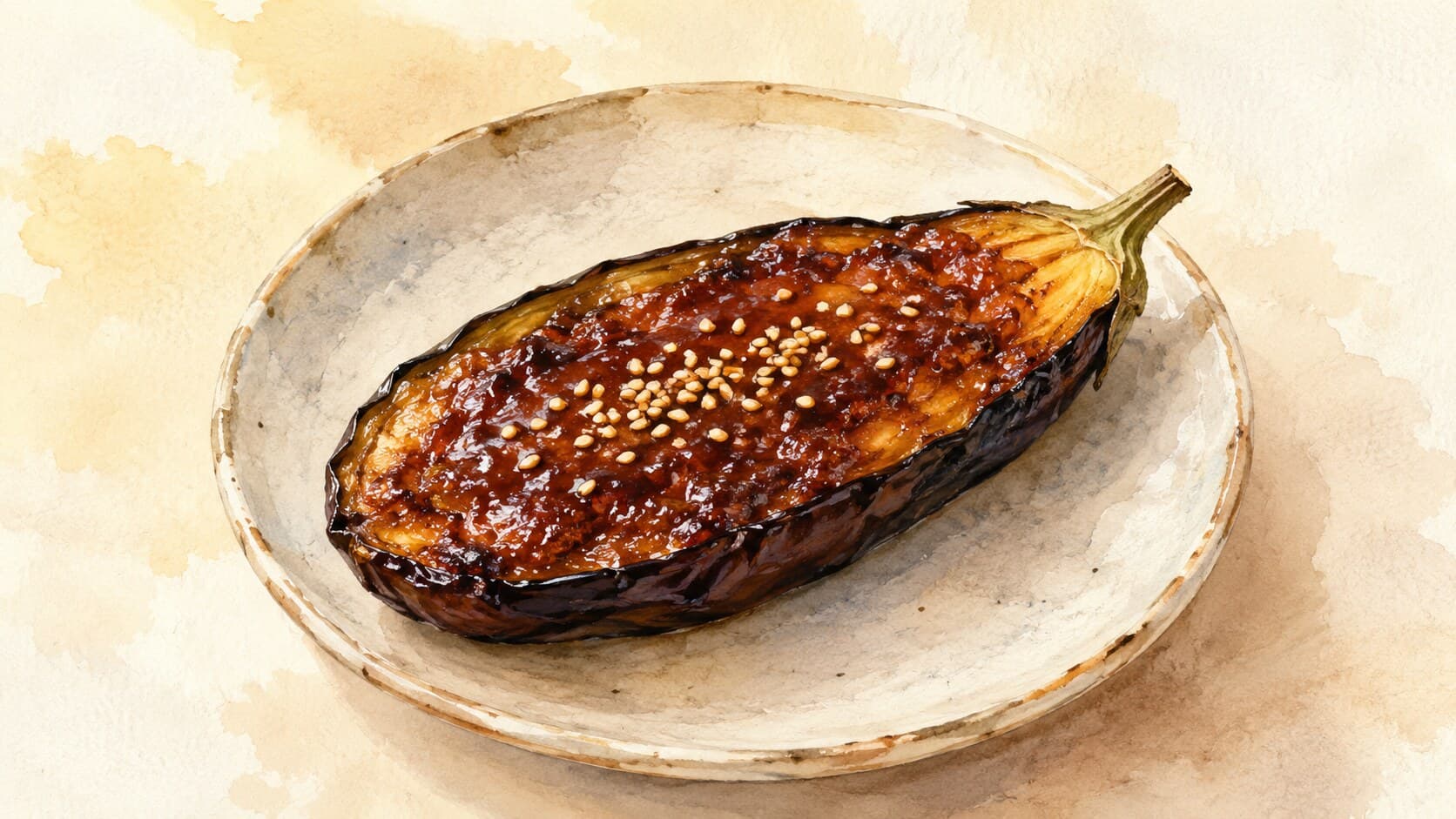
Nasu Dengaku consists of broiled Japanese eggplant coated with miso glaze, served as a vegetarian side dish.
Contents (5 sections)▾
Ingredients
- 2 large Japanese eggplants
- 4 tbsp red miso
- 2 tbsp mirin
- 1 tbsp sugar
- 1 tbsp sesame oil
- Sesame seeds for garnish, to taste
Steps
1. Preheat your broiler to high (about 260°C or 500°F). This high heat is essential for achieving that charred, caramelized finish.
2. While the broiler is heating, prepare the eggplants by cutting them in half lengthwise and scoring the flesh in a diamond pattern. This allows the miso glaze to penetrate and flavor the eggplant more effectively.
3. In a bowl, mix 4 tbsp of red miso, 2 tablespoons of mirin, 1 tablespoon of sugar, and 1 tablespoon of sesame oil until smooth. This glaze combines sweet and savory, enhancing the natural umami of the eggplant.
4. Brush the miso mixture generously over the scored flesh of the eggplants. Make sure to coat them evenly for a balanced flavor.
5. Place the prepared eggplants on a baking sheet, flesh side up, and broil for 10-15 minutes, checking every 5 minutes to prevent burning. The goal is a bubbly, caramelized surface.
6. Once broiled, remove from the oven and let cool slightly for 2-3 minutes. Garnish with sesame seeds before serving. Enjoy warm as a delightful side or appetizer.
Why this works
The technique of broiling (cooking under direct overhead heat) with a miso glaze creates a beautiful caramelization that enhances the eggplant's natural sweetness and umami (savory depth) flavor. Miso, a fermented soybean paste, adds depth and richness, while the high heat from the broiler ensures a lovely char on the surface. Scoring the eggplant allows the glaze to penetrate more deeply and helps the flesh to cook evenly. If your glaze seems too thick, you can thin it out with a teaspoon of water or additional mirin to achieve the desired consistency. If the eggplant seems too firm after broiling, you might extend the cooking time by an additional 5 minutes while keeping a close watch to avoid burning. The balance of flavors, combined with the texture of the roasted eggplant, makes this dish a standout vegetarian appetizer that complements various meals. The careful attention to timing and temperature ensures that the eggplant is tender yet retains its shape, making it an elegant addition to any dining experience.
Common mistakes
Glazing the eggplant before the flesh is cooked through. Target: flesh tender all the way to the centre of the half, then glaze in the final 2–3 minutes only. Why it matters: eggplant has a spongy cell structure that holds air; until that structure collapses with heat (roughly 60–70 °C / 140–160 °F internal), the flesh stays firm and slightly squeaky. Glazing too early means the miso scorches on a still-undercooked vegetable — you bite through a sticky crust into a raw-tasting interior. Miso is high in sugar and amino acids, so it browns fast under direct heat. What to do: broil or grill the eggplant cut-side up without the glaze first, until you can push a chopstick into the flesh with no resistance (about 8–10 minutes under a hot broiler). Then brush on the miso glaze and broil 2–3 minutes more, watching constantly.
Walking away from the broiler with miso on top. Target: stay near the oven once the glaze is on; pull at glossy mahogany, not black. Why it matters: miso glaze is sugar, amino acids, and water. Under a broiler at around 230–260 °C (450–500 °F), the Maillard reaction (proteins and sugars browning together) and caramelisation (sugars browning into amber-mahogany flavors) run fast — the difference between perfect and burnt is 30–60 seconds. Once burnt, the bitter acrolein and burnt-sugar compounds infiltrate the eggplant and the whole half tastes off. What to do: rack closer to the heat is fine — but stay watching. Pull at the moment the surface bubbles and the colour deepens from amber to mahogany. If the glaze starts to char in spots, drop the rack one level and finish gently.
Letting raw glaze get on the cut you bring to the table. Target: cook the miso glaze on the eggplant or as a brief saucepan reduction before glazing — never serve uncooked miso paste warmed only by the eggplant's heat. Why it matters: unpasteurised miso contains live cultures and ambient yeasts; pasteurised miso is safe by itself but combined raw with mirin and sugar then warmed on a hot plate is not the same as cooking. Brushing on glaze that then bakes hot under a broiler is fine; smearing on raw glaze just before serving means the glaze stays under-warmed near the centre. What to do: stir the glaze ingredients in a small saucepan over low heat for 2 minutes until smooth and just barely simmering, then brush on. Or apply glaze with enough broiler time left to bring it to a clear bubble.
Scoring too lightly (or not at all), so the miso slides off. Target: a diamond pattern cut about halfway through the flesh, deep enough that the criss-cross stays visible after cooking. Why it matters: the eggplant's smooth, slightly waxy surface (especially Japanese varieties) sheds water-based glazes. Cuts give the glaze pockets to settle into, and as the eggplant cooks and contracts, those pockets open wider — more surface area for caramelisation, more glaze actually inside each bite. What to do: with the eggplant cut-side up, score across the flesh in one direction at a 45° angle, then perpendicular, cuts about 5 mm apart, depth about half the flesh thickness. Don't cut through to the skin.
What to look for
- Flesh that gives way without resistance when poked with a chopstick or skewer — the doneness test. Squeaky, dense flesh means it needs more time before the glaze goes on.
- A glossy mahogany surface with the score marks still visible in deeper amber — the perfect glaze stage, where Maillard browning and caramelisation have happened but stopped short of scorching.
- A smell of toasted miso, soy, and slightly burnt sugar at the very edge — not acrid smoke — the aromatic cue. Sharp burnt smell or visible black spots means pull immediately and trim, or start a fresh round.
- A faint puddle of clear, slightly purple liquid pooling under the eggplant on the tray — that is the eggplant's own moisture finally released as the flesh collapses, the structural sign of fully cooked through.
A note on history
Nasu dengaku is the eggplant variant of a much older Japanese form, miso dengaku, where tofu or other ingredients are skewered, glazed with sweet miso, and grilled. The name dengaku traces back to the Heian-period (794–1185) ritual dance dengaku-mai — performed by stilt-walking dancers (dengaku bōshi) at rice-planting festivals — because skewered grilled tofu was said to resemble those dancers in posture. Miso dengaku with tofu became a popular food during the mid-16th century. Eggplant joined the family in the early 1800s, when Edo-period cookbooks broadened dengaku beyond its tofu origin, and street vendors at temple festivals helped spread the smoky, miso-glazed style now familiar as nasu dengaku (Food in Japan: Nasu Dengaku; Just One Cookbook: Miso Dengaku).
Get the essays in your inbox — free
Weekly notes on flavor, fermentation, and food history — the writing behind the Atlas of Flavor. No spam; unsubscribe anytime.