
Murgh Karahi
Murgh Karahi is a vibrant, spicy Pakistani chicken curry cooked in a wok-like pan, featuring tomatoes and ginger.
Contents (5 sections)▾
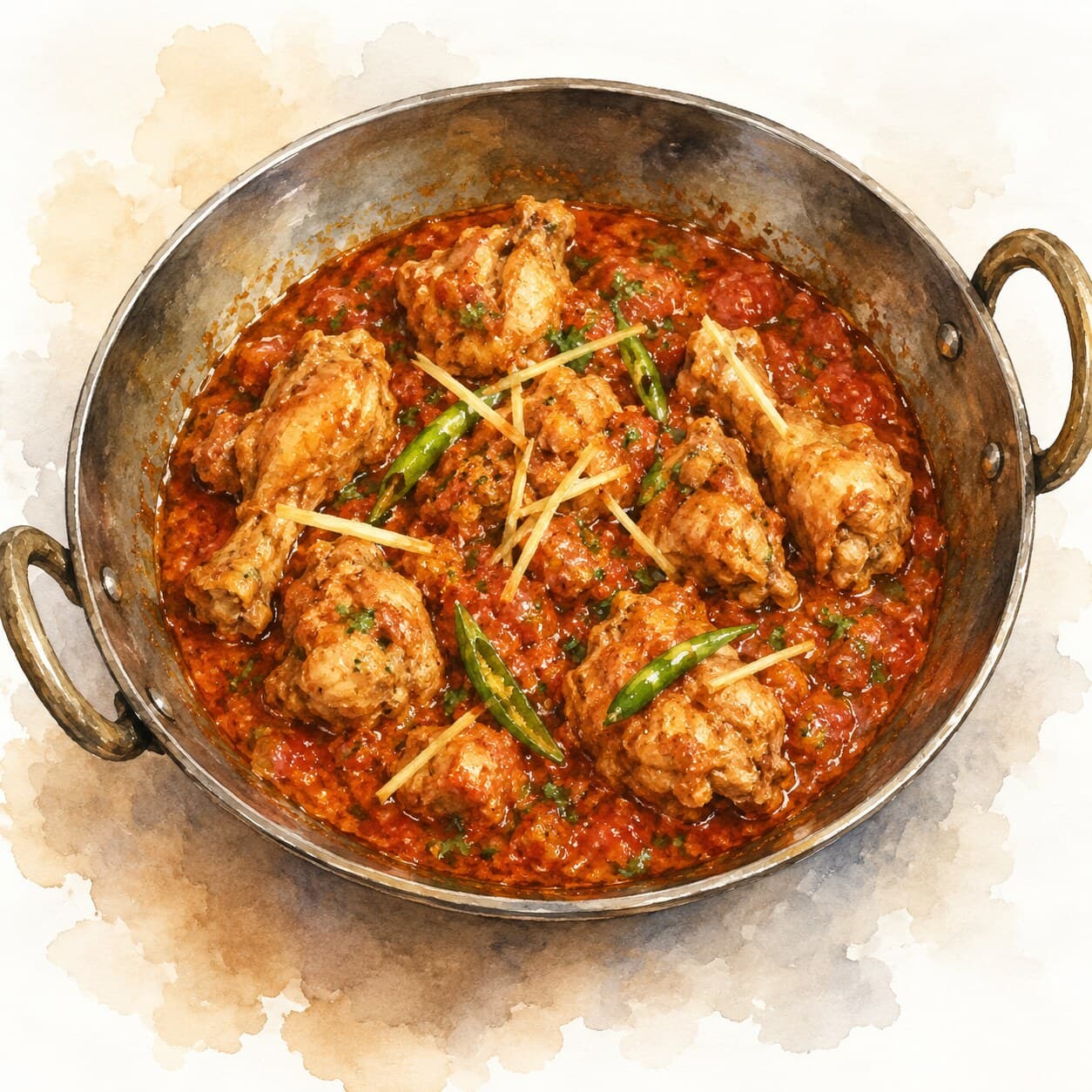
Ingredients
- 1 kg chicken on the bone, cut into pieces
- 400 g ripe tomatoes, chopped
- 2 tbsp ginger, finely julienned
- 3 green chilies, slit lengthwise
- 2 tbsp ghee or butter
- 2 tsp garam masala
- 1 tsp salt, or to taste
- 1/4 cup fresh cilantro, chopped, for garnish
Steps
Heat the ghee or butter in a karahi over medium-high heat until it's hot but not smoking, about 2 minutes.
Add the ginger and green chilies, sautéing for about 1 minute until fragrant to release their natural oils.
Add the chicken pieces and salt, stirring well to coat; cook for 5-6 minutes until the chicken begins to brown.
Stir in the chopped tomatoes, mixing well; cook on high heat for another 8-10 minutes until the tomatoes break down and form a thick sauce. Cook until the thickest part reaches 74 °C / 165 °F on an instant-read thermometer — colour, juices and time are guides, not the safety test.
Sprinkle the garam masala over the chicken, stirring it in for a minute before removing from heat.
Garnish with fresh cilantro and serve hot with naan or rice.
Why this works
The Murgh Karahi technique emphasizes high heat cooking, which allows the chicken to brown quickly and develop a flavorful surface. The use of tomatoes adds acidity and depth of flavor, and contributes to a sauce that clings beautifully to the chicken. Ginger enhances the dish with its brightness, balancing the richness of the ghee or butter. Cooking at high temperatures means the dish is finished quickly, keeping the spices vivid. If the sauce becomes too thick, add a splash of water to loosen it up; if the chicken starts to burn, reduce the heat slightly to prevent it from sticking while ensuring it cooks through. The interplay of spices here is crucial—if the garam masala seems too overpowering, simply adjust by adding more tomatoes or ghee to balance the heat.
Common mistakes
Using chicken pieces too large for the short total cooking time.
Target: Cut bone-in chicken into smaller pieces so that roughly 15-17 minutes of total cooking is enough to bring the meat nearest the bone to 74°C/165°F, with no pink and clear juices.
Why it matters: This dish cooks fast and hot by design, but that speed only works safely if the pieces are sized for it. Large bone-in pieces can brown nicely on the outside while the meat against the bone lags well behind, especially since the tomato stage is meant to reduce quickly rather than simmer low and slow.
What to do: Cut pieces down smaller than you might for a longer-cooked curry, and before serving, cut into the thickest, closest-to-bone piece in the pot to confirm there's no pink and the juices run clear.
Letting the ghee or butter get too hot before adding the ginger and chilies.
Target: Heat the ghee (clarified butter) or butter until hot and fluid but not smoking, then add the ginger and chilies right away.
Why it matters: Butter solids scorch quickly past a certain point, and ginger dropped into overheated fat can char at the edges within seconds, turning bitter instead of fragrant.
What to do: Watch for the fat to become fluid and just shimmering, not smoking, and have the ginger and chilies ready to go in immediately.
Walking away during the high-heat tomato stage.
Target: Stir the tomatoes frequently through the full 8-10 minutes on high heat as they break down into a sauce.
Why it matters: A karahi (a wok-like pan with sloped sides) conducts and holds heat efficiently, which is exactly why this stage works quickly — but the same efficiency means sauce sitting still against the hot metal can scorch and stick, adding a burnt taste to the whole dish.
What to do: Stay at the stove and stir every minute or so, scraping the bottom of the pan, and lower the heat slightly if the sauce is catching before the tomatoes have fully broken down.
Adding the garam masala too early, or cooking it too long.
Target: Sprinkle the garam masala in only at the end, stirring for about a minute before taking the pan off the heat.
Why it matters: Garam masala (a warm spice blend, typically cinnamon, cardamom, cloves, and similar spices) is built from aromatic compounds that fade with prolonged heat; added early or cooked too long alongside the simmering tomatoes, its fragrance dulls into a flatter, muddier background note.
What to do: Hold the garam masala back until the sauce has already thickened, stir it through briefly just to wake it up, and pull the pan off the heat soon after.
What to look for
- No pink and clear juices from the chicken piece closest to the bone. Check this piece specifically, not just the surface of the largest pieces, since the total cook time here is short.
- Ginger and chilies that turn fragrant rather than dark or acrid. Charred, bitter-smelling ginger means the fat was too hot when they went in.
- A thick, jammy sauce with no scorched bits clinging to the bottom of the pan when stirred. A burnt smell or dark flecks mean the tomato stage needs more frequent stirring or slightly lower heat next time.
- A final aroma where the garam masala is distinct and fragrant, not flattened into the background. That brightness signals it went in at the end rather than simmering the whole time.
A note on history
The word karahi refers to the wok-like pan the dish is cooked and often served in, and the pan's name is genuinely old: it traces to the Sanskrit and Prakrit word kataha, a cooking vessel mentioned as far back as the Sushruta Samhita, an ancient Sanskrit medical text. The dish called karahi, though, is a much newer creation, and accounts of exactly where it comes from vary. Some trace chicken karahi to the Punjab region, particularly Lahore; others point to the North-West Frontier Province — now Khyber Pakhtunkhwa — and specifically to Peshawar's Namak Mandi food street, known for cooking meat karahi-style with little more than salt, tomatoes, and black pepper. As the dish spread to Lahore, Karachi, and beyond, and eventually abroad, each city's cooks folded in their own touches, which is a large part of why so many regional versions — and origin stories — exist side by side today (Chicken karahi, Wikipedia).
Get the essays in your inbox — free
Weekly notes on flavor, fermentation, and food history — the writing behind the Atlas of Flavor. No spam; unsubscribe anytime.